About us
Superior Locksmith Company
A Sherman Oaks locksmith business working on locks, keys, door hardware and security systems across Los Angeles County.

Superior Locksmith works on the physical and electronic parts of getting into — and staying out of — buildings, vehicles and safes. That is a narrower trade than it sounds, and a deeper one.
Most people meet a locksmith at an awkward moment: a key that has snapped off in a cylinder, a tenant who has moved out with a spare, a storefront door that will not lock at closing time, a car key that stopped talking to the car. The work itself, though, is mostly ordinary diagnostic craft. Somebody looks at the hardware, works out what it is doing and why, and then does the smallest thing that puts it right.
The business operates from 13305 Moorpark St in Sherman Oaks. That location matters practically rather than symbolically: it puts the central San Fernando Valley within easy reach, and it explains why Studio City, Encino, Van Nuys, Valley Village and Valley Glen appear so often through this site. From there the published service area runs west through Tarzana and Woodland Hills to Calabasas and the Conejo Valley, north through Van Nuys to Northridge and Chatsworth, and over the hill into Hollywood, Beverly Hills and out to Santa Monica.
How the work is approached
Locks fail in a small number of recognisable ways, and a surprising proportion of apparent lock failures are not lock failures at all. A deadbolt that binds when the door is shut but turns freely when it is open has an alignment problem, not a cylinder problem. A keypad that keeps eating batteries is often fighting resistance at the bolt. A storefront lock that stops latching at the end of the day may be telling you about the door closer rather than the cylinder.
So the first thing a technician does is usually the least dramatic: operate the lock with the door open, then closed, look at the hinges, look at the strike, look at the gap around the door. That sequence takes a couple of minutes and regularly saves a customer the cost of hardware they did not need.
The same principle applies to vehicles. A modern car key combines a cut blade, a transponder and usually a remote, and each of those can fail on its own. A fob that still locks the doors but will not start the engine is a different fault from a fob that does nothing at all. Establishing which is which, before any key is cut or programmed, is most of the job.
What we work on
Residential
Rekeying, lock repair and replacement, deadbolts, smart and keypad locks, gate and mailbox locks, authorised house lockouts.
Commercial
Storefront cylinders, mortise locks, master-key planning, panic bars, door closers, commercial rekeying and premises lockouts.
Automotive
Replacement and spare keys, transponder and fob programming, push-to-start service, broken-key extraction, ignition work.
Safes
Opening with proof of ownership, lock diagnostics, combination changes, lock replacement and installation planning.
Access control
Readers, controllers, electric strikes, magnetic locks, credential management and fail-safe behaviour.
Video surveillance
Camera placement, cabling, recorder setup and remote viewing for homes, offices and multi-unit property.
Security systems, not just locks
A growing share of the work is electronic. Access-control systems replace keys with codes, cards, fobs or phones, and bring their own questions: how credentials are issued and revoked, whether an activity record is needed, and — most importantly — how the door behaves when power or network fails. Egress and life-safety requirements constrain what can be fitted to a given opening, and those constraints are not negotiable.
Camera systems raise similar practical questions. Where the cameras go, how they are powered, where footage is recorded and who can view it remotely all need deciding before anything is mounted. Both are covered in detail on the access control and video surveillance pages.
Access, identification and authorisation
Every job that provides access to a property, vehicle or safe requires identification and proof of entitlement. A locksmith who opens a door for whoever is standing next to it is not doing the job properly. For rented and commercial property this may mean seeing a lease, a management authorisation or speaking to the listed owner. It occasionally slows a visit down. It is not optional.
Being straight about limits
Some work sits outside what a general locksmith should take on. Certain high-security and fire-rated safes need manufacturer support or a specialist who works on that model daily. Some fire-rated door assemblies must not be modified without the right listed components and the involvement of the authority having jurisdiction. A few vehicle platforms require dealer-level tooling. Where that is the case, you will be told, and pointed at who can help, rather than left with a half-finished job.
Getting in touch
Common questions about the business
Before you call
Knowing the property or vehicle, the hardware involved and what changed before the problem started makes the conversation much shorter. A photograph of the lock face, the door edge or the key helps more than almost anything else.
The trade
How the work actually gets done
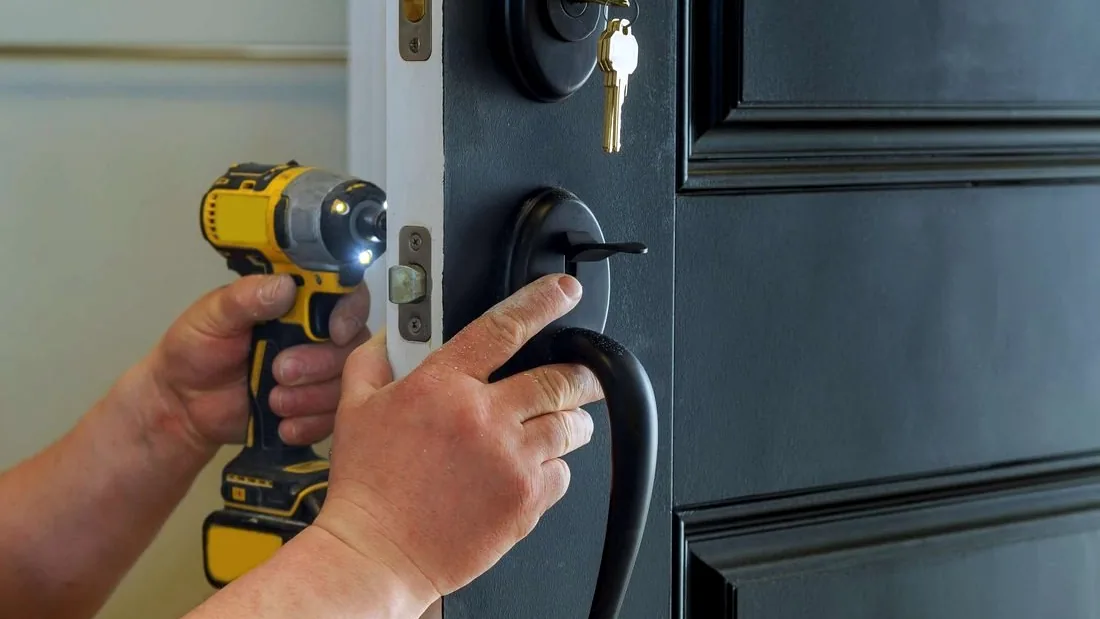
Most jobs are a combination of bench work, hardware fitted on site and whatever stock happens to be in the van.


Start with a description of the problem
The more specific you can be about the hardware and what changed, the more useful the first conversation will be.