
Serving Los Angeles County from Sherman Oaks, CA

Automotive Locksmith Services

Car Key & Fob Programming

Check vehicle and key compatibility for transponder or fob programming, distinguishing starting, remote entry and mechanical key functions.

Sherman Oaks & Los Angeles · Scope and compatibility checked before work

Technician using a diagnostic device beside a vehicle
Relevant service image; not presented as a documented customer job.

01 / Service overview

Match the electronic key to the vehicle

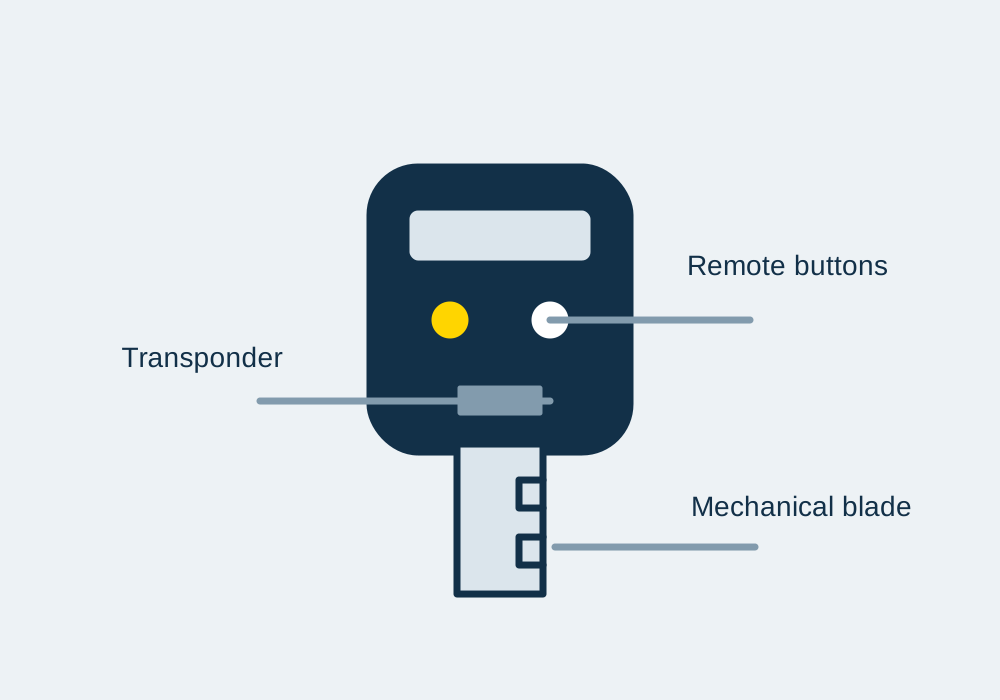
A vehicle key may include a mechanical blade, a transponder and remote-control functions. These parts have different jobs.

A blade that opens the door does not prove the vehicle will recognize the electronic key for starting, and a working start function does not prove every remote button is correctly matched.

Programming scope

Superior Locksmith Service's automotive offerings include transponder and fob programming for supported vehicles. This page focuses on the electronic matching and verification involved with a compatible key or fob.

The vehicle details, key type, existing keys and system condition determine whether the requested work can be supported.

Replacement enquiries

If you need a complete replacement because no usable key remains, describe that before arranging programming. The car-key replacement page for Sherman Oaks is the established detailed destination for replacement requests.

Programming, supplying a key and cutting its blade should be identified as separate parts of the proposed work.

02 / What we handle

Distinguish three starting situations

Adding another key while one still works

Tell us how many working keys you have and whether each starts the vehicle and operates the expected remote functions. An existing key can help identify the arrangement, but it does not establish a universal programming procedure.

The model and system still need to be checked before a spare is agreed.
Replacing a key when none is available

State that no working key remains, even if you have an old case, an unprogrammed fob or a key that only opens a door. The starting conditions can affect the required scope.

Ownership verification, key identification and vehicle compatibility need to be addressed together rather than assuming that any matching-looking fob will work.

Investigating a key that stopped being recognized

Describe the message or behavior and whether another key works. A recognition complaint can involve the key or the vehicle, and it is not automatically corrected by programming.

Report recent damage, changes or attempted work so the assessment starts with a clear record of what happened.

03 / Details that matter

Identify the vehicle and the actual key

Vehicle details

Provide the make, model, year and whether the vehicle uses a turn key or push-button starting. Mention whether the key is original to the vehicle, a replacement or something purchased separately.

Have the vehicle identification number available if requested through an appropriate channel.

Identify the key

The exterior case is not enough to establish compatibility. Similar-looking remotes may differ in the electronics and application they support.

Any identifiers on the existing or proposed key can help with checking, but final suitability must be established for the actual vehicle rather than by appearance alone.

Changed housings

If a remote case has been replaced, mention that when providing photographs. The outer housing may no longer identify the electronics inside.

Keep any packaging or service record associated with the existing key, and distinguish details you know from details inferred from its appearance. It is useful to say “this key came with the vehicle and starts it” rather than guessing that it is an original manufacturer part.

Previous attempts

Also explain whether another provider has already attempted work. A record of the original symptom and the later changes helps separate a replacement request from an unresolved fault.

Avoid repeating an unsuccessful procedure simply to show what happened.

Purchased parts

Avoid ordering parts solely from a broad listing that says they fit many vehicles. If you already bought a key or fob, provide the product information before booking.

Ask whether it can be assessed and whether supplying, cutting or programming it is within the supported scope. An unused-looking item is not automatically a compatible one.

04 / Hardware check

Separate starting, remote entry and mechanical operation

Check three different functions — service hardware illustration
Mechanical entry, starting recognition and remote buttons are assessed separately.

Describe each function

Describe each function independently: whether the key turns, whether the vehicle recognizes it for starting and whether remote locking operates. If only one function has stopped, say which one.

That information helps prevent a general “key failure” description from hiding a more specific problem.

Mechanical faults

For a physical key that will not turn in the ignition, the ignition repair page may be the appropriate starting point. For a key that turns in a door without operating the lock, use car-door lock repair.

Those mechanical complaints are not the same task as matching a compatible electronic key.

Vehicle-side issues

If neither the existing key nor a known working spare behaves normally, tell the office. A vehicle-side issue may need investigation or referral.

General engine repairs and unrelated vehicle electrical repairs are outside the key-programming scope described here, and a starting fault should not be labeled a key fault without assessment.

05 / Before work begins

Establish authorization before changing access

Ownership records

Work that provides vehicle access requires identification and evidence of entitlement. Ask what documents are needed when arranging the service.

If those records are inside a locked vehicle, explain that during the initial discussion rather than assuming verification can be skipped.

Who can authorize

For a leased, borrowed or company vehicle, identify the person or organization that can authorize the work. A driver and a registered owner may have different roles in approving replacement keys or changes to access.

Keep the authorization route clear before decisions are made about the vehicle's key set.

Private information

Do not send identity documents, key codes or sensitive vehicle records through public comments. The initial website form should contain the model, location and symptoms.

The office can explain what further information is required and how it should be provided for the specific request.

06 / Assessment and handover

Agree the supported programming scope

  1. Agree included work

    The proposal should state whether a key is being supplied, whether mechanical cutting is included and which electronic functions are being configured. It should also identify anything that still needs examination at the vehicle.

    Ask what will happen if the supplied part or vehicle condition prevents the agreed work.

  2. Check compatibility

    Manufacturer procedures, system access and compatible equipment determine the method. This page does not promise support for every make, security system or aftermarket device.

    A replacement or programming enquiry should be evaluated on the actual vehicle details rather than on a general claim that all car keys work alike.

  3. Discuss missing keys

    If a missing key is part of the request, ask separately about its remaining access. Adding a key does not by itself prove that all functions of a missing one have been disabled.

    The relevant options and limits need to be explained, including any distinction between electronic recognition and a mechanical blade that still fits a door.

07 / Prepare your request

Bring the whole key set to the assessment

Bring the key set

Tell the office about every key you want considered, including a spare that works only partly. Follow the instructions given for the supported procedure.

Do not leave an existing key out of the discussion because you assume that only the new one matters.

Vehicle access

Provide a clear description of the vehicle's location and whether it can be accessed normally. Mention parking restrictions or a site manager who controls entry.

The required working conditions and access arrangements should be confirmed when scheduling; a key enquiry does not establish that a vehicle must be moved or towed.

Prepare the details

The lost-car-key preparation guide offers a checklist for these details. It also helps distinguish a vehicle-entry request from a replacement-key request so the office knows whether you need one service or several related tasks.

08 / What to review

Check the functions that were agreed

Test agreed functions

At completion, review the included functions on the supplied or programmed key. Where applicable, those checks may cover vehicle recognition, remote locking and the mechanical blade.

The agreed scope determines the checklist; a working remote button alone is not evidence that starting and physical entry have both been verified.

Record the outcome

Ask how the existing keys were handled and what outcome was established for a missing key if that question formed part of the work. Retain the service record and any relevant product information.

Do not put identifying access information on a key tag that could disclose the vehicle or owner's address if the key is lost.

Related vehicle services

Superior is based in Sherman Oaks with an existing Los Angeles service area. Give your actual location and vehicle details through the contact page, or review the broader automotive service page if the problem includes more than the electronic key.

Common questions

Questions before you book

Ask with the product identifiers and vehicle details before arranging work. Appearance and an advertised fit do not establish compatibility or condition. The office needs to determine whether the item and vehicle can be supported and whether any supply or cutting work is also required.

The requirements depend on the vehicle and the supported procedure. State clearly whether any key starts the vehicle, whether a key only opens the door or whether all keys are missing. Those are different starting conditions and should not be treated as interchangeable.

No. A starting problem may involve something other than key recognition. Describe warning messages and what happens with any remaining key, without assuming the diagnosis. Mechanical ignition faults and unrelated engine or electrical faults need the appropriate assessment rather than a programming promise.

Not automatically. Ask about the missing key as a separate access-control concern. What can be changed depends on the system, and electronic recognition may be distinct from mechanical door access. The outcome should be explained and recorded as part of the agreed work.

Discuss car key & fob programming

Describe the hardware, the problem and your location. Keep working codes and passwords out of the message.

Photographs of the lock face, door edge or key help us identify the hardware before a visit.

We use these details to respond to your request. See our privacy policy. Access work requires proof of ownership or authorisation.

Identification is required

For any work that provides access to a property, vehicle or safe, the technician will ask for photo identification and evidence that you are entitled to enter. Having that ready keeps the visit short.