
Serving Los Angeles County from Sherman Oaks, CA

Commercial Locksmith Services

Authorized Padlock Removal

Arrange assessment of a damaged padlock or missing-key access problem on a gate, locker or storage fitting you are authorized to control.

Sherman Oaks & Los Angeles · Scope and compatibility checked before work

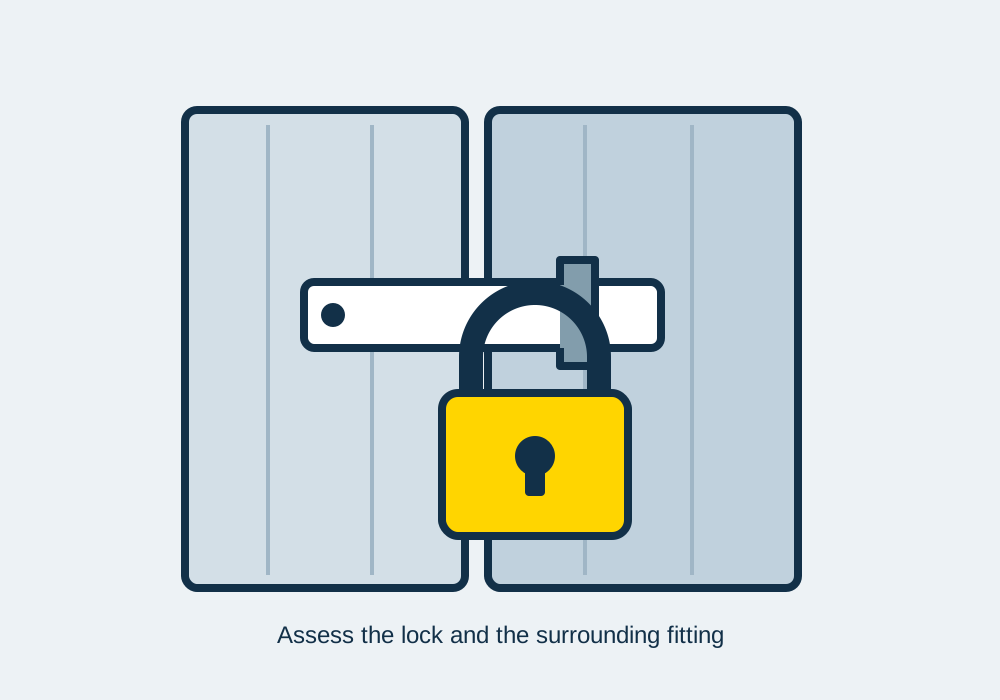
Illustration of a padlock securing a gate hasp
Service illustration; actual hardware and supported work vary.

01 / Service overview

Remove a lock only with the right authorization

A damaged or seized padlock can prevent normal access to a gate, locker or storage area. A missing key can create a similar access problem even when the lock itself is intact.

The service starts by identifying who owns or controls the secured property and who can authorize removal.

Removal scope

Superior Locksmith Service's documented commercial offerings include removal of old or damaged padlocks, including locks on gates and managed lockers. This page focuses on an authorized removal request and the condition of the hardware around the lock.

It does not provide cutting or bypass instructions, and it does not establish a right to access someone else's property.

The required outcome

Describe the location, what the padlock secures, why normal opening is unavailable and who can approve the work. Include whether you want to retain the lock if possible or expect it to be replaced.

The condition and arrangement determine the options; preserving every removed lock is not promised.

02 / What we handle

Three requests that should be distinguished

A key is missing but the lock appears intact

Explain who last controlled the key, whether an authorized spare may exist and why removal is being requested. A working lock with a missing key is different from one that is visibly damaged.

The assessment should consider the access requirement and agreed outcome rather than assuming the lock must be treated as defective.
The key is present but the lock will not operate

Describe whether the key enters, turns or has broken. Mention any visible corrosion, deformation or earlier attempted work.

The symptom helps define the request, but it does not establish the internal cause. Avoid adding force or unrelated products while waiting for advice suited to the actual hardware.

A managed locker or gate has an abandoned lock

Identify the manager or owner responsible for authorizing access and explain the property's process. A person describing a lock as abandoned does not settle ownership or permission.

Work should proceed only after the required authority is established, with the scope limited to the specified lock and secured area.

03 / Hardware check

Identify the entire locking arrangement

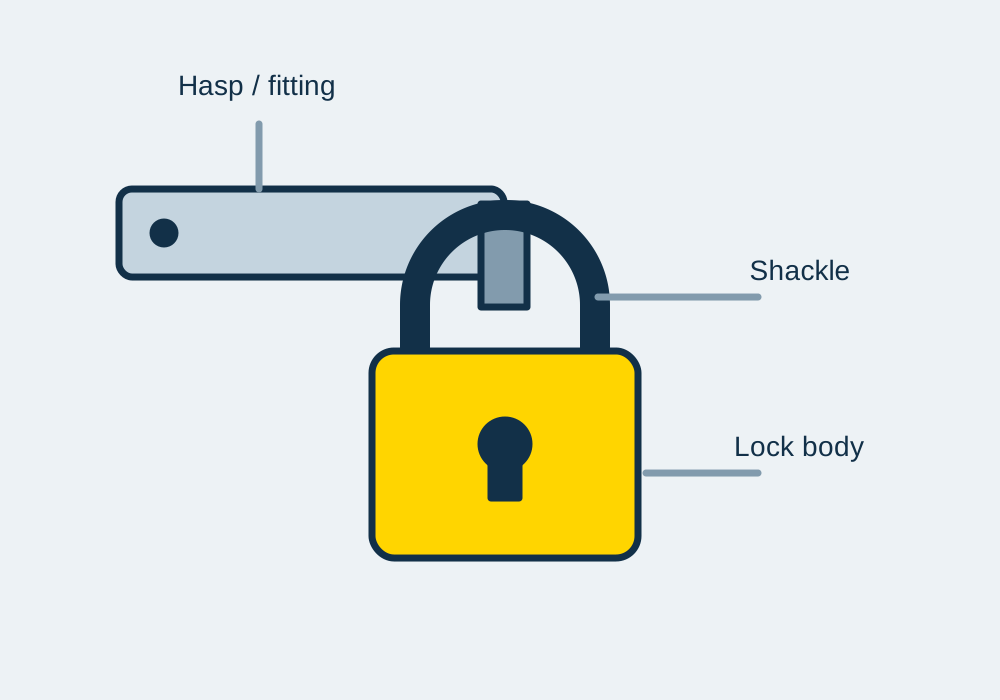
Look beyond the padlock — service hardware illustration
The shackle, hasp and surrounding fitting all affect the request.

Lock and fitting

A padlock is one part of an assembly. The shackle passes through a hasp, chain, staple or other fitting, and those components may be attached to a gate, door or locker.

Damage or pressure elsewhere in that assembly can affect the way the lock operates.

Show the whole assembly

Provide a photograph that shows the lock and the surrounding fitting, not only a close view of the keyway. Mention whether the fitting is loose, the gate has dropped or a chain is under tension.

Do not alter the arrangement to obtain a clearer photograph if doing so would create an access or safety problem.

Separate surrounding repairs

The assessment should distinguish the padlock from the hardware it secures. Removing a lock will not repair a broken hasp, a damaged gate post or a distorted locker door.

If further work is needed, ask which items are within the available service and which require another trade or the property manager.

04 / Before work begins

Confirm the person and property involved

Identify authority

For an individually owned gate or storage space, have identification and evidence of entitlement available. For a business or managed facility, identify the person who can approve access and explain any documentation the property requires.

Ask what the locksmith needs before the visit is arranged.

Shared or rented spaces

Rental, shared-storage and workplace situations can involve more than one party. Permission to enter a building does not necessarily authorize removal of a lock on an individual compartment.

The request should identify the exact gate, locker or unit and the scope of authority over it.

Resolve permission

Where ownership or access is disputed, resolve that question through the responsible parties before arranging physical work. This service description is about hardware and authorized access, not a determination of tenancy, possession or ownership rights.

The existence of a damaged lock does not change that distinction.

05 / Assessment and handover

Agree the removal outcome before work starts

  1. Define the outcome

    The discussion should establish whether the service objective is access, removal of a damaged lock, assessment of the surrounding fitting or a combination. It should also identify what is expected after the lock is removed.

    A gate or compartment may need a replacement locking arrangement before it can be left in normal use.

  2. Understand the approach

    Ask whether the proposed approach is expected to make the padlock unusable and what effect, if any, is anticipated for adjacent hardware. The answer depends on the condition and physical arrangement.

    No method should be assumed from the word “padlock,” and an undamaged lock or fitting is not a promised outcome.

  3. Assess retained fittings

    If you want to reuse the existing chain, hasp or keeper, make that preference clear before the scope is agreed. The technician still needs to assess their condition and suitability.

    A request to preserve a fitting cannot establish that a worn, bent or damaged component is appropriate to keep.

06 / Consider the options

Decide how the opening will be secured afterward

Replacement choice

Removal and replacement are separate decisions. If a new padlock is needed, compatibility includes the available space, the fitting it passes through and the environment in which it will be used.

Choosing by exterior size or appearance alone may not answer those questions.

Pedestrian gate hardware

For a pedestrian gate with an integrated latch or lock, the gate lock service page is the more relevant destination for that hardware. A padlock request should not be confused with gate-motor work or overhead garage-door work, neither of which is offered through this page.

Built-in storage locks

If a cabinet or storage door has its own built-in cylinder rather than an external padlock, use file-cabinet and storage-lock services. Identifying the type of lock helps route the enquiry without treating all storage access as the same repair.

07 / Prepare your request

Prepare the site for an assessment

Site access

State whether the lock is indoors or outdoors and whether the area is occupied or managed. Explain any gate, reception or site-access arrangements needed to reach it.

An authorized representative should be available to identify the correct lock and approve the defined work.

  • Give the actual property location and the lock's position on the site.
  • Describe what the lock secures and the problem preventing opening.
  • Note visible damage to the lock and surrounding hardware.
  • Explain who owns or manages the secured space.
  • State whether replacement locking is part of the request.
  • Mention any restrictions that affect access to the work area.

Working conditions

Keep people, pets and loose belongings clear of the area as directed for the work. If the lock secures equipment, a utility area or something under load, disclose that before the appointment.

The suitability of the task and working conditions needs to be assessed, not inferred from a photograph alone.

08 / What to review

Check the fitting and the access record afterward

Inspect the fitting

After removal, inspect the agreed opening or fitting with the person completing the work. If replacement hardware is included, confirm how it operates and who will receive the keys.

Any remaining damage to the gate, locker or hasp should be recorded as a separate item.

Update the record

For a managed facility, update the access record with the lock or compartment involved, the authorizing person and the outcome. Avoid including unnecessary details about private contents.

A clear record helps separate the completed hardware task from any ongoing property-management decision.

Plan replacement keys

If removal followed a lost key, review how keys for the replacement will be issued and stored. The business key handover guide can help organize that record.

Replacing a lock without deciding who should hold its keys leaves the administrative part of the request unfinished.

09 / Discuss the service

Discuss a specific removal request

Superior is based in Sherman Oaks and has an existing Los Angeles service area. Use the commercial locksmith page for the wider property service scope, or the contact page to describe the lock, authorization and location.

Availability and the supported work need to be checked for the actual request.

Exterior photographs can be discussed through the contact email. The website form has no upload field, so use it for the written description rather than referring to an attachment that cannot be included.

Do not disclose working access codes or sensitive records when a general description of the lock would be sufficient.

Common questions

Questions before you book

An authorized removal request can be assessed when the key is unavailable. The lock, fitting, site conditions and evidence of entitlement determine what can be agreed. Explain whether retaining the padlock matters; the service does not promise that every lock can be preserved.

Visible corrosion is a condition to report, not a complete diagnosis or a predetermined removal method. Describe how the key and shackle behave and show the surrounding fitting. The assessment should establish an appropriate scope based on the actual condition and authorized access requirement.

Not necessarily. If a fragment is inside the lock, broken-key extraction may be relevant. The underlying reason for the break still needs consideration. Tell the office whether you want the lock assessed for continued use or need an authorized removal outcome.

That depends on the hardware and the supported scope. Lock and latch work is different from structural gate, frame or door repair. Describe all visible damage before agreeing to work, and ask which items can be addressed and which need another provider.

Discuss authorized padlock removal

Describe the hardware, the problem and your location. Keep working codes and passwords out of the message.

Photographs of the lock face, door edge or key help us identify the hardware before a visit.

We use these details to respond to your request. See our privacy policy. Access work requires proof of ownership or authorisation.

Identification is required

For any work that provides access to a property, vehicle or safe, the technician will ask for photo identification and evidence that you are entitled to enter. Having that ready keeps the visit short.