
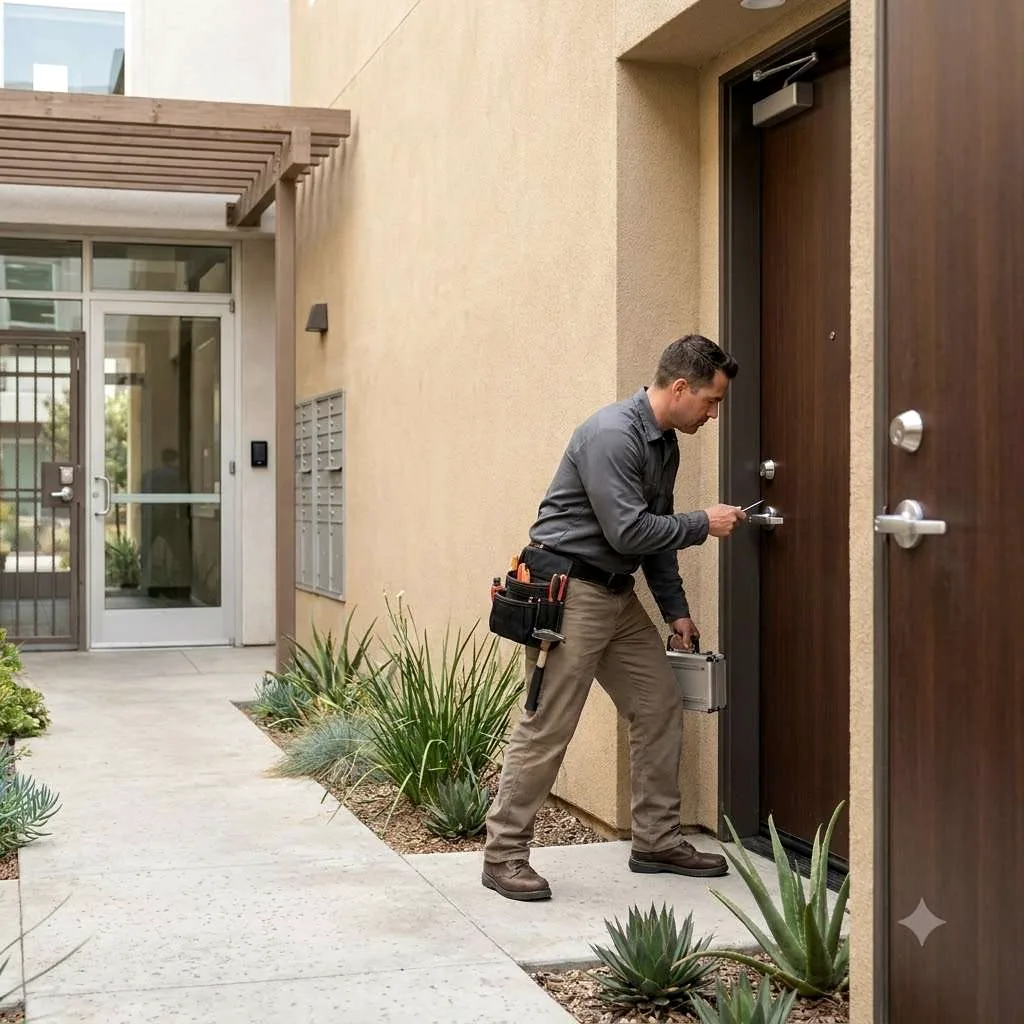
An apartment turnover involves more than collecting the unit key. A departing resident may also have a building fob, mailbox key, parking credential or access to a connected lock. Those items may be managed by different people. This checklist helps an authorized property representative keep the unit handover separate from shared-building access, then bring the two records together before the incoming resident receives access.
Identify who controls each entrance
Begin with the unit entrance, any separate storage area, mailbox, parking entrance and shared building door. Name the person or organization that can approve changes to each. A manager authorized to rekey a unit cylinder may not administer the lobby reader or control the mailbox. Mark an unknown administrator for follow-up instead of assuming one instruction covers every opening.
Record whether the unit is vacant, occupied or awaiting a scheduled handover. Keep tenant names, tenancy documents and access credentials in the property’s private records. A service enquiry needs the authorized contact and the work requested; it should not become a public record of who can enter the building.
Reconcile what went out and what came back
List the items issued to the departing household by purpose, not just by quantity. Count unit keys, building keys, fobs, remotes and mailbox or storage keys separately. Note returned, missing and unidentified items. A returned key confirms a physical item was handed back; it does not establish whether another copy exists.
For a controlled electronic entrance, ask its administrator which individual permissions need review. Do not assume changing the unit lock removes access through a shared reader. The access-control handover guide explains how to transfer responsibility for user accounts and credentials without sharing passwords.
Check the unit door while access is available
Observe normal operation of the latch, bolt and handle. Does the door close and secure through its intended routine? Does the key turn without lifting or pulling the door? Record the behavior you see rather than naming a failed component. A request to change who holds the key and a request to repair a binding door are different scopes, even when one visit may address both.
If the existing cylinder is compatible and the property representative approves it, rekeying the unit lock may change which key operates it. That page is specific to Sherman Oaks; confirm location and hardware with the team for other properties. Residential locksmith services describe the broader lock and key work. Shared or specially controlled doors require their own review before any change.
Prepare the incoming handover
For each item, record its purpose, intended recipient and who will issue it. The incoming resident should be able to identify which key opens the unit and which separate item operates a common entrance. Include model-specific instructions for any installed electronic lock and name the administrator who can manage user access. Do not pass along an old resident’s login as an incoming resident’s account.
Leave a visible pending item for a missing mailbox key, unverified parking credential or door fault. A full envelope of keys can still be an incomplete access handover. Close each item only after the responsible person confirms the agreed result.
A private turnover record
Copy these fields into the property’s existing management record:
Unit and authorized manager:
Turnover date and access permission:
Opening or system, and its administrator:
Items expected, returned, missing and newly issued:
Door operation observed and work approved:
Electronic permissions reviewed by:
Incoming recipient, acknowledgement and unresolved items:
Keep the working record restricted. It should not include key-cut photographs, usable codes or account recovery details. For a planned service request, send the relevant opening, observed issue and authorized contact through the contact page. The broader business key handover checklist covers organizational key custody; this apartment record focuses on the boundary between one unit and shared access.