
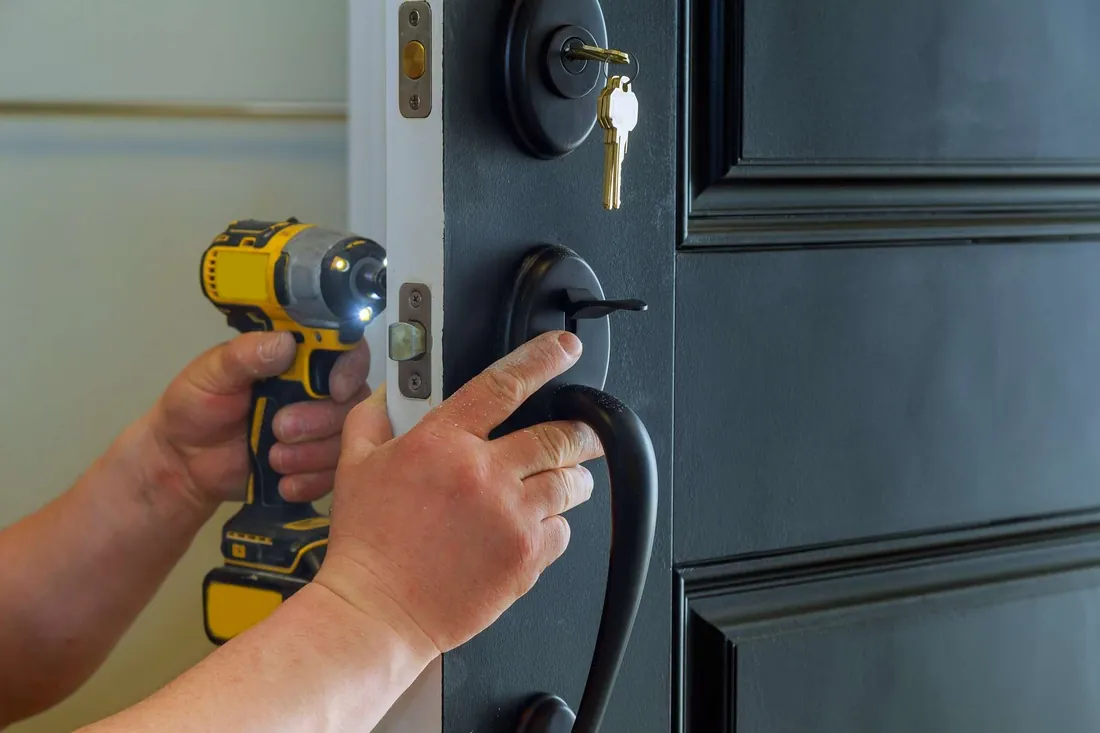
A useful maintenance calendar records changes in how a door operates. It does not prescribe one lubricant, adjustment or replacement interval for every lock. The goal is to notice a new symptom, connect it to a particular opening and arrange the right assessment before the observation is lost in a vague “door sticking” report.
Give each opening a stable name
List the doors covered by the record and the person responsible for observing each during normal use. A home might use “front entry” and “side entry.” A business can use a stable door ID that also appears in its commercial door hardware inventory. Keep shared and managed entrances separate from private ones so a resident or employee does not attempt work that belongs to the building representative.
Where known, note the lock, cylinder, closer or connected-device model. Different components on the same opening can have different instructions. Store the official product documentation with the property records rather than treating a whole door as a single item.
Observe operation without dismantling anything
During ordinary authorized use, record whether the latch catches, the key turns in its normal way, the handle feels secure and the door closes as intended. Describe a changed behavior: “The bolt turns freely with the door open but resists when closed” is more useful than “bad lock.” Note whether it occurs every time or only under particular conditions. Do not force the mechanism to complete a check.
For a door with a closer or exit device, record the normal closing and release behavior that staff already use. A slamming door, incomplete closure or failed latch should go to the responsible property contact. The door closer service page explains the service scope; it is not an instruction to adjust an unfamiliar closer. Hardware tied to exit or connected access needs project-specific review.
Use events as well as calendar dates
Choose an internal review interval that fits the opening’s use and any manufacturer instructions. The interval is a reminder to review open observations, not a universal service schedule. Update the record after a repair, user change, damage report or alteration to the door. If an issue recurs, keep the earlier entry and the work performed so the next assessment has history.
Do not close an item merely because someone applied a workaround. Record what was tested after service and any separate door or frame action still pending. If the opening cannot be secured or a required release is not working, follow the property's established response process rather than waiting for the next calendar review.
A compact entry to keep
Door ID and responsible contact:
Date and normal action observed:
Changed behavior, frequency and conditions:
Visible hardware model, if known:
Permitted photo reference:
Person notified and assessment requested:
Work completed, operation checked and remaining dependency:
Keep sensitive opening details in the property’s private file. For a residential lock issue, residential locksmith services describe the available work. For business doors, commercial locksmith services are the broader starting point. Send the relevant observations through the contact page without codes or usable key images.