
Sherman Oaks & Los Angeles
Door Closer Repair & Adjustment
A slamming door or one that stops before it latches may need closer adjustment, mounting repairs or replacement.
Tell us the hardware, location and what stopped working.
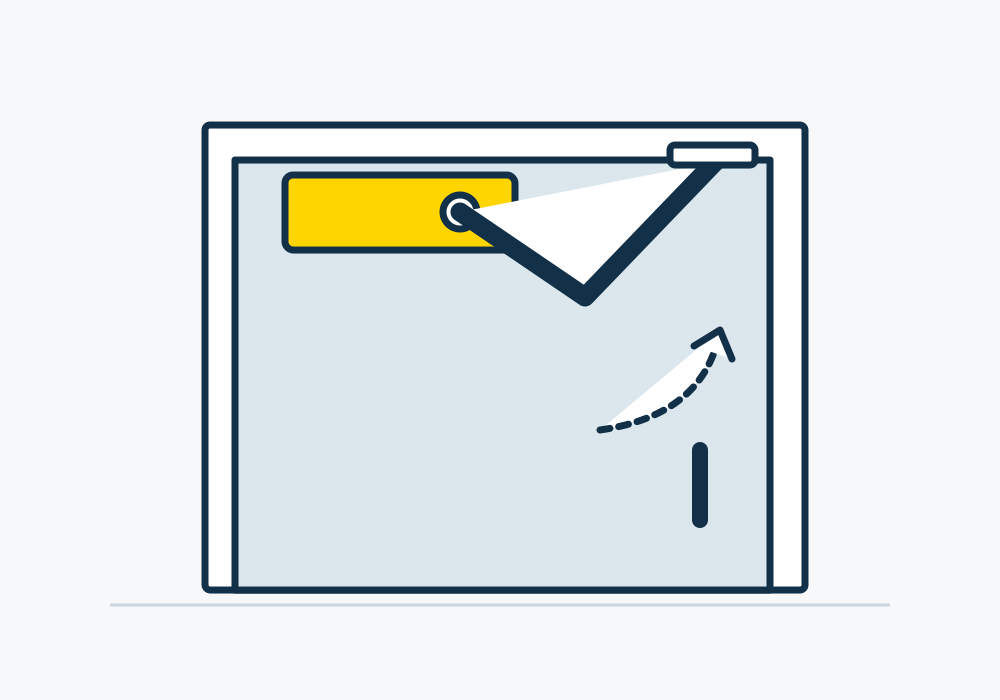
A closer should finish the job without a slam
A door closer controls a door's return toward its closed position. When that movement becomes too forceful, too slow or incomplete, the entrance can be difficult to use or fail to latch. The problem may be in the closer, its arm and mounting, or the resistance created by the door itself.
Superior Locksmith's commercial services include door closers and the hardware they work alongside. Requests commonly involve an entrance that slams, drags, rebounds or stops just before the latch engages. The assessment concerns the actual door assembly, not simply turning adjustment screws until one symptom disappears.
Describe the door material, approximate size, location of the closer and when the fault occurs. An exterior storefront entrance exposed to wind behaves differently from an internal office door, but neither should depend on users forcing it into the frame after every closing cycle.
Four patterns worth distinguishing
The door closes too hard
A change in controlled closing behavior can indicate an adjustment issue, wear or a failed closer. Report whether the problem began suddenly and whether the closer body shows visible leakage. Do not assume a unit that has lost fluid can be restored by repeated adjustment.
The door stops before it latches
Resistance from seals, hinges, the latch or an out-of-position keeper may prevent the final closure. The closer may also be unsuitable or incorrectly adjusted for the opening. Increasing force without checking the door can create a different problem while leaving the cause unresolved.
The arm or body moves at its fixings
Loose or damaged mounting points can change the closer's geometry and operation. Tell us whether the arm is visibly detached or the body shifts during use. Avoid operating a door with an unstable component more than necessary, and keep people clear of loose parts.
The door is difficult to open
Excessive resistance may involve the closer, door binding or another part of the assembly. The appropriate operation must consider the people using the entrance as well as its need to close and latch. A door that closes securely but is unreasonable to open is not a satisfactory result.
Check the door before changing the closer
A closer cannot straighten a dropped door, repair worn pivots or move a misplaced strike. If the leaf scrapes or has to be lifted, the technician needs to identify the source of resistance. Otherwise, additional closing force can accelerate wear and make the entrance harder to use.
The lock and latch should also be considered. A latch that strikes the wrong part of its keeper can stop a correctly operating closer from completing the cycle. A stiff or damaged latch may need storefront lock repair rather than a different closer.
Paired doors and electronically controlled entrances introduce other dependencies. Tell us about exit devices, electric strikes and any management requirements before parts are selected. The hardware must work together in the intended sequence.
If the door or frame requires structural work outside the locksmith scope, that needs to be identified rather than masked by adjustment. The proposed repair should explain what is causing resistance and which parts of the opening are included.
Adjustment, repair or replacement
An adjustable closer that is in serviceable condition may be set up to operate appropriately on the door. Adjustments depend on the product and installation. Randomly turning valves without identifying their function can impair control or damage the unit, so this page does not provide a universal screw-turning procedure.
Repair may involve correcting suitable mounting or arm issues where the hardware permits it. A closer with failed internal control, significant leakage or damage may require replacement. The choice should be based on its condition and compatibility rather than appearance alone.
A replacement must suit the door's size, use, mounting arrangement and any applicable requirements. Available space on the frame, door handing and the required arm configuration affect the selection. Existing holes may not match a different model, and the substrate needs to support the installation properly.
Confirm any required hold-open or closing behavior for the specific opening rather than adding a convenience feature by default. Fire-rated or designated exit assemblies may constrain the arrangement. The applicable requirements need to be verified for the actual property and hardware.
Why propping or disconnecting the door is not a repair
A wedge or disconnected arm may make a difficult door easier to pass through temporarily, but it removes the intended controlled closing function. That can leave an entrance unsecured or interfere with the role of the door in the building. The responsible manager should be involved in handling the fault.
Likewise, adding a heavier lock does not make a door close. If the closer stops short, the latch may never reach the keeper no matter how strong the lock is. The closing cycle and the locking function need to be tested together.
Report changes in wind exposure, new weather seals, recent floor work or other alterations near the door. A previously acceptable setup can behave differently after the resistance or clearance changes. That history may be more useful than an assumption that the closer has simply become weak.
Testing at ordinary opening positions
After adjustment or replacement, the door should be tested from the opening positions people actually use. A test from fully open alone may miss a door that fails to latch after a shorter swing. The technician should observe the final approach to the keeper and confirm the latch engages.
Check inside release, outside entry and any connected access-control operation that applies. Confirm that the repaired door is usable by its normal occupants and that it does not rely on someone adding a final push. Any continuing frame, hinge or latch fault should be recorded separately.
Keep the closer identification and service information with the building's maintenance records. If closing speed changes again or leakage appears, report it rather than repeatedly compensating with more force at the door. A return of the symptom may indicate an underlying issue rather than an adjustment that simply needs repeating.
Booking a door-closer assessment
For a Sherman Oaks or Los Angeles business, provide the address, door type and symptoms. Photographs of the entire door, closer body, arm and mounting points are useful. Tell us whether the opening is shared, managed, identified as fire-rated or connected to electronic access.
This work sits within commercial locksmith services. If a push bar fails to release or latch, see panic bar service as well. The service request should identify the whole complaint so a closer is not replaced for a fault in another part of the entrance.
Common questions
Questions before you book
Request door closer repair & adjustment
Describe the problem and include the hardware or vehicle details that apply. For photographs, use the email link on our contact page.
Identification is required
For any work that provides access to a property, vehicle or safe, the technician will ask for photo identification and evidence that you are entitled to enter. Having that ready keeps the visit short.