Serving Los Angeles County from Sherman Oaks, CA

Commercial Locksmith Services

Mortise Lock Repair

A binding key, loose handle or latch that will not retract needs a check of the mortise case, cylinder, trim and door alignment before choosing repairs.

Sherman Oaks & Los Angeles · Scope and compatibility checked before work

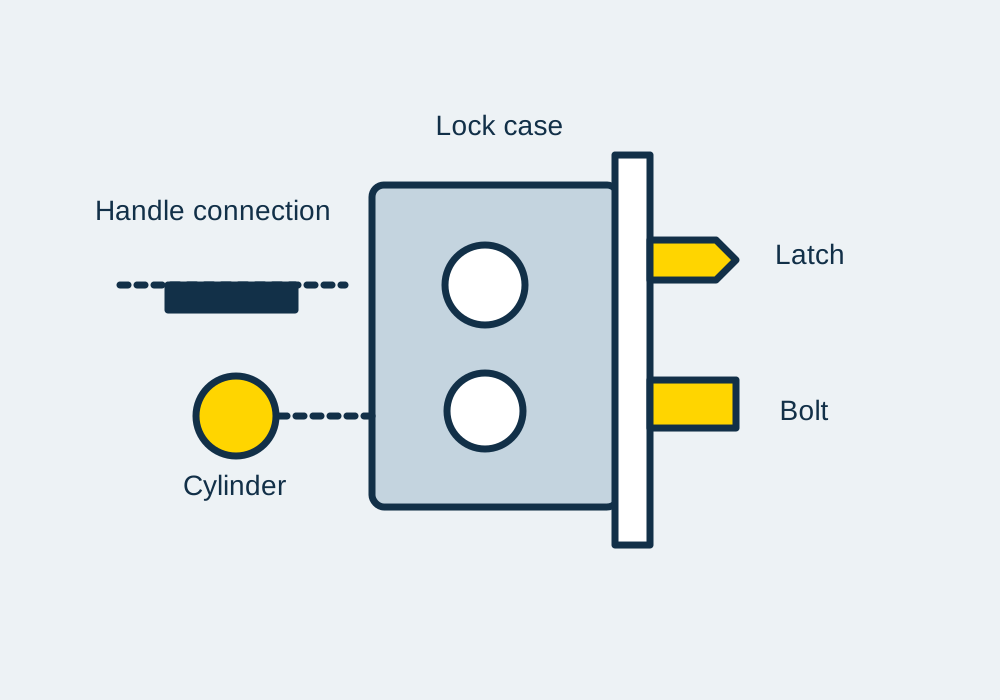
Illustration of a mortise lock case, latch and cylinder in a door edge
Service illustration; actual hardware and supported work vary.

01 / Service overview

Identify the lock inside the door

A mortise lock sits within a pocket in the door edge, with its operating parts connected to the handles, cylinder or other trim. That arrangement means a fault at the handle does not automatically identify the failed component.

The lock case, spindle, cylinder, strike and door alignment can each affect what the user experiences.

Repair scope

Superior Locksmith Service's existing residential and commercial content includes mortise hardware assessment and repair considerations. This focused service concerns a mortise lock that binds, fails to latch, has unreliable handle operation or no longer responds normally to its key.

It is separate from changing a working cylinder solely because you want different keys.

Describe the fault

Tell us what the door does, which side you are using and whether the fault occurs with the door open as well as closed. A photograph of the door edge and both handles can help identify the arrangement.

The actual lock and its condition determine which repair or replacement options can be supported.

02 / Describe the problem

Symptoms worth describing separately

The handle moves but the latch does not retract

Describe whether this affects one side or both and whether the handle feels loose, stays lowered or returns normally. The visible symptom may involve the trim connection or the mechanism within the case.

Do not assume that replacing the handle alone will restore operation, and avoid repeated force while the cause remains unknown.

The key turns differently when the door is closed

A lock that operates with the door open but binds against the frame needs the door and strike considered together. Pressure or misalignment may interfere with normal travel.

Explain whether lifting or pushing the door changes the symptom, but do not treat that workaround as a diagnosis or a permanent repair.

The door closes without staying latched

The latch must meet the corresponding frame opening and operate as intended. A failure to latch can involve positioning, wear or a mechanism that does not return normally.

Describe any recent closer, hinge or handle work. A separate issue elsewhere on the door can affect the mortise lock without the case itself being the only problem.

03 / Hardware check

Separate the case, cylinder and door condition

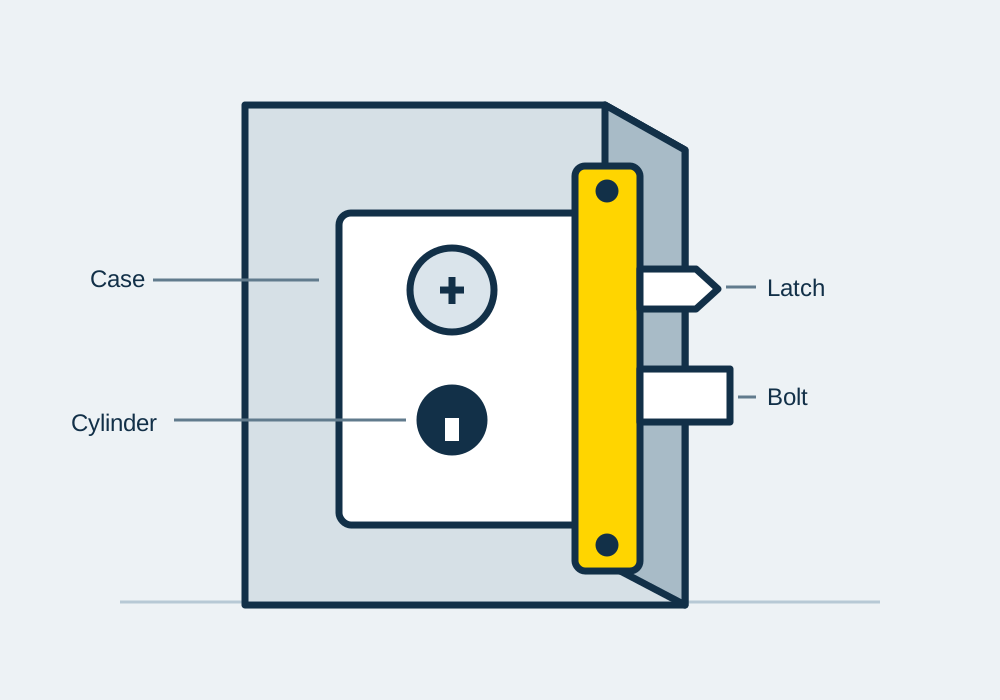
One assembly. Separate components. — service hardware illustration
The case, cylinder and handles can create different operating symptoms.

Cylinder and case

The cylinder is the part operated by the key; the lock case contains the mechanism within the door. Their relationship varies with the installed hardware.

A key problem can sometimes be addressed without replacing the whole case, while an internal case fault may remain even after a cylinder is changed.

Connections and condition

An assessment considers the visible fittings, the way the components interact and their operation in the door. Loose mounting, damaged trim, unsuitable connections or earlier alterations can affect what can be repaired.

If the door pocket or surrounding material is damaged, fitting a different case may not resolve the condition by itself.

The whole entrance

For an exterior business entrance, the storefront door lock repair page covers the wider door assembly. This page focuses on the mortise hardware within it.

The two may need to be considered together, but the scope should identify which parts require attention rather than automatically treating every entrance problem as complete lock replacement.

04 / What to review

Understand the function before choosing parts

Door function

Mortise locks are not all intended to behave alike. The required function may depend on whether the door serves a dwelling, an office, a shared entrance or another controlled space.

Handle operation, locking from each side and the key arrangement need to suit the actual application.

Compatible parts

Preserving the correct function matters when replacement is being considered. A product that fits the visible faceplate opening may have different operating behavior or connections.

Selection needs more information than a photograph of the finish or the dimensions of the exterior handle.

Building requirements

Managed buildings can also have approval requirements and established hardware standards. Identify the person who can authorize changes and provide any relevant existing specification.

Where a door assembly has restrictions or safety-related functions, these need appropriate review; a repair enquiry does not establish that any available component may be substituted.

05 / Consider the options

Assess repair and replacement on the findings

Repair or replace

Repair may be considered where the fault can be identified, suitable parts are available and the resulting arrangement remains appropriate for the door. Adjustment may address a fitting or alignment problem.

Replacement may be considered when the case or associated hardware is damaged, unsuitable or unsupported. The outcome should follow the assessment rather than a preset rule based on the age of the door.

Older hardware

Older hardware can present identification and availability questions. Clear photographs, manufacturer markings and any known history help, but they do not establish that an exact replacement exists.

If the original finish or visible trim matters, explain that before the options are narrowed.

What stays in place

Ask what each proposal includes: case work, cylinder work, trim, strike adjustment or a combination. Also ask what stays in place.

This distinction helps you understand whether a proposed repair addresses the observed fault, the desired key arrangement and the appearance you want to retain.

Previous changes

If earlier work changed the handles or cylinder, provide any record of the parts used. An assembly made from components selected at different times may need its connections reviewed together.

Knowing what changed can help explain why a previously usable door now behaves differently without assuming that the last fitted part is necessarily defective.

06 / Before work begins

Plan around the people using the entrance

Occupants and access

A repair on an occupied property needs an agreed access arrangement. Identify who will be present, which entrance is affected and how authorized occupants will move through the building while work is assessed.

Shared doors may require coordination beyond the person who first noticed the fault.

Business keys

For a business, distinguish a lock repair from a change in staff access. If a lost key or departure is part of the request, identify the doors that key operated and whether a master-key arrangement exists.

The master-key systems page explains that broader planning question; it should not be inferred from a single defective cylinder.

Home entrances

For a home, explain whether the mortise lock is the only means of securing that entrance. If other locks are involved, say which ones work and which are part of the request.

Avoid leaving the scope as “fix the front door” when several independently operated pieces of hardware are installed.

07 / Assessment and handover

Check more than the key at completion

  1. Check each function

    Completion checks should cover the agreed functions from the relevant sides of the door. The key, handles and latch should be considered together.

    Checking only a cylinder while the door is open does not show that the closed door latches and locks correctly against the frame.

  2. Record limitations

    Ask to have any remaining limitation explained. If the repair restores the lock but separate door movement still needs another trade, record that as an unresolved item.

    A hardware repair should not be described as correcting structural issues that were outside the work.

  3. Confirm the key arrangement

    Confirm whether the key arrangement changed. A repaired case can leave the existing cylinder and keys in place, while cylinder work may have a different result.

    Keep a record of what was actually fitted or serviced so a later enquiry can identify the hardware without repeating the entire identification process.

08 / Prepare your request

Details to gather before contacting us

Useful photographs

Photograph the lock face at the door edge, the handles or knobs on both sides and the part of the frame where the latch engages. Only take photographs from areas you can access with permission.

If the door is locked, do not force it open to obtain a better picture.

  • State the property type and actual location.
  • Describe the key, handle and latch symptoms individually.
  • Note whether the fault affects one or both sides.
  • Mention a recent hardware change or door adjustment.
  • Identify the person who can authorize the work.
  • Explain any requirement to retain the existing trim or keys.

Related property services

The commercial service page and residential service page provide the wider scope for each property type. Superior is based in Sherman Oaks; location and the supported hardware should be checked when arranging an assessment in the existing Los Angeles service area.

Common questions

Questions before you book

That depends on the fault and the installed components. The cylinder and case perform different tasks, so work on one is not automatically work on both. Describe what the key does and what the handle does. The assessment should identify which component or connection prevents normal operation.

They may be retained if their condition, connections and compatibility allow it. A change of lock case can affect the trim required. Explain any appearance or preservation requirement before parts are chosen, and ask which visible components a proposed repair would keep or replace.

No. Mortise hardware is one possible part of a storefront entrance, while a storefront assessment can also involve the strike, alignment and associated door hardware. Use the related storefront page if the whole entrance is difficult to operate or you are unsure which part is involved.

Leave the fragment undisturbed and describe what happened. Broken-key extraction may be the relevant starting point, followed by assessment of the reason it broke. Removing the fragment and correcting a binding mechanism are separate parts of the overall request.

Discuss mortise lock repair

Describe the hardware, the problem and your location. Keep working codes and passwords out of the message.

Photographs of the lock face, door edge or key help us identify the hardware before a visit.

We use these details to respond to your request. See our privacy policy. Access work requires proof of ownership or authorisation.

Identification is required

For any work that provides access to a property, vehicle or safe, the technician will ask for photo identification and evidence that you are entitled to enter. Having that ready keeps the visit short.