
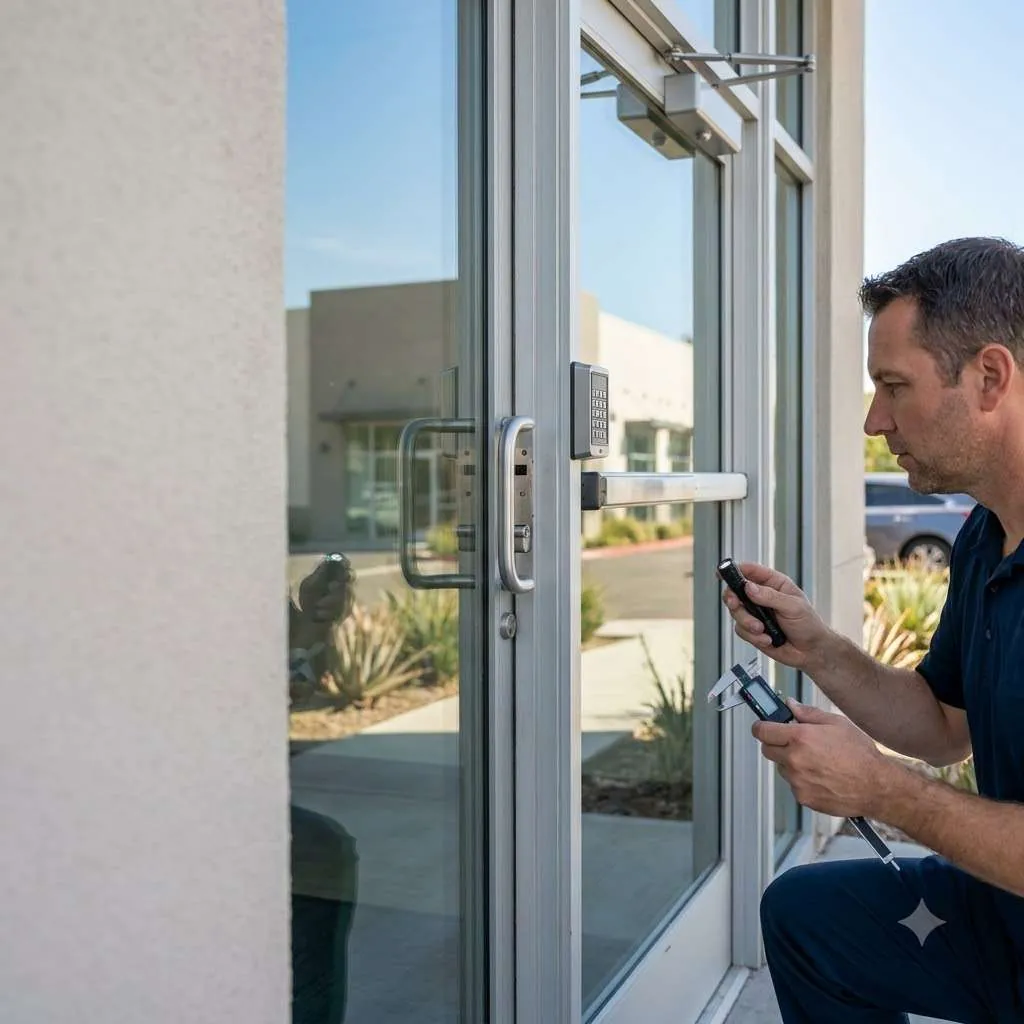
A storefront closing check should confirm the business’s approved securing routine and leave a clear record when it fails. Staff do not need to diagnose the lock or adjust a closer. They need to know which door is involved, which normal step changed and who can arrange an assessment.
Define the routine before the next closing
Name the manager responsible for each exterior opening, including an approved side or delivery door. Give every door a stable identifier. Note whether a landlord or another party controls any part of the opening. Keep the authorized operating sequence available to closing staff, including who to contact if a step cannot be completed.
If an opening has an exit device, connected access or other special function, the responsible property party must define the appropriate checks and response. This guide does not replace that opening’s instructions or decide whether a change meets building requirements.
Watch the door’s normal movement
During the approved closing routine, observe whether the door reaches its usual closed position and the latch engages where applicable. Note dragging, loose hardware, unusual slamming or a new need to push or lift the door. Do not repeatedly force the door to see whether it eventually catches.
If the door has a closer, record what it does without changing its settings. A door that slams or stops short may need a door closer assessment. A key that turns when the door is open but binds when closed may relate to alignment; the storefront door lock repair page describes how those symptoms are assessed.
Confirm the intended secured state
Use the approved key or credential sequence and the business’s method for checking the result. If the normal sequence fails, write down the exact step. A vague entry such as “front door bad” gives a technician little to work with. “D-01 closes, but the key needs the handle pulled before it turns” records a reproducible observation without guessing at a failed part.
Do not prop, strike, disconnect or block hardware to make the closing entry appear complete. If the opening cannot be secured or a required release does not operate, follow the business’s established response and notify the responsible manager. A failed check stays open until someone authorized confirms a working arrangement or service outcome.
Keep the report usable
Door ID and closing staff member:
Date and approved step attempted:
What happened, including any intermittent behavior:
Manager or property contact notified:
Temporary authorized arrangement, if any:
Service work, normal sequence retested and unresolved items:
Store the report with the business’s private closing record. Link a recurring symptom to the commercial door hardware inventory so the model and earlier work are available to the authorized manager. After service, tell closing staff whether the normal routine changed. For a work enquiry, send the door ID, observed symptom and authorized contact through the contact page.