
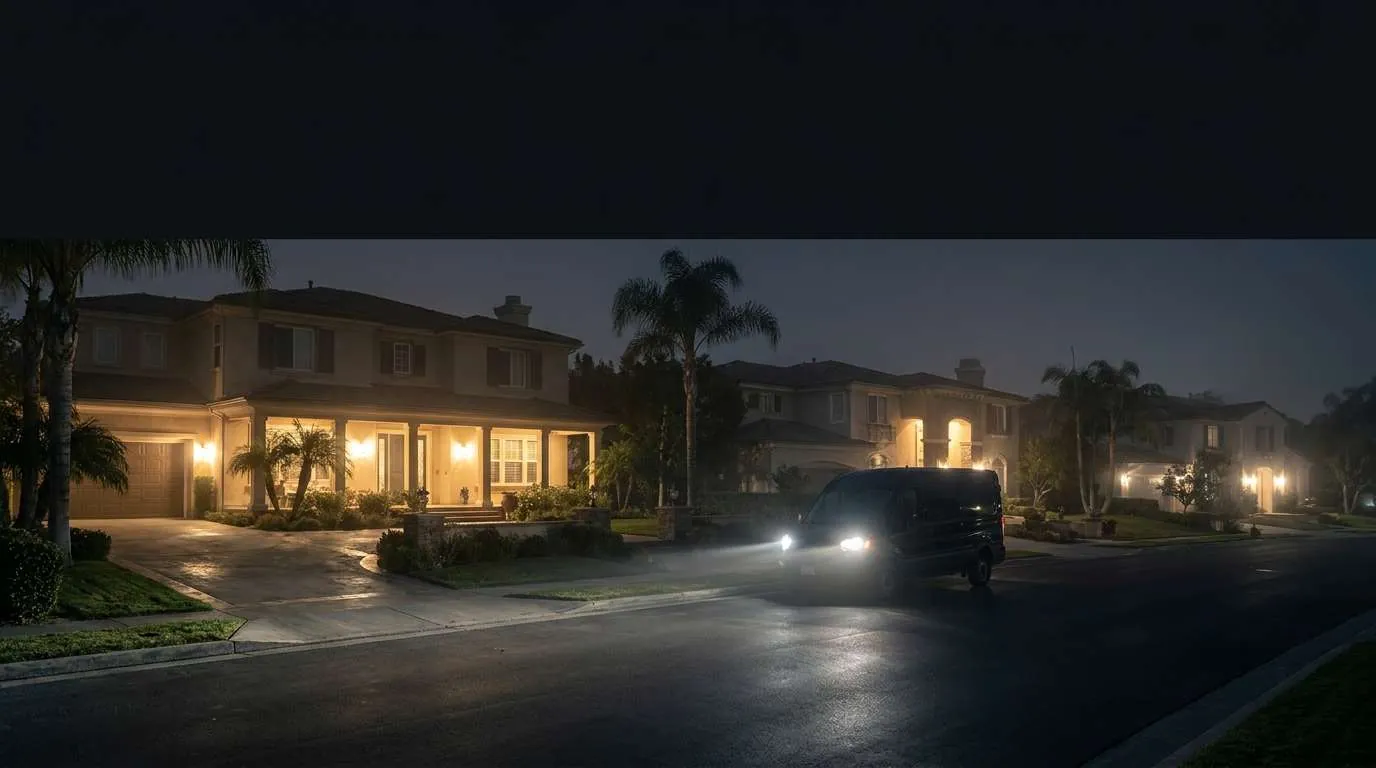
Emergency locksmith
Emergency locksmith assistance in Los Angeles
For situations where a door, vehicle or safe cannot be opened — or cannot be closed and secured. What to do first, what happens when a technician arrives, and what is required before anything is opened.
Emergency locksmith work
When something cannot be opened — or cannot be secured
Most locksmith emergencies are one of two things: you cannot get in, or you cannot make something secure. The first is inconvenient. The second is the one that matters more, because an opening that will not lock leaves a property exposed until it is dealt with.
This page deliberately does not quote arrival times. Travel across Los Angeles County varies too much by hour and route for any honest number to be printed in advance, and a technician may be finishing another job. When you call, our team can tell you where the nearest available technician is and give you a realistic estimate for that moment. That is a more useful answer than a promise made by a web page.
What follows is the practical part: what to do before help arrives, what usually happens on site, and what a technician will need from you.
Situations
The situations this covers
Locked out of a home
Keys inside, lost, or a lock that has stopped responding. Non-destructive entry wherever the hardware allows, after entitlement is confirmed.
Locked out of a vehicle
Keys shut inside or lost entirely. Handled under <a href="/automotive-locksmith-services-los-angeles-ca/">automotive work</a>, with proof of ownership required.
Premises that will not lock
A storefront or office door that fails at closing time. Securing the opening comes first; the permanent repair can follow.
Key broken in the only cylinder
Extraction so the lock can be used again, then finding out why the key failed.
After a break-in or attempted entry
Making the opening secure, then replacing damaged hardware. Report to the police before anything is altered.
Lock seized or failed
A cylinder that no longer turns, a bolt stuck out, or a mechanism that has given up entirely.
First steps
What to do before anyone arrives
The single most useful thing is to stop trying to force the door. Every locksmith has seen the aftermath: a bent latch, a split jamb, a bowed frame, a broken window, a door that now needs a carpenter as well. A lock problem is cheap. A door problem is not.
Work through the simple options first. Is there another door? A window left unlatched? Does a neighbour, family member or letting agent hold a spare? Has a key been left with someone at work? These solve a surprising proportion of lockouts in about five minutes.
If none of that helps, find somewhere safe to wait — ideally visible and, at night, lit. If you are outside a vehicle, wait away from traffic. If it is hot, do not wait in direct sun beside the car.
Then gather what the technician will need: identification, and anything that connects you to the property or vehicle. If your documents are locked inside, say so on the phone; there are usually other ways to establish the connection, and it is better to work that out early than on the doorstep.
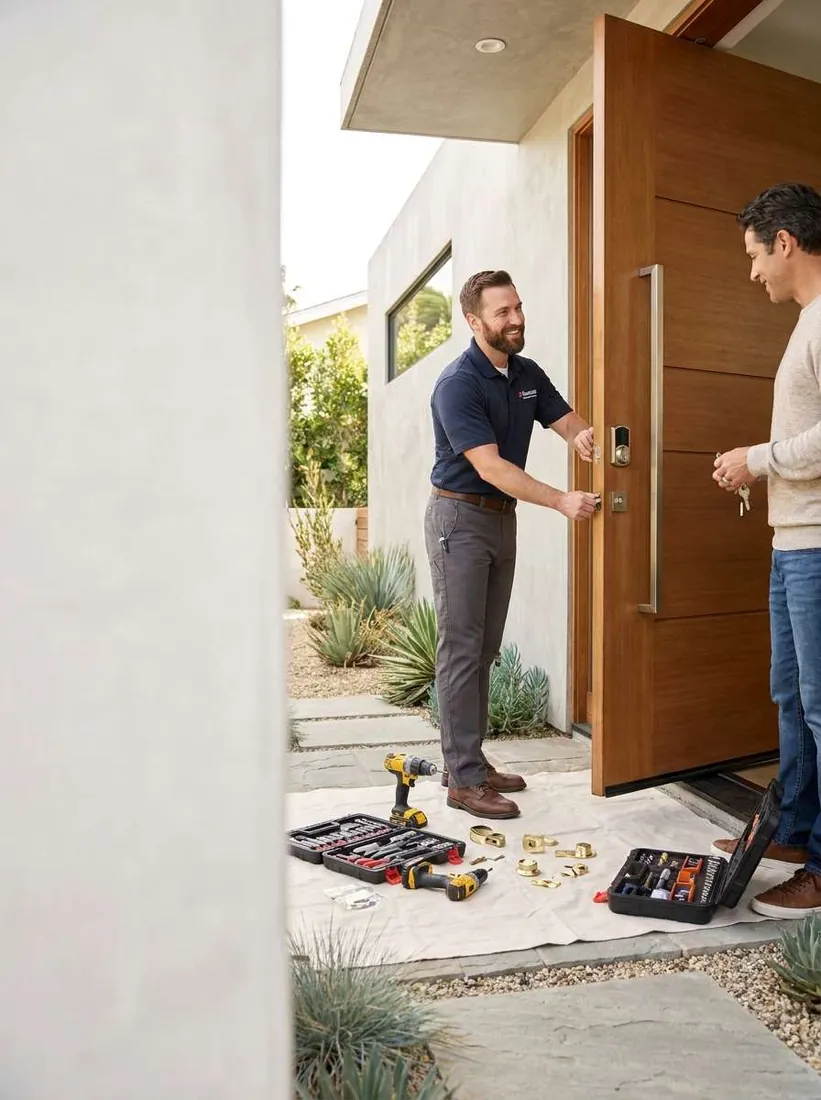
Forcing a door turns a lock problem into a door problem.
On site
What happens when the technician arrives
The sequence does not change with the time of day or the urgency of the call.
Identification
Photo ID and evidence you are entitled to enter. This comes first, every time, regardless of how urgent the situation is.
Assessment
The lock, the door and the frame are looked at together, and you are told which entry method is realistic for that hardware.
Entry
Non-destructive methods are used wherever the hardware allows. If drilling is the only route, that is explained and agreed before it starts.
Making it secure
The lock is tested, or replacement hardware is fitted so the opening can be locked again before the visit ends.
Methods
Non-destructive entry, and when it is not possible
Most residential and commercial cylinders can be opened without damage. The techniques vary — picking, bypassing the latch, decoding the cylinder — but the outcome is the same: the lock works afterwards and you keep using it.
There are limits, and they are worth knowing in advance rather than discovering on the doorstep.
High-security cylinders are designed specifically to resist these methods. That is what you paid for, and it applies to a locksmith as much as anyone else. A cylinder that has seized, corroded or already failed mechanically may not respond at all. A door that has been forced or damaged may not open even once the lock is defeated. And a key snapped deep in the plug sometimes has to come out before anything else can be attempted.
Where drilling is the only remaining option, it is a decision, not a default. The technician will explain why, what it means for the existing hardware, and what replacing it involves. Nothing is drilled without that conversation happening first.
After a forced entry
If a door or window has been forced by someone else, the priority order changes. Report it to the police before anything is altered — they may want to see the scene as it is, and an incident number is usually needed for an insurance claim. Photograph the damage. Then the opening can be secured, with temporary hardware or boarding if a permanent repair needs parts.
On the call
What to tell us on the phone
These are the details that decide what equipment a technician needs and how the call should be prioritised.
- Whether this is a home, a commercial premises, a vehicle or a safe
- Exactly where you are, including the nearest cross street
- Whether anyone is trapped or at risk — if so, call emergency services first
- What the lock is doing: will not turn, will not open, will not lock
- Whether the door or window has been damaged
- What identification and proof of entitlement you can show
- For a vehicle: the year, make and model, and whether any key remains
- Whether it is safe for you to wait where you are
Common questions
Questions about urgent locksmith calls
Request locksmith assistance
For an urgent situation, calling is faster. Use this form if you would rather write it down or attach a photograph.
Identification is required
For any work that provides access to a property, vehicle or safe, the technician will ask for photo identification and evidence that you are entitled to enter. Having that ready keeps the visit short.