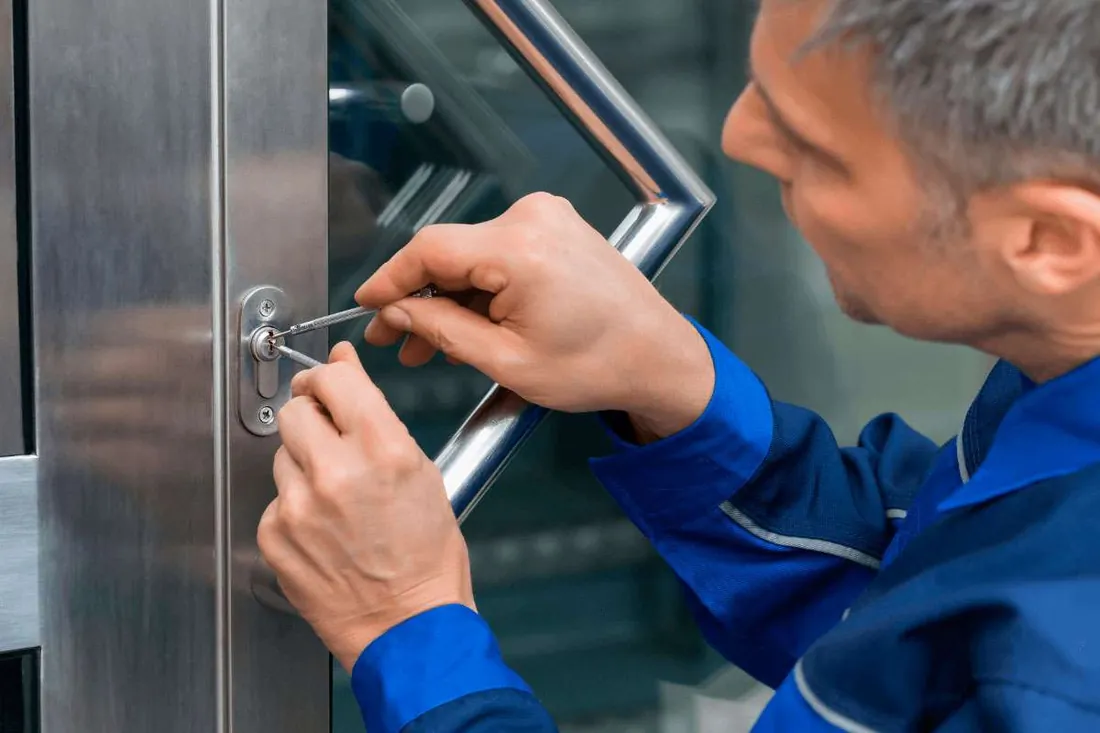
Residential Locksmith Services
Rekeying, lock repair and replacement, smart locks and authorised house lockouts for homes, condominiums and rental property.

Service area
A largely residential area in the central-north Valley, with housing that spans several post-war decades.
North Hills locksmith
North Hills sits north of Van Nuys and south of Granada Hills, bounded roughly by Nordhoff Street and the Ronald Reagan Freeway. It is predominantly residential, and its housing stock spans a wider period than many Valley neighbourhoods — early post-war tracts to the south, later construction from the sixties and seventies further north.
That range shows up directly in the hardware. Houses from different decades were built with different door preparations, different standard backsets, and different assumptions about what a front door should carry. A neighbourhood built in 1952 and one built in 1971 will present quite different problems to a technician, even when the symptoms sound identical over the phone.
Commercially the area is modest: strip retail and service businesses along Sepulveda Boulevard and Nordhoff Street, plus light industrial premises toward the freeway corridor.
On the ground
What a technician meets in North Hills depends heavily on which part of the area the property is in.
Single-storey homes with original hardware and seventy years of door movement behind them.
Heavier doors and standardised bore preparations that make modern hardware straightforward to fit.
More common here than in older neighbourhoods and consistently the weakest opening on the property.
Along the larger roads, with turnover rekeying and shared-entrance hardware.
Strip retail, service premises and light industrial units toward the freeway.
Common calls
A sample of the calls that come from this part of the service area.
The weakest opening on most units here, and among the cheapest to improve.
Hinge screws into softened timber; longer screws reaching the stud usually fix it.
Standardised bore preparations make upgrades simpler than on older stock.
Unit-door rekeying, with shared entrances remaining the building's responsibility.
Closer adjustment rather than lock replacement.
Keyed-alike planning, including any patio or side access.
In practice
A sliding patio door is a large piece of glass in a track, and the latch that comes with it is frequently the least substantial piece of security hardware on the whole property. On a house where the front door carries a decent deadbolt and a reinforced strike, the patio door may be held by a small hook engaging a thin keeper in soft aluminium.
There are two distinct weaknesses. The first is the latch itself, which can be forced or bypassed without much effort. The second is lifting: many sliding panels can be raised in their track far enough to come out of it entirely, which defeats the latch without touching it.
Both are inexpensive to address, and neither requires replacing the door.
A secondary lock — a keyed or thumb-operated bolt through the frame near the top or bottom of the panel — adds a second point of restraint in a different position, which makes forcing considerably harder. An anti-lift device, or simply adjusting the rollers and fitting screws into the upper track to limit vertical movement, stops the panel being raised out. A bar or dowel in the track prevents the panel sliding at all when nobody needs to use it.
For apartments in particular, the patio door is worth checking as a matter of course. It is often the only opening a ground-floor unit has that is not overlooked from the street.
Local context
The earlier tracts have the familiar profile of Valley post-war construction: single storey, attached garage, and hardware that in many cases predates every current occupant. Doors have had seventy years of seasonal movement, and the alignment work that follows is the steadiest part of the local job list.
Later construction brought heavier doors, deeper frames and more standardised bore preparations, which makes fitting modern hardware easier. It also brought two-storey plans with more exterior doors, and in some streets, attached patio and sliding-door access that needs its own attention.
The apartment stock along the larger roads is mostly from the sixties and seventies and generates the usual turnover work. Sliding patio doors are more common here than in the older neighbourhoods, and they are consistently the weakest openings on a unit.
Services
Each service page explains the work in full. The order below reflects what comes up most often in this part of the service area.
Rekeying, lock repair and replacement, smart locks and authorised house lockouts for homes, condominiums and rental property.
Assistance when a door, vehicle or safe cannot be opened, or when a lock has failed and the opening needs securing.
Storefront and office door hardware, master-key planning, panic bars, closers and commercial rekeying.
Car key replacement, transponder and fob programming, ignition work and authorised vehicle lockouts.
Camera placement, cabling, recorder setup and remote viewing for homes, offices and multi-unit property.
Readers, controllers, electric strikes and magnetic locks for buildings that manage entry with credentials rather than keys.
Coverage
Neighbouring communities with their own pages. Each describes the property types and lock work common to that area.
Process
The property or vehicle, the hardware involved and what changed. Photographs of the lock face and door edge help.
We confirm which service line applies and what the technician needs to bring, including how authorisation will be shown.
The hardware and the whole opening are inspected before anything is replaced.
Locks, keys or credentials are tested in place before the visit ends.
Common questions
Tell us the address or neighbourhood, the hardware involved and what it is doing.
For any work that provides access to a property, vehicle or safe, the technician will ask for photo identification and evidence that you are entitled to enter. Having that ready keeps the visit short.