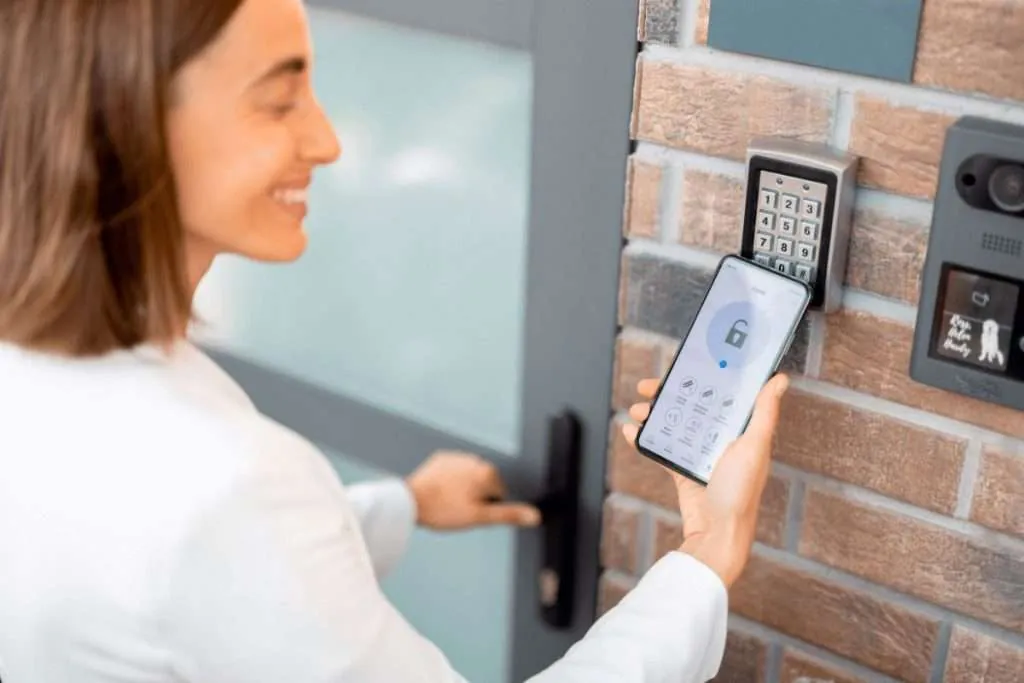
Residential Locksmith Services
Rekeying, lock repair and replacement, smart locks and authorised house lockouts for homes, condominiums and rental property.

Service area
Substantial residences with gated approaches, alongside a dense professional and retail district in the flats.
Beverly Hills locksmith
Beverly Hills divides neatly along Santa Monica Boulevard. North of it, the residential streets climb gently and then steeply, with houses on large lots behind planted frontages, and, further up, properties on winding canyon roads. South of it, the grid tightens into the flats: smaller lots, apartment buildings, and a transition into the commercial core.
That commercial core is unusual in density and character. The Golden Triangle carries luxury retail, while the surrounding blocks hold a heavy concentration of professional offices — legal, financial, medical, entertainment — in mid-rise buildings with controlled access and formal management.
Both halves share a requirement that shapes how work is done here: discretion, and rigour about authorisation. Properties are frequently managed by estate managers, business managers or property companies rather than occupied directly by the owner, so establishing who can authorise work is a first step rather than a formality. A separate commercial page covers the business side in more depth.
Local context
Residential properties north of Santa Monica commonly have a gate at the street, a long approach, and several structures on the lot: main house, guest house, pool house, garage, staff accommodation. Each has different users, which makes a designed key arrangement genuinely necessary rather than a refinement.
A meaningful proportion of these properties are run by an estate manager, a business manager or a management company. That is a practical advantage — there is usually a clear point of authorisation — but it means work is arranged through that person rather than with whoever answers the door.
The commercial buildings in the flats run layered credential access: street entrance, lobby, lift, floor, suite. Internal rooms holding client files or valuables are frequently the doors that matter most, and are the ones most often left on the same key as the suite entrance.
On the ground
What a technician meets in Beverly Hills depends heavily on which part of the area the property is in.
Several structures on one lot with different users, requiring a designed key arrangement rather than an accumulated one.
Street gates and long driveways, best handled with credentials that can be issued and withdrawn without hardware changing hands.
Layered credential access with formal management, where internal rooms often need separating from the suite key.
Common in both halves of the city, frequently installed long enough ago that the combination record has been mislaid.
High-value stock, service and rear access, and hardware that must work reliably without being conspicuous.
In practice
Two things distinguish work here from an equivalent job elsewhere, and neither is technical.
The first is authorisation. Where a property is run by an estate manager, a business manager or a management company, the person arranging the work is often not the owner and not the occupant. That is entirely normal and usually makes things simpler, because there is a defined point of authority. But it has to be established first: a technician cannot take a request at face value from whoever happens to be present, and for anything that changes access — rekeying, new credentials, opening a safe — written authorisation from the right person is the minimum.
The second is discretion, which is a practical matter rather than a courtesy. Knowing that a property has a particular lock, a particular safe, or a particular arrangement of access is information that should not travel. Work should be done without drawing attention, and records of it should not be discussed.
Those two things shape a sensible approach to key control on a large property. The people who need access — household staff, grounds staff, pool service, contractors — should hold only what their role requires, and that should be documented so it can be withdrawn cleanly when someone leaves. A single key that opens everything, handed out over years, is the arrangement that causes problems later.
In office buildings the same logic applies to internal rooms. A suite entrance admits everyone who works there; a file room holding client material should not. " Separating those doors, or putting a logged credential on them, is a small change " with a disproportionate effect.
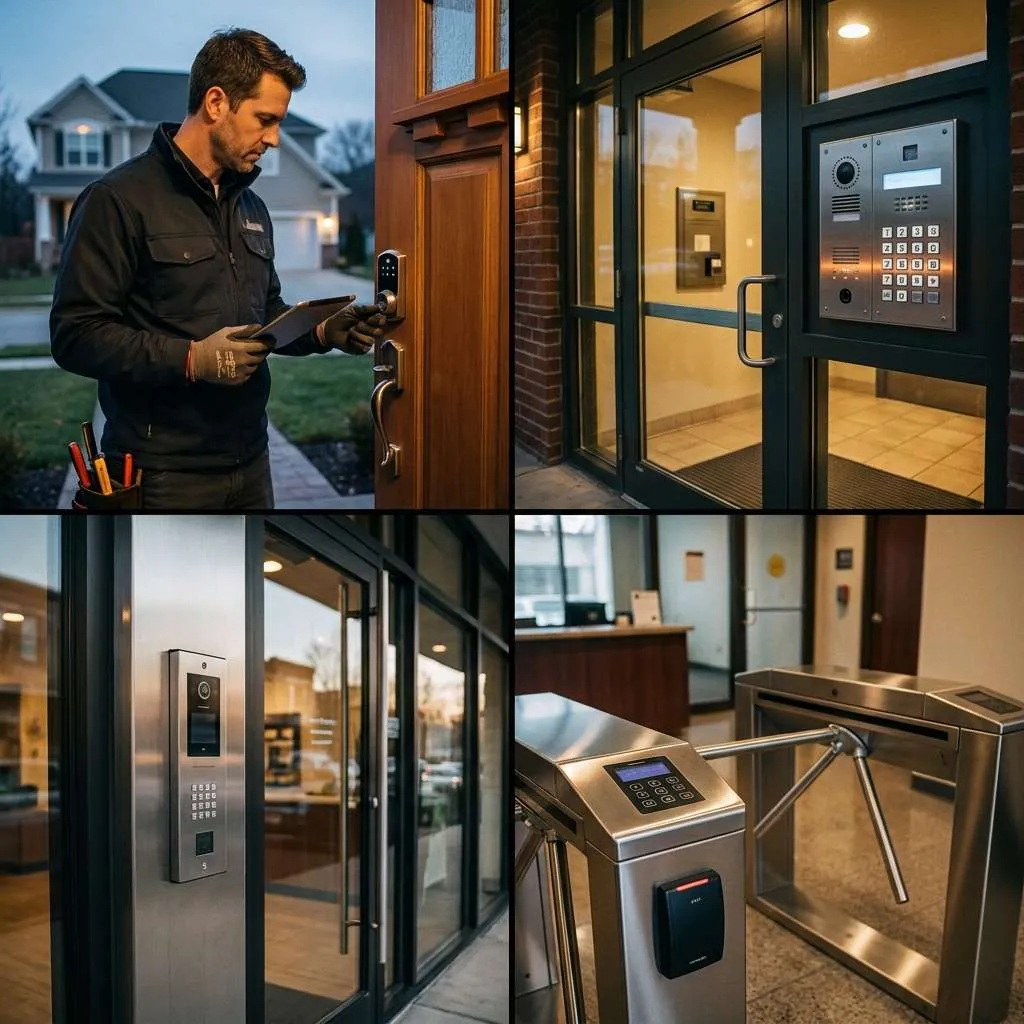
Common calls
A sample of the calls that come from this part of the service area.
A clear authorisation route, provided it is established before the visit.
Tiered keying so each group holds only what it needs.
Separating those rooms, or moving them to a logged credential.
Non-destructive opening where possible, then a fresh combination recorded off-site.
Targeted rekeying of the cylinders that person held, not a whole-property reissue.
Function without conspicuousness, particularly on frontages.
Services
Each service page explains the work in full. The order below reflects what comes up most often in this part of the service area.
Rekeying, lock repair and replacement, smart locks and authorised house lockouts for homes, condominiums and rental property.
Readers, controllers, electric strikes and magnetic locks for buildings that manage entry with credentials rather than keys.
Safe opening with proof of ownership, lock diagnostics, combination changes and installation planning.
Storefront and office door hardware, master-key planning, panic bars, closers and commercial rekeying.
Camera placement, cabling, recorder setup and remote viewing for homes, offices and multi-unit property.
Car key replacement, transponder and fob programming, ignition work and authorised vehicle lockouts.
Process
The property or vehicle, the hardware involved and what changed. Photographs of the lock face and door edge help.
We confirm which service line applies and what the technician needs to bring, including how authorisation will be shown.
The hardware and the whole opening are inspected before anything is replaced.
Locks, keys or credentials are tested in place before the visit ends.
Coverage
Neighbouring communities with their own pages. Each describes the property types and lock work common to that area.
Common questions
Tell us the address or neighbourhood, the hardware involved and what it is doing.
For any work that provides access to a property, vehicle or safe, the technician will ask for photo identification and evidence that you are entitled to enter. Having that ready keeps the visit short.