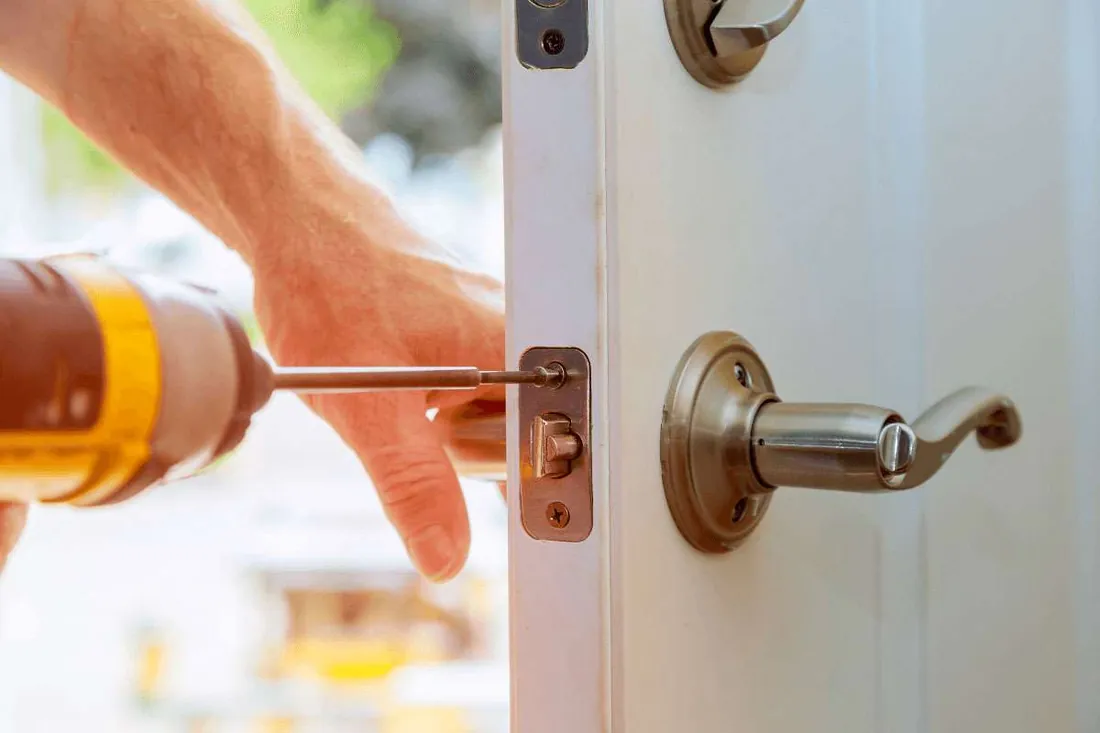
Residential Locksmith Services
Rekeying, lock repair and replacement, smart locks and authorised house lockouts for homes, condominiums and rental property.

Service area
A large northern Valley community shaped by its university, with a housing market to match and a substantial retail centre.
Northridge locksmith
Northridge is one of the bigger communities in the northern Valley, and its character is shaped substantially by California State University, Northridge. The campus sits near the centre of the area, and the housing around it reflects that: a high proportion of rentals, houses subdivided into shared occupancy, and apartment buildings oriented toward the academic year.
Away from the campus the area is conventional suburbia — post-war and later single-family homes on wide streets, with larger properties toward the northern and western edges. The Northridge Fashion Center anchors a substantial retail and commercial district, and there is a spread of professional and medical premises alongside it.
The result is two quite different rhythms of work. Around the campus, turnover rekeying, lost keys and shared-occupancy access questions dominate, concentrated heavily in late summer. In the suburban streets and the retail district, the work looks like it does anywhere else in the Valley.
Local context
Student housing changes the security question in a specific way. In a shared house or apartment, several people who did not choose each other hold keys to the same front door, and the group changes every year. Individual rooms often matter more than the front door, because that is where residents keep anything they care about.
Turnover is also concentrated rather than spread. A landlord with several units will need most of them dealt with in the same few weeks, which makes planning the work in advance considerably more efficient than reacting to it.
The suburban streets and the retail district behave conventionally. Family homes with three or four exterior doors, retail units with glass frontages and closers under heavy load, and professional premises with the usual suite-door and records-room questions.
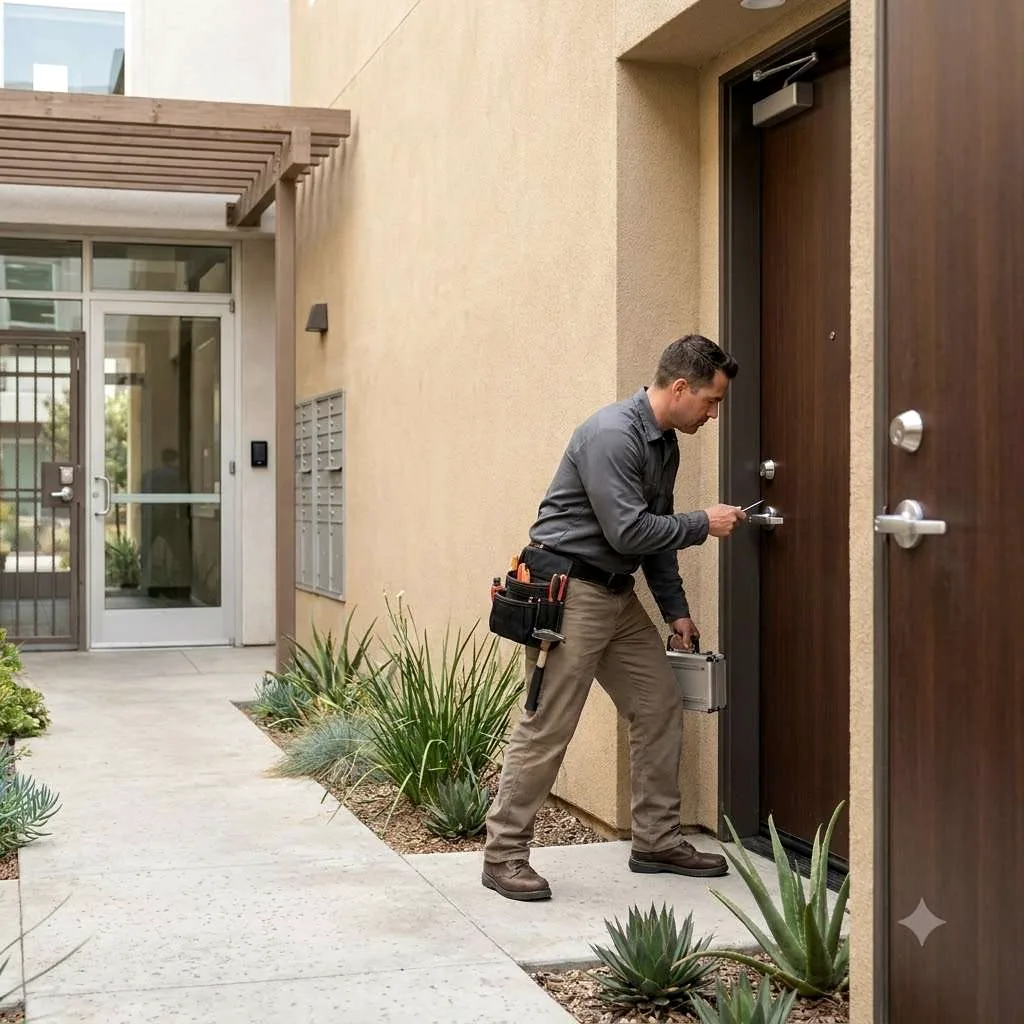
In practice
A house built for one family and let to five unrelated people creates a security situation the building was never designed for, and the front door is the least of it.
Everyone in the house has a key to the entrance, which is unavoidable and fine. What is usually missing is any way for an individual resident to secure their own room. Bedroom doors in a single-family house typically have privacy latches at best — the kind that can be released with a screwdriver or a straightened paperclip from the corridor, because they were designed to stop a child locking themselves in, not to secure anything.
For residents, that is often the thing that actually matters. Laptops, instruments, documents and everything else of value sit in a room that anyone in the house, or anyone a housemate lets in, can open in seconds.
Fitting keyed locks to individual room doors is straightforward and, in most cases, acceptable to landlords — though it should always be agreed first, because it changes the property. The usual arrangement gives each resident a key to their own room while the landlord holds a master that opens all of them, which preserves the access a landlord needs for inspections and repairs.
The front door still needs rekeying when the group changes. But rekeying the entrance while leaving five unsecured bedrooms behind it solves only half the problem.
Services
Each service page explains the work in full. The order below reflects what comes up most often in this part of the service area.
Rekeying, lock repair and replacement, smart locks and authorised house lockouts for homes, condominiums and rental property.
Storefront and office door hardware, master-key planning, panic bars, closers and commercial rekeying.
Assistance when a door, vehicle or safe cannot be opened, or when a lock has failed and the opening needs securing.
Car key replacement, transponder and fob programming, ignition work and authorised vehicle lockouts.
Readers, controllers, electric strikes and magnetic locks for buildings that manage entry with credentials rather than keys.
Camera placement, cabling, recorder setup and remote viewing for homes, offices and multi-unit property.
Common calls
A sample of the calls that come from this part of the service area.
Rekeying the front door, and possibly fitting interior room locks that did not exist before.
Planned rekeying across several doors in one or two visits.
Rekeying rather than recutting, because the key is connected to an address.
Often what residents actually want, and rarely present in a house originally built for one family.
High cycle counts wear closers fast; the latch stops engaging long before the lock fails.
Non-destructive entry after ownership is confirmed; the level and row help.
On the ground
What a technician meets in Northridge depends heavily on which part of the area the property is in.
Multiple unrelated residents on one front door, changing annually, with interior room locks often mattering more than the entrance.
Conventional post-war and later housing across most of the area, with standard rekeying and alignment work.
A substantial commercial district with high-cycle doors, closers under load and back-of-house access.
Where keys are lost frequently, codes cost nothing to reissue and can be changed the moment a tenancy ends.
Large parking areas around the university and the retail centre, where vehicle lockouts are common.
Process
The property or vehicle, the hardware involved and what changed. Photographs of the lock face and door edge help.
We confirm which service line applies and what the technician needs to bring, including how authorisation will be shown.
The hardware and the whole opening are inspected before anything is replaced.
Locks, keys or credentials are tested in place before the visit ends.
Coverage
Neighbouring communities with their own pages. Each describes the property types and lock work common to that area.
Common questions
Tell us the address or neighbourhood, the hardware involved and what it is doing.
For any work that provides access to a property, vehicle or safe, the technician will ask for photo identification and evidence that you are entitled to enter. Having that ready keeps the visit short.