
Focused service
Broken key extraction
Removing a snapped key from a cylinder without driving the fragment deeper or damaging the lock — then working out why the key failed.
Broken key extraction
Half the key is in the lock. What happens now?
A key snaps and half of it stays in the lock. The door is now neither open nor usable, a spare key will not fit past the obstruction, and whatever you do in the next few minutes largely determines how difficult the repair becomes.
The single most useful thing is to stop. A fragment sitting near the face of the plug can usually be drawn out in minutes. The same fragment pushed a centimetre deeper, or glued to the wafers by an improvised attempt, turns a short job into cylinder work.

Method
How extraction actually works
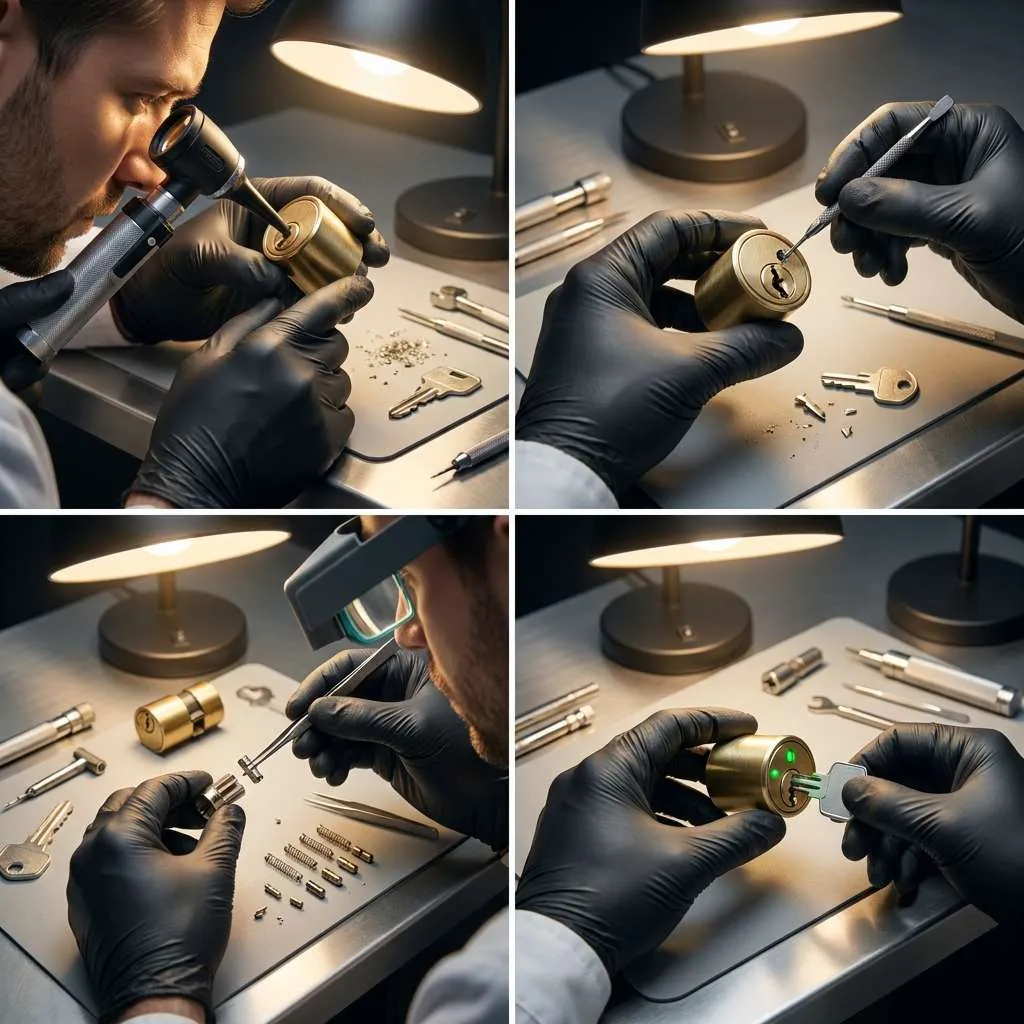
Purpose-made extractors are thin, stiff blades with a hook or barb on one edge. They slide into the keyway alongside the fragment, catch on a cut or the edge of the blade, and draw it out along the axis of the keyway. Two are often used together, one on each side, so the fragment comes out straight rather than twisting and jamming.
A complication: the pins or wafers are pressing down on the fragment the whole time. Lifting that pressure slightly — and only slightly — while pulling makes the difference between a clean withdrawal and a fragment that digs in. That is a matter of feel more than force.
Where the fragment sits deep, or the break is ragged, the cylinder may need removing from the door so it can be worked on from both ends. That is routine and does not damage anything, though it takes longer than working through the face.
Once the metal is out, the lock is tested with a good key. If there was roughness or binding that contributed to the break, that gets dealt with then — otherwise the next key will do exactly the same thing.
Common cases
Where keys tend to break
Front and back door cylinders
The most common, usually on a key that had been getting stiff for weeks.
Padlocks and gate locks
Exposure and corrosion make both the lock stiff and the key brittle.
Car ignitions
A smaller, more delicate cylinder. If the key carried a transponder, the electronic half still needs resolving afterwards.
Car door locks
Often unused for years on a vehicle opened by remote, so the cylinder has seized quietly while nobody was looking.
Mailbox and cabinet locks
Small, lightly built keys that fatigue quickly with daily use.
Mortise locks on older doors
Long keyways and heavier mechanisms; extraction may need the lock body removed.
Before you call
What helps when you call
Most of these decide whether the fragment can be taken out through the face or whether the cylinder needs to come off the door.
- Whether any part of the key is protruding
- Whether a spare key exists
- What kind of lock it is: door cylinder, padlock, ignition, cabinet
- Whether the key was becoming stiff before it broke
- Whether anything has already been tried
- For a vehicle: the year, make and model, and whether the key had a chip
- A photograph of the keyway, and of the piece you are holding
Common questions
Broken key questions
Request broken key extraction
Tell us what kind of lock it is and whether any part of the key is protruding.
Identification is required
For any work that provides access to a property, vehicle or safe, the technician will ask for photo identification and evidence that you are entitled to enter. Having that ready keeps the visit short.