
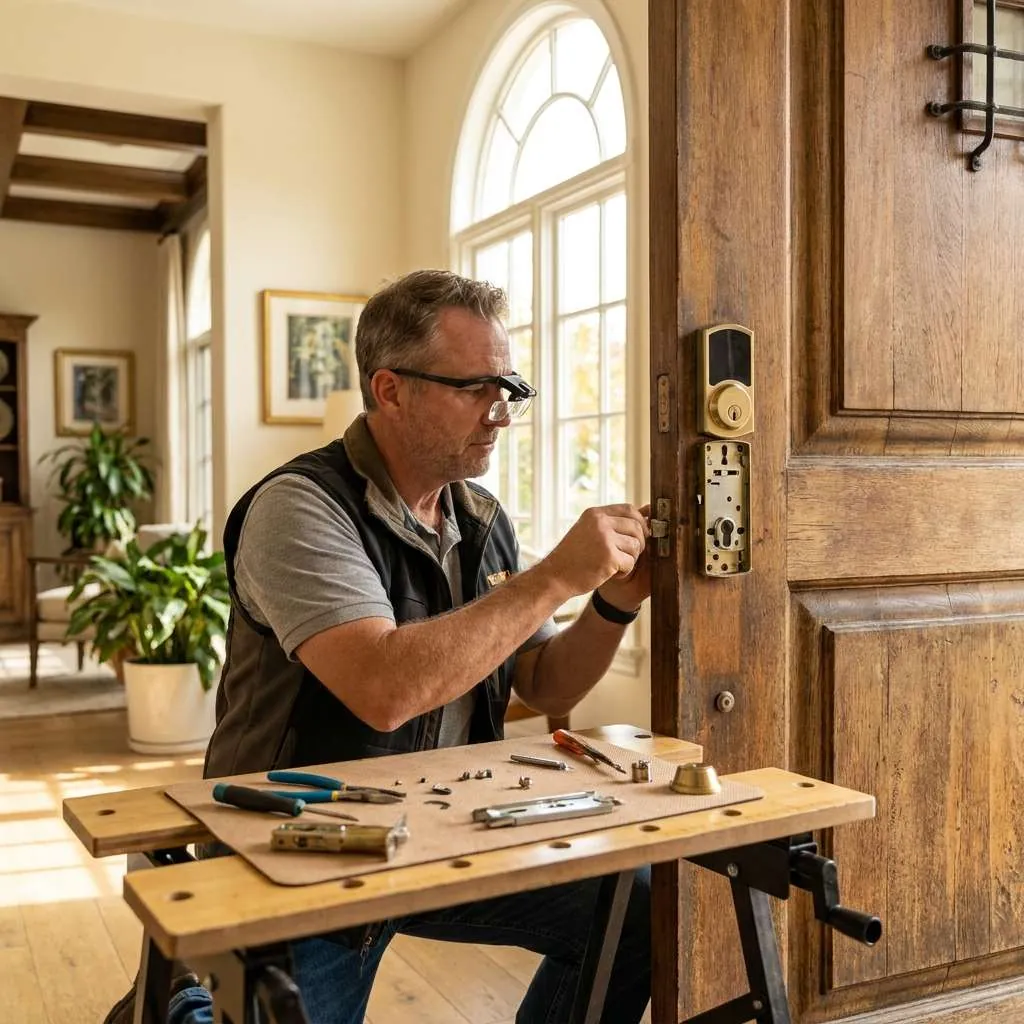
Lock repair in Sherman Oaks
Lock repair in Sherman Oaks, CA
Diagnosing sticking keys, bolts that will not throw and doors that will not latch — and finding out whether the lock is the problem at all.
Lock repair in Sherman Oaks
Start with the door open
There is one test that settles most lock complaints in about ten seconds, and it costs nothing: open the door fully and operate the lock in free air.
If the key turns smoothly and the bolt extends fully with the door open, the cylinder and the lock body are healthy. Whatever is going wrong is happening because of where the door sits relative to its frame — the strike, the hinges, the gap. Replacing the lock would change nothing, because the new bolt would meet the same misplaced strike.
If it binds even with the door open, the fault is inside the lock, and that is a different conversation. Sherman Oaks generates plenty of both, because so much of the housing north of Ventura is old enough to have moved and old enough for the hardware to be genuinely worn.

In detail
Why doors move, and what it takes to correct them
Doors are timber, or timber-cored, hanging from three screws per hinge into a frame that is itself fixed to a building which settles. Over decades, all of those move.
The most common failure by a wide margin is hinge screws working loose in softened timber. The door drops a few millimetres at the leading edge — invisible to the eye, entirely sufficient to make a bolt catch on the strike. The fix is often as simple as replacing the short factory screws with longer ones that reach past the jamb into the framing stud, which pulls the door back up and holds it.
Frames shift with seasonal humidity, which is why some doors bind in winter and behave perfectly in summer. Strike plates that were positioned correctly for the original door no longer line up. Latches wear and stop protruding as far as they did. On a door with a closer, the closer may simply have stopped bringing it fully home.
The corrective work is usually modest: longer hinge screws, repositioning or enlarging the strike pocket, easing a mortise, adjusting a latch or a closer. Where the lock genuinely is at fault, springs, tailpieces, followers and cylinders can frequently be replaced without changing the whole unit.
Options
What gets repaired rather than replaced
A surprising amount of a door assembly is serviceable. Replacement is for hardware that is genuinely worn out or was never right.
Hinge screws and door position
Longer screws into framing, which lifts a dropped door back into place.
Strike plate and pocket
Repositioned or enlarged so the bolt passes cleanly.
Latch adjustment
Where the latch no longer protrudes or engages fully.
Cylinder servicing
Cleaning decades of dust and hardened lubricant from a stiff plug.
Springs and followers
Internal components that fail long before the lock body does.
Mortise lock rebuild
Stripping and re-springing an older lock case rather than cutting the door.
Key cut from code
Restoring the original profile where a worn key is the real problem.
Closer adjustment
On doors with one, where the latch never engages because the door stops short.
Common cases
Symptoms and what they usually mean
Key turns open, binds closed
Alignment. The bolt is catching the strike. Hinges or strike position.
Key stiff in every position
A worn or dirty cylinder, or a key worn thin from years of copies.
Bolt throws only part-way
An obstruction, a shallow strike pocket, or a failing lock body.
Door will not stay latched
The latch is not engaging, or a closer is not pulling the door home.
Handle turns but nothing happens
A broken spindle, follower or internal linkage.
Binds in winter, fine in summer
Timber movement with humidity, on a door with little clearance left.
Before you call
What helps when you call
- Whether the lock binds with the door open as well as closed
- Whether the problem appeared suddenly or developed gradually
- Whether it varies with the season or the time of day
- Roughly how old the door and hardware are
- The brand on the lock face if it is visible
- Whether the key looks worn compared with an old spare
- Whether anything has been changed recently on the door
- A photograph of the lock face, the door edge and the strike
Process
How the visit runs
Describe it
The property or vehicle, the hardware involved, and what changed before the problem started.
Confirm the service
We confirm what applies and what the technician needs to bring, including how authorisation will be shown.
Diagnose on site
The hardware and the whole opening are inspected before anything is replaced.
Complete and test
Everything is tested in place before the visit ends.
Common questions
Lock repair questions
Request lock repair in Sherman Oaks
Tell us whether the lock binds with the door open as well as closed — that one answer narrows it down considerably.
Identification is required
For any work that provides access to a property, vehicle or safe, the technician will ask for photo identification and evidence that you are entitled to enter. Having that ready keeps the visit short.