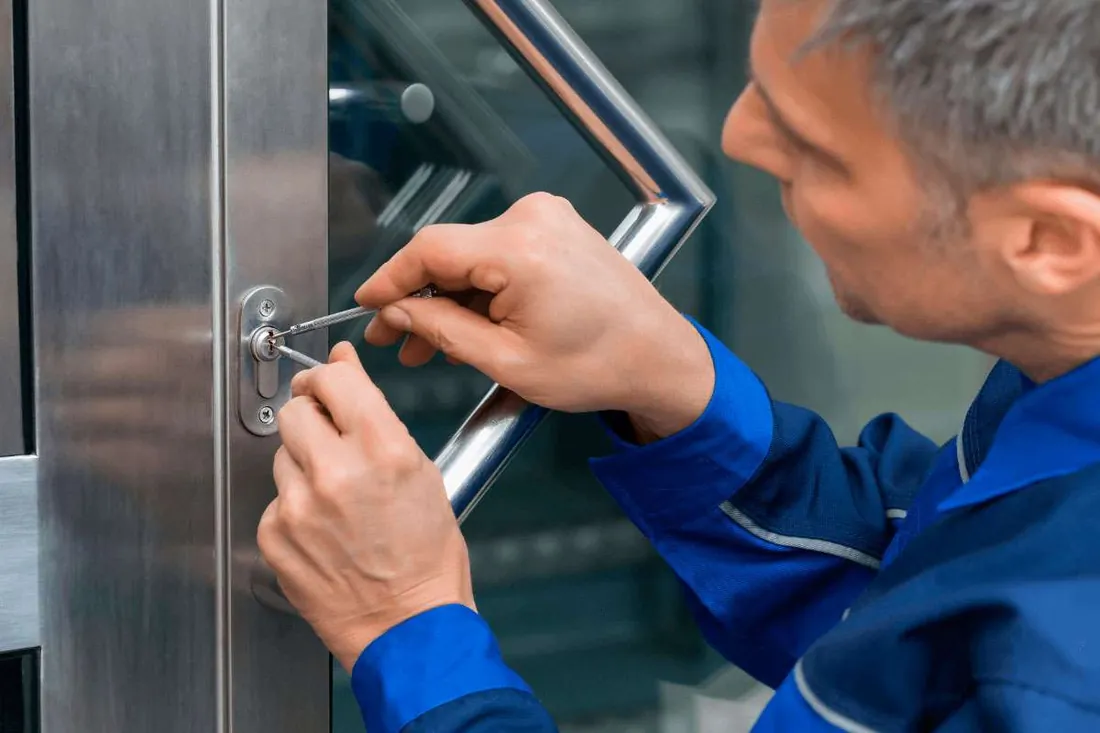
Residential Locksmith Services
Rekeying, lock repair and replacement, smart locks and authorised house lockouts for homes, condominiums and rental property.

Service area
A broad, mixed residential and commercial district between the Westside centres, with an unusually even spread of property types.
West Los Angeles locksmith
West Los Angeles occupies the ground between Santa Monica, Westwood, Century City and Culver City — less a single centre than a broad, mixed district that connects several others. Its character is a genuine mixture rather than a dominant type.
The housing runs from single-family streets through duplexes and small apartment courts to larger apartment buildings, with a substantial rental proportion throughout. Much of it dates from the post-war decades, with steady later infill and rebuilding.
Commercially it is dominated by small businesses rather than large premises: service shops, restaurants, professional offices, workshops and trade counters along Pico, Olympic, Santa Monica and Sawtelle. These are mostly owner-operated, which makes commercial work straightforward to arrange.
Local context
Because the property mix is so even, this is one of the few areas where the full range of ordinary locksmith work turns up in more or less equal measure. A week here can move between a single-family rekey, an apartment turnover, a shop door closer, a lost car key and a duplex where one unit has changed hands.
The residential stock is mixed enough in age that hardware varies noticeably street to street. Post-war houses have the familiar alignment problems; later infill has standardised preparations; older pockets retain original fittings.
The small-business character of the commercial frontage means the person calling is usually the person who can authorise the work, and usually the person who will be there when the technician arrives. That removes a step that slows commercial jobs in larger buildings.
In practice
Not every area has a distinctive locksmith problem, and it would be dishonest to invent one. What West Los Angeles has instead is a very even spread of ordinary work — which is a good opportunity to be specific about what “ordinary” should look like when it is done properly.
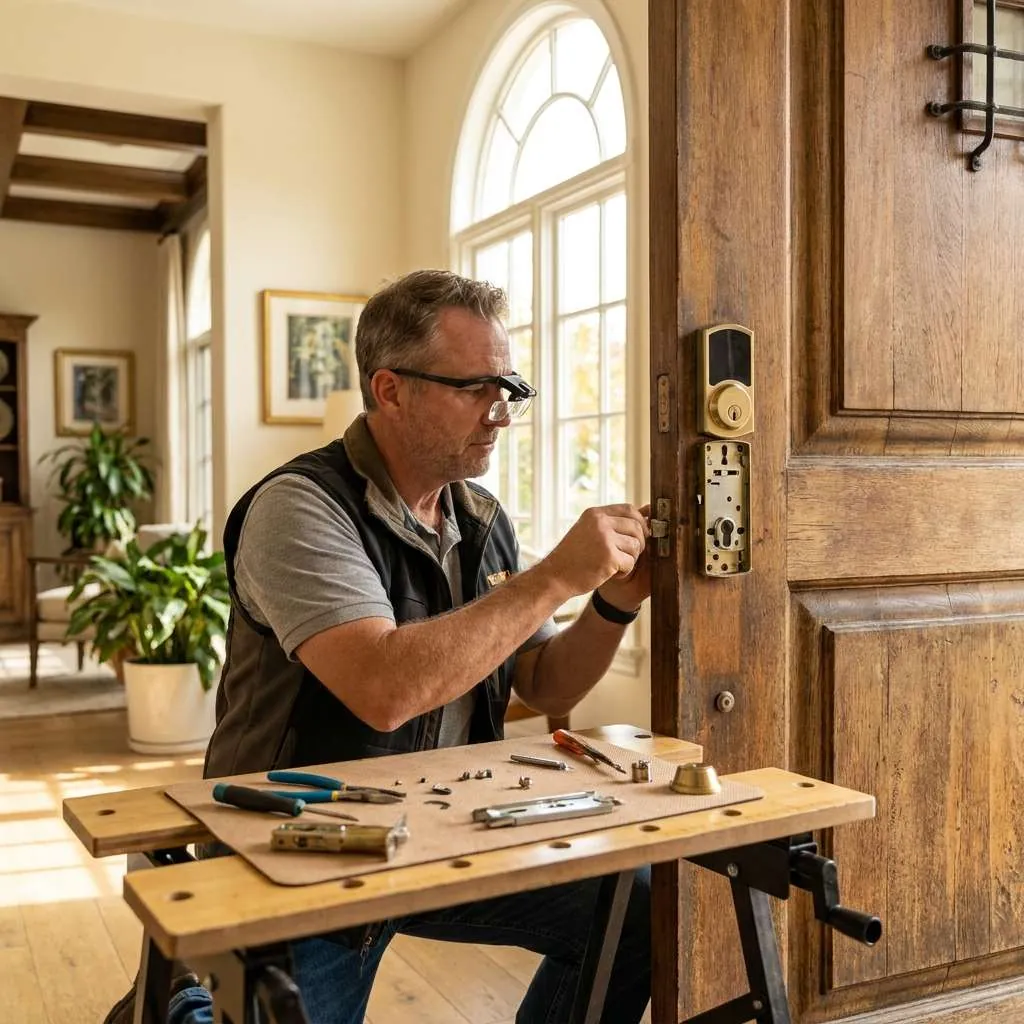
A rekey done properly means every exterior cylinder on the property, not just the front door, because a back door on the old key leaves the job half finished. It means checking whether the cylinders can be brought onto one key while the work is being done, since doing it later means paying for the same visit twice. And it means testing each lock with the door closed afterwards, not just on the bench.
A lock repair done properly starts with the door open, to establish whether the fault is inside the lock at all. It looks at the hinges, the strike, the gap and the closer before anything is replaced. And when the cause is alignment, it says so rather than selling hardware that would not have helped.
A commercial door visit done properly checks the closer as well as the lock, because on a door cycled hundreds of times a day the closer fails first and the lock gets blamed. It considers whether the door is an exit, because that constrains what may be fitted. And it leaves the latch engaging reliably, not just the key turning.
A car key job done properly establishes whether the fault is mechanical or electronic before anyone is dispatched, so that the right equipment arrives. And it confirms ownership before anything is cut or programmed, every time.
None of that is remarkable. It is simply the difference between a visit that solves the problem and one that postpones it.
Services
Each service page explains the work in full. The order below reflects what comes up most often in this part of the service area.
Rekeying, lock repair and replacement, smart locks and authorised house lockouts for homes, condominiums and rental property.
Storefront and office door hardware, master-key planning, panic bars, closers and commercial rekeying.
Car key replacement, transponder and fob programming, ignition work and authorised vehicle lockouts.
Assistance when a door, vehicle or safe cannot be opened, or when a lock has failed and the opening needs securing.
Readers, controllers, electric strikes and magnetic locks for buildings that manage entry with credentials rather than keys.
Safe opening with proof of ownership, lock diagnostics, combination changes and installation planning.
Common calls
A sample of the calls that come from this part of the service area.
Rekeying that unit, and deciding whether both should share a keyway.
Closer adjustment under daily cycling, arranged directly with the owner.
Alignment rather than cylinder failure.
Short work on a single door, quicker still if the building shares one keyway.
Commercial-grade specification rather than shop-door fittings.
Non-destructive entry after ownership is confirmed.
On the ground
What a technician meets in West Los Angeles depends heavily on which part of the area the property is in.
Mixed building periods, so door preparations and hardware vary more than in a uniformly developed area.
A substantial rental proportion, generating steady turnover rekeying and shared-entrance work.
Shops, restaurants, offices and workshops where the owner authorises the work directly.
Dense residential and commercial street parking, where vehicle lockouts commonly occur.
Light commercial and trade units needing hardware specified for heavier use than a shop door.
Process
The property or vehicle, the hardware involved and what changed. Photographs of the lock face and door edge help.
We confirm which service line applies and what the technician needs to bring, including how authorisation will be shown.
The hardware and the whole opening are inspected before anything is replaced.
Locks, keys or credentials are tested in place before the visit ends.
Coverage
Neighbouring communities with their own pages. Each describes the property types and lock work common to that area.
Common questions
Tell us the address or neighbourhood, the hardware involved and what it is doing.
For any work that provides access to a property, vehicle or safe, the technician will ask for photo identification and evidence that you are entitled to enter. Having that ready keeps the visit short.