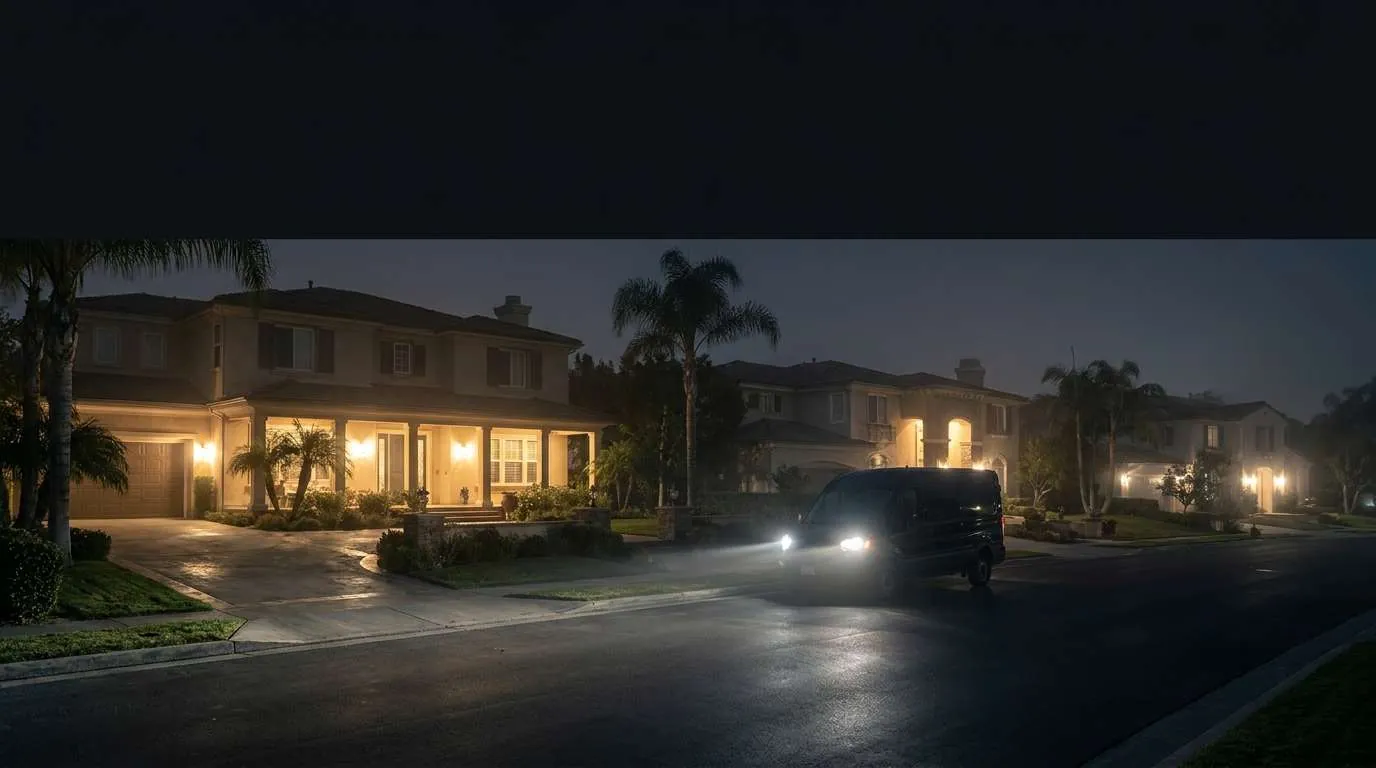
Residential Locksmith Services
Rekeying, lock repair and replacement, smart locks and authorised house lockouts for homes, condominiums and rental property.

Service area
A large, mixed area that has changed faster than most of the Valley, with new mid-rise housing sitting beside long-established streets.
North Hollywood locksmith
North Hollywood covers a lot of ground and has been rebuilding parts of itself steadily for two decades. Around the transit station and the arts district, mid-rise apartment blocks and mixed-use buildings have gone up alongside theatres, studios and restaurants. A few streets away the neighbourhood reverts to single-storey post-war housing that has changed very little.
That contrast defines the locksmith work here. Newer buildings arrive with controlled entry, fob readers, parking gates and package rooms — systems that need administering rather than rekeying. Older streets have the familiar problems of sixty-year-old doors and the hardware still hanging on them.
The area also carries a substantial commercial layer, from small arts-district units to light industrial premises on its northern edge. Separate pages cover commercial locksmith work, residential work and smart lock installation in more depth.
On the ground
What a technician meets in North Hollywood depends heavily on which part of the area the property is in.
Lobby readers, parking gates, package rooms and amenity doors under building control, with conventional cylinders on the unit doors themselves.
Single-storey houses with original hardware and the usual pattern of dropped doors and misaligned strikes.
Small commercial units, often in buildings not originally designed for their current use, with mixed-era hardware on the doors.
Credential systems that need administering rather than rekeying, where the practical issue is usually who maintains the resident list.
Concentrated parking around the station and the arts district, where vehicle lockouts and key work are common.
Common calls
A sample of the calls that come from this part of the service area.
Usually an administration issue rather than a hardware one — the credential has expired or been removed from the list.
An audit of the credential list, which is faster and cheaper than any mechanical work.
Original industrial fittings alongside later additions, each needing its own assessment.
Rekeying everything before occupation, with no assumption about how many keys exist.
Gate hardware, the reader, or the controller — tested in that order rather than replaced.
Non-destructive entry after ownership is confirmed.
In practice
In a modern mid-rise this line matters more than people expect, and it is worth establishing before anything is scheduled.
Almost always, everything from the street to your front door belongs to the building: the lobby reader, the parking gate, the lift, the package room, the corridor doors. Those run on a credential system administered by management, and a resident who cannot get in usually has an administration problem rather than a hardware one. The fob has expired, or been removed from the list, or the record was never created. Calling a locksmith will not fix that; calling the management will.
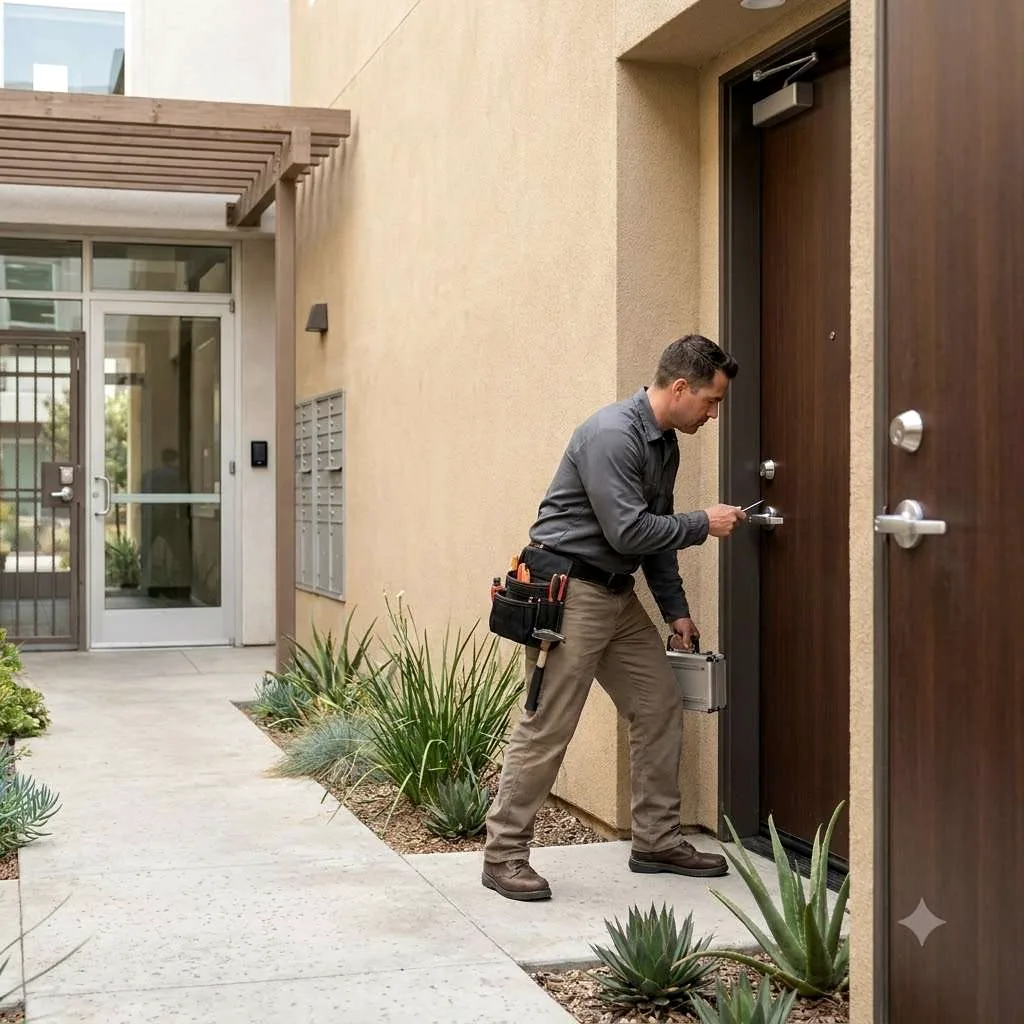
The unit door is usually yours, subject to the lease. Most leases require the management to hold a key for access in an emergency, so changing that lock without telling them can create a problem later. Rekeying with a key provided to management is normally acceptable; simply replacing the lock and keeping the only key often is not.
The package room and amenity doors sit in an awkward middle ground. They are building property, but they are the doors residents most often report as faulty. Those reports belong with management, who can authorise work on them.
None of this applies to the older streets a few blocks away, where the house is yours from the pavement in. The distinction is worth knowing precisely because both kinds of property sit in the same neighbourhood.
Local context
The newer mid-rise developments are built around controlled access from the street inward: a fob or code at the lobby, another at the parking gate, sometimes a third at a lift lobby or amenity floor. Individual unit doors are usually conventional cylinders, which puts the boundary between building responsibility and resident responsibility right at the unit threshold.
The older residential streets around them are classic post-war Valley: single storey, attached garage, original or near-original hardware, and doors that have had sixty years to move. These produce the standard diet of alignment work, rekeying after a sale, and deadbolt upgrades.
Commercially, the arts district has a concentration of small units, converted spaces and premises that were not originally built for their current use. Doors there are frequently a mixture of original industrial hardware and later additions, which makes each one its own small puzzle.
Services
Each service page explains the work in full. The order below reflects what comes up most often in this part of the service area.
Rekeying, lock repair and replacement, smart locks and authorised house lockouts for homes, condominiums and rental property.
Storefront and office door hardware, master-key planning, panic bars, closers and commercial rekeying.
Readers, controllers, electric strikes and magnetic locks for buildings that manage entry with credentials rather than keys.
Car key replacement, transponder and fob programming, ignition work and authorised vehicle lockouts.
Assistance when a door, vehicle or safe cannot be opened, or when a lock has failed and the opening needs securing.
Camera placement, cabling, recorder setup and remote viewing for homes, offices and multi-unit property.
Coverage
Neighbouring communities with their own pages. Each describes the property types and lock work common to that area.
Process
The property or vehicle, the hardware involved and what changed. Photographs of the lock face and door edge help.
We confirm which service line applies and what the technician needs to bring, including how authorisation will be shown.
The hardware and the whole opening are inspected before anything is replaced.
Locks, keys or credentials are tested in place before the visit ends.
Common questions
Tell us the address or neighbourhood, the hardware involved and what it is doing.
For any work that provides access to a property, vehicle or safe, the technician will ask for photo identification and evidence that you are entitled to enter. Having that ready keeps the visit short.