Commercial Locksmith Services
Storefront and office door hardware, master-key planning, panic bars, closers and commercial rekeying.

Service area
A large community combining a high-rise business district with extensive hillside and suburban housing.
Woodland Hills locksmith
Woodland Hills is one of the biggest communities in the service area and one of the most varied. Warner Center, at its eastern end, is the Valley's principal high-rise business district — office towers, corporate premises, hotels and large-format retail concentrated into a few square miles.
Away from that, the area is residential on a substantial scale. North of Ventura Boulevard the streets are suburban and largely later post-war. South of it the land climbs into the Santa Monica Mountains, where large hillside properties sit on winding roads with long driveways, gates and extensive grounds.
The two halves generate quite different work. Warner Center is commercial access control at building scale: lobbies, lift lobbies, parking structures, tenant floors and credential administration. The hillside is domestic access planning at property scale: gates, multiple doors, detached structures and the question of who should be able to open what.
Local context
Warner Center buildings run on layered access. A credential at the lobby, another in the lift or at a floor lobby, and often a third at a tenant suite door. Parking structures have their own arrangements again. The practical consequence is that almost nothing there is a simple lock job; it is an access-administration question with hardware attached.
The suburban streets north of Ventura are conventional, with standard housing and the usual pattern of rekeying, repair and hardware upgrades.
The hillside properties south of the boulevard are where domestic work gets genuinely complex. Long driveways with gates at the street, houses with five or six exterior doors, detached garages, pool houses and guest accommodation, and a regular cast of people who need some access but not all of it.

In practice
Warner Center and the hillside look like opposite kinds of property, but the underlying problem is identical: several thresholds, several groups of people, and a need to decide who crosses which.
In an office tower the layers are explicit. The street door admits anyone with a building credential. The lift or floor lobby narrows that to people who belong on that floor. The suite door narrows it again to one tenant's staff. Internal rooms — server, records, stores — narrow it further still. Each layer is a separate decision, and the value of the system lies in being able to change any one of them from a desk.
A large hillside house has exactly the same structure, usually without anyone having designed it. The gate admits everyone who comes to the property: deliveries, gardeners, pool service, guests. The house doors should admit fewer people. A home office, a wine store or a garage workshop should admit fewer again. The difference is that most properties handle all of this with one key that opens everything, handed out freely and never collected back.
The fix at domestic scale is the same principle at smaller cost. The gate goes on a code, so it can be issued and withdrawn without hardware. The house doors are keyed alike so the household carries one key. Anything that should be more restricted gets its own cylinder. The owners carry a master.
What makes both work is not the hardware but the decision that precedes it: " writing down who genuinely needs to open what, and then building the arrangement to match.
Services
Each service page explains the work in full. The order below reflects what comes up most often in this part of the service area.
Storefront and office door hardware, master-key planning, panic bars, closers and commercial rekeying.
Readers, controllers, electric strikes and magnetic locks for buildings that manage entry with credentials rather than keys.
Rekeying, lock repair and replacement, smart locks and authorised house lockouts for homes, condominiums and rental property.
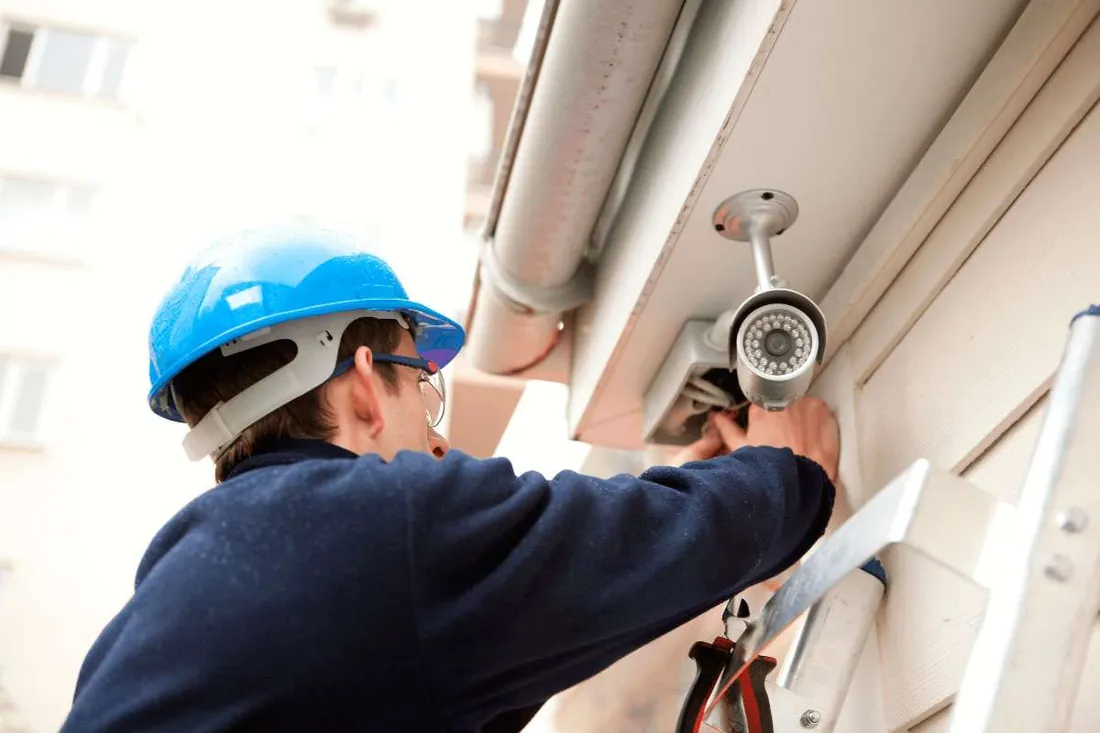
Camera placement, cabling, recorder setup and remote viewing for homes, offices and multi-unit property.
Safe opening with proof of ownership, lock diagnostics, combination changes and installation planning.
Car key replacement, transponder and fob programming, ignition work and authorised vehicle lockouts.
Common calls
A sample of the calls that come from this part of the service area.
A credential audit rather than any mechanical work.
A keypad or reader at the street, so access can be granted without handing over keys.
A household master arrangement, tiered by who actually needs what.
Tested through reader, controller, relay and gate hardware in order.
Deliberately keyed separately from the main residence.
Rekeying everything, and bringing the doors onto one key.
On the ground
What a technician meets in Woodland Hills depends heavily on which part of the area the property is in.
Layered credential access from street to suite, with administration mattering more than hardware on most calls.
Street gates a long way from the house, better handled with codes than with keys.
Five or six exterior doors plus detached structures, worth planning as one scheme.
Conventional later post-war housing with standard rekeying and repair work.
Rear and side boundaries that nothing overlooks, which shifts where cameras and gate hardware are worth placing.
Process
The property or vehicle, the hardware involved and what changed. Photographs of the lock face and door edge help.
We confirm which service line applies and what the technician needs to bring, including how authorisation will be shown.
The hardware and the whole opening are inspected before anything is replaced.
Locks, keys or credentials are tested in place before the visit ends.
Coverage
Neighbouring communities with their own pages. Each describes the property types and lock work common to that area.
Common questions
Tell us the address or neighbourhood, the hardware involved and what it is doing.
For any work that provides access to a property, vehicle or safe, the technician will ask for photo identification and evidence that you are entitled to enter. Having that ready keeps the visit short.