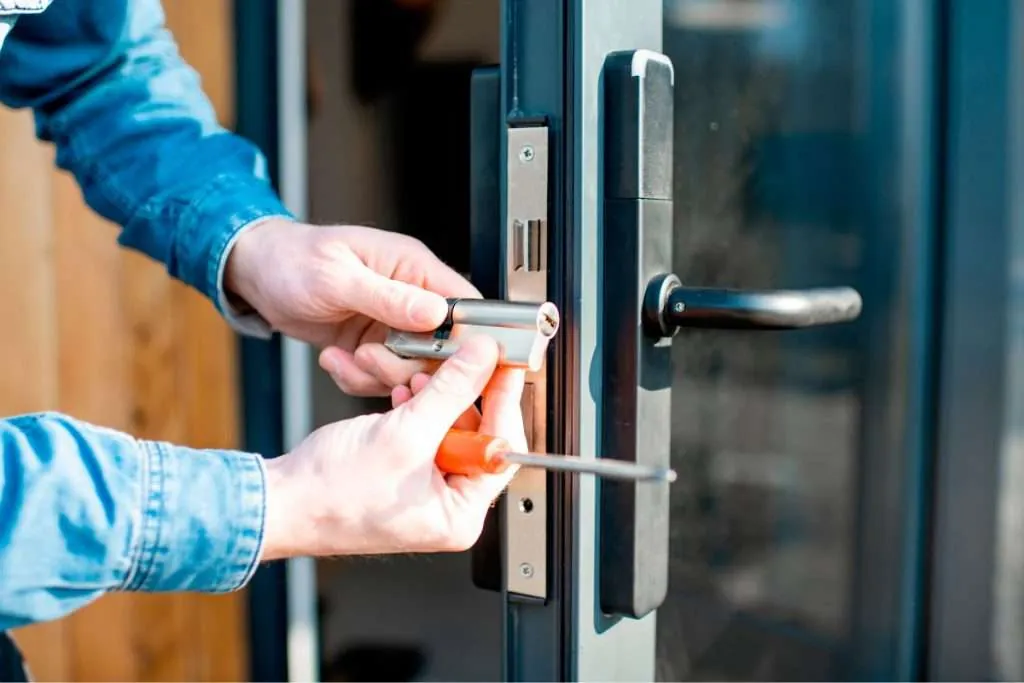
Residential Locksmith Services
Rekeying, lock repair and replacement, smart locks and authorised house lockouts for homes, condominiums and rental property.

Service area
Dense, mixed and constantly turning over, with a building stock that runs from nineteen-twenties courts to recent mid-rise.
Hollywood locksmith
Hollywood is among the densest parts of the service area and among the most mixed. Within a few blocks the building stock can move from nineteen-twenties bungalow courts and Spanish revival apartment buildings, through mid-century blocks, to recent mid-rise development with controlled entry and parking structures.
The commercial layer is equally varied: ground-floor retail, restaurants and bars, production and post-production premises, offices above street level, and the entertainment venues along the main boulevards.
Occupancy turns over faster here than almost anywhere else in the service area. Short tenancies, subletting, shared occupancy and frequent moves make key control a live and recurring question rather than something settled once. That is the single most consistent theme in local lock work.
On the ground
What a technician meets in Hollywood depends heavily on which part of the area the property is in.
Credential access at lobbies and parking, conventional cylinders on unit doors, with the boundary of responsibility at the unit threshold.
Nineteen-twenties courts and walk-ups with original hardware in common areas, often worth preserving rather than replacing.
Retail, restaurants and bars with heavily cycled doors, hard-working closers and service entrances that need as much attention as the frontage.
Short tenancies and shared occupancy make rekeying a recurring requirement rather than an occasional one.
Dense parking throughout, where vehicle lockouts and key work are frequent.
Common calls
A sample of the calls that come from this part of the service area.
Rekeying the unit door, which is short work and the only reliable response.
Servicing the mortise case rather than converting the door.
Usually the credential list rather than the hardware.
Heavy cycling wears closers long before cylinders fail.
Straightforward to fit, and best agreed with the owner first.
Non-destructive entry after ownership is confirmed; the level and bay help.
In practice
In a neighbourhood where people move often, sublet frequently and share space with housemates they did not choose, the question “who has a key?” never settles. It has to be managed rather than answered once.
For a unit door, the only reliable response to a change of occupancy is rekeying. Collecting keys back proves nothing, because a key can be copied at any hardware counter for a few dollars and nothing about the returned key reveals whether that " happened. Re-pinning the cylinder makes every previous key inert regardless of how many exist.
For a building owner with multiple units, two decisions make this sustainable. Standardising the keyway across the building means every cylinder is interchangeable and re-pinning is quick. Moving to a restricted keyway means blanks are controlled and duplication requires authorisation — which turns “we collected the keys back” into a statement that actually means something.
Common entrances are a separate problem and are frequently the weaker one. A shared street door with a conventional key, in a building where occupancy turns over several times a year, will accumulate uncontrolled copies quickly. Credential access solves this properly: a fob can be deactivated the moment someone leaves, with no hardware to collect and no cylinder to re-pin.
For residents in shared occupancy, the front door is only half the question. " Interior room locks are usually what people actually want, and they are simple to " fit — though they change the property, so they should be agreed with the owner " first.
Local context
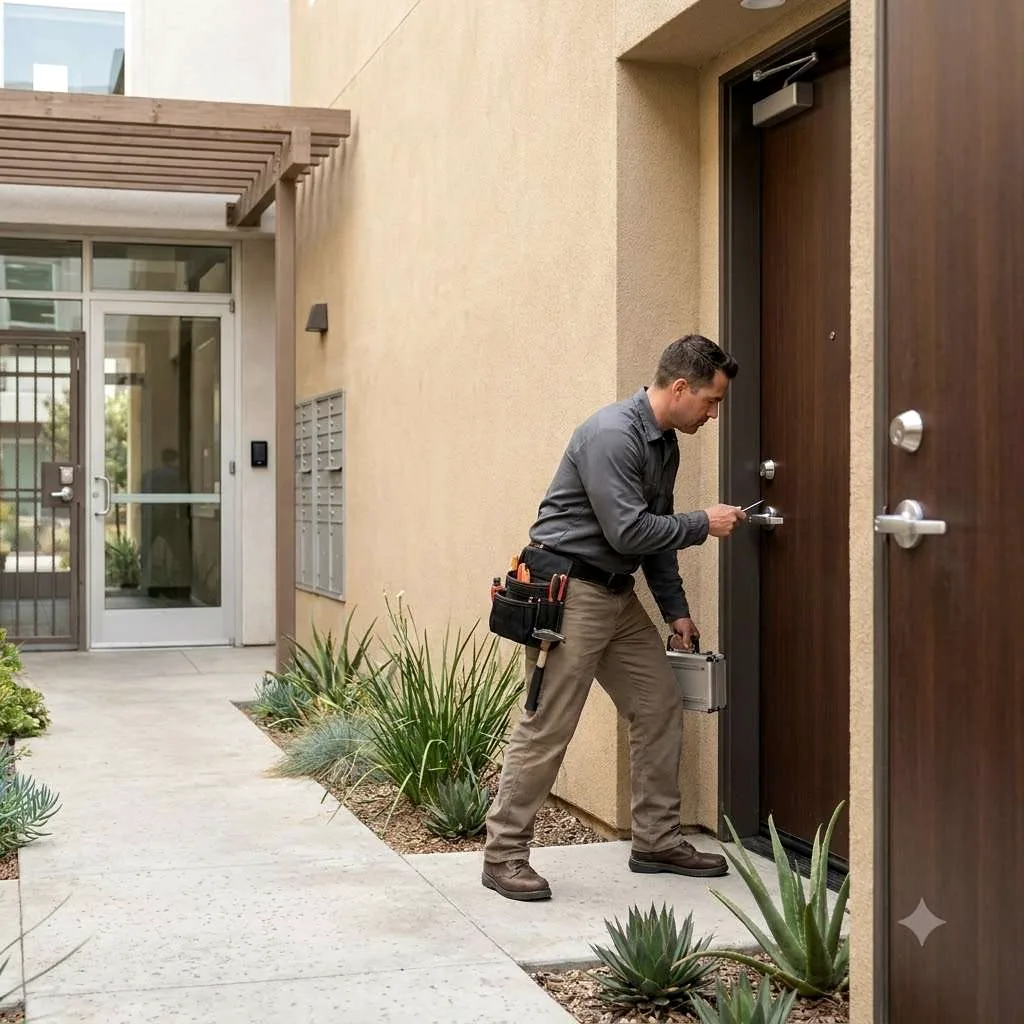
The period buildings — courts, four-storey walk-ups, Spanish revival blocks — frequently retain original hardware in common areas even where unit doors have been updated. Mortise locks, original rim cylinders and period furniture turn up regularly, and owners of these buildings are often keen to keep them.
The newer mid-rise development operates on a different model entirely: credential access at the lobby and parking, conventional cylinders on unit doors, and a clear boundary between building responsibility and resident responsibility right at the unit threshold.
Commercially, ground-floor premises along the boulevards take heavy use. Doors cycle constantly, closers work hard, and late trading means hardware failures get noticed at inconvenient hours. Back-of-house and service doors are frequently the ones that actually need attention.
Services
Each service page explains the work in full. The order below reflects what comes up most often in this part of the service area.
Rekeying, lock repair and replacement, smart locks and authorised house lockouts for homes, condominiums and rental property.
Storefront and office door hardware, master-key planning, panic bars, closers and commercial rekeying.
Assistance when a door, vehicle or safe cannot be opened, or when a lock has failed and the opening needs securing.
Readers, controllers, electric strikes and magnetic locks for buildings that manage entry with credentials rather than keys.
Car key replacement, transponder and fob programming, ignition work and authorised vehicle lockouts.
Camera placement, cabling, recorder setup and remote viewing for homes, offices and multi-unit property.
Coverage
Neighbouring communities with their own pages. Each describes the property types and lock work common to that area.
Process
The property or vehicle, the hardware involved and what changed. Photographs of the lock face and door edge help.
We confirm which service line applies and what the technician needs to bring, including how authorisation will be shown.
The hardware and the whole opening are inspected before anything is replaced.
Locks, keys or credentials are tested in place before the visit ends.
Common questions
Tell us the address or neighbourhood, the hardware involved and what it is doing.
For any work that provides access to a property, vehicle or safe, the technician will ask for photo identification and evidence that you are entitled to enter. Having that ready keeps the visit short.