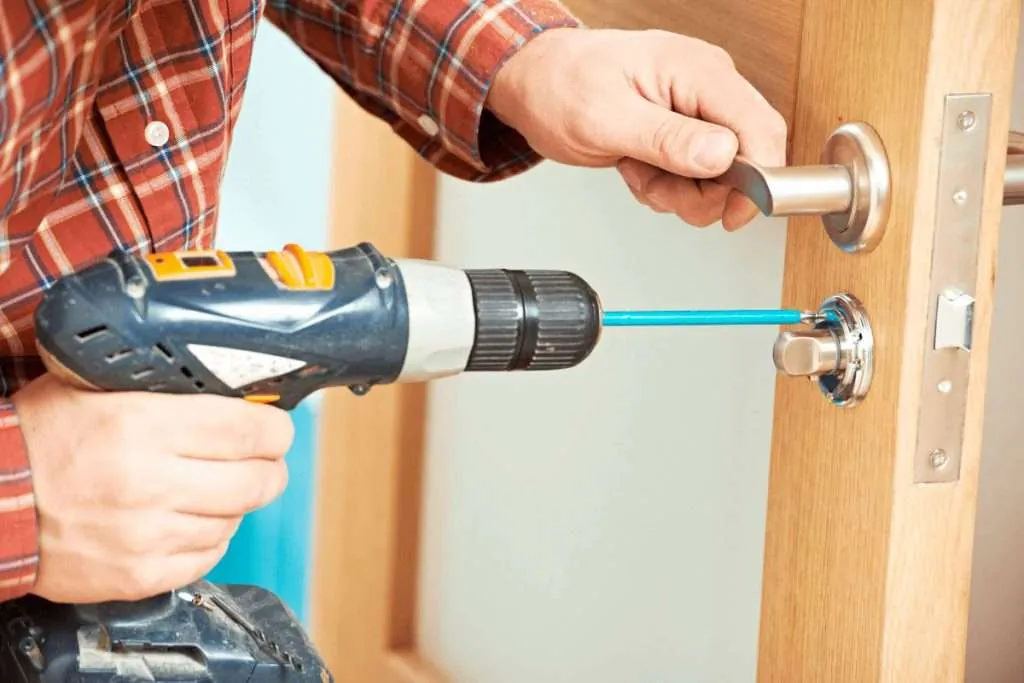
Residential Locksmith Services
Rekeying, lock repair and replacement, smart locks and authorised house lockouts for homes, condominiums and rental property.

Service area
A central Valley community of post-war housing and independent small businesses along its two main corridors.
Reseda locksmith
Reseda sits squarely in the middle of the Valley and is one of its more consistently residential communities. The housing is overwhelmingly post-war single-family, laid out on a regular grid of flat streets, with apartment buildings concentrated along the wider roads.
Its two commercial corridors — Sherman Way running east to west and Reseda Boulevard running north to south — carry a dense mix of small independent businesses: restaurants, service shops, salons, markets and professional offices. These are mostly owner-operated single units rather than chains, which makes commercial work here straightforward to arrange.
The dominant pattern is therefore the most ordinary kind of locksmith work done well: rekeying after a sale or a tenancy change, correcting doors that have moved over sixty years, upgrading hardware that was adequate in 1955 and is not now, and keeping small-business doors working under daily use.
Local context
The residential streets are about as uniform as the Valley gets. Similar plans, similar door preparations, similar hardware, and similar problems. In practice that makes the work predictable: a technician arriving at a Reseda front door has a good idea what they will find before they see it.
Sixty-odd years of movement is the main variable. Timber has softened around hinge screws, frames have settled, and a great many deadbolts are working against a strike that has not been in quite the right place for a decade. The symptoms get reported as lock failure and resolve as alignment.
The commercial corridors are made up of small units with glass frontages and narrow-stile hardware, cycled heavily through the day. Because most are owner-operated, the person on the phone is usually the person who can authorise the work — which removes a step that slows commercial jobs elsewhere.
In practice
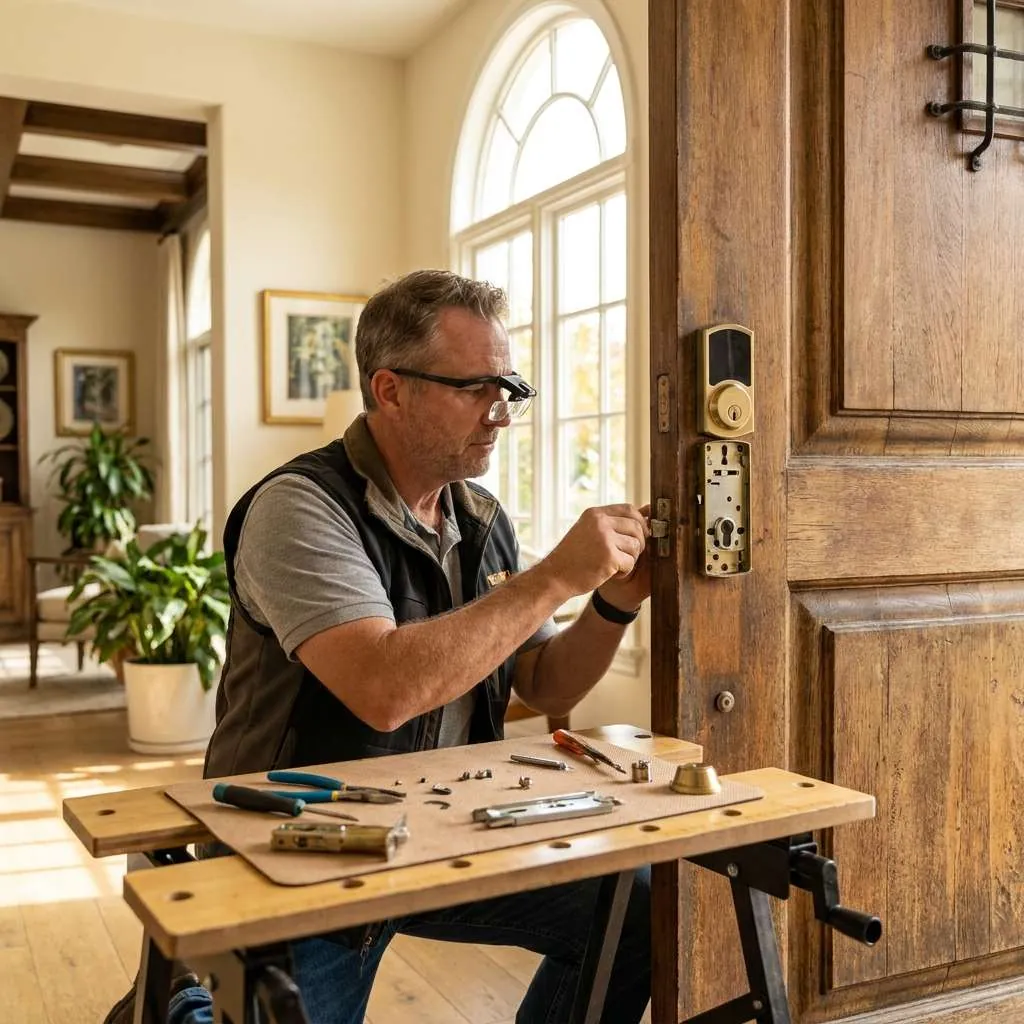
The usual advice on this site is to repair rather than replace, and it holds most of the time. But there is a point at which repairing a sixty-year-old lock stops being economical, and it is worth being honest about where that point sits.
A cylinder that has simply become dirty or dry can be serviced and will work well afterwards. A lock body with a tired spring can be re-sprung. A misaligned strike is not a lock problem at all. All of those are worth fixing.
Replacement becomes the better answer in a few specific situations. When the plug has worn to the point that it no longer holds pins reliably, the lock will keep failing regardless of what is done to it. When the hardware was never suited to the door — a latch-only knob set on a main entrance, for instance — repair preserves an inadequate arrangement. When parts are no longer obtainable for an obsolete pattern, each repair is a temporary measure. And when a lock has been serviced twice already, a third visit is usually money spent on postponement.
There is also a security argument. A 1955 cylinder was designed against 1955 expectations. Modern cylinders with anti-drill inserts and better pick resistance are not expensive, and on a main entrance the difference is real.
The practical test is straightforward: if the lock is mechanically sound and suited to the door, repair it. If it is worn out, unsuitable, or you are looking at it for the third time, replace it — and take the opportunity to bring the other exterior doors onto the same key while the work is being done.
Services
Each service page explains the work in full. The order below reflects what comes up most often in this part of the service area.
Rekeying, lock repair and replacement, smart locks and authorised house lockouts for homes, condominiums and rental property.
Storefront and office door hardware, master-key planning, panic bars, closers and commercial rekeying.
Assistance when a door, vehicle or safe cannot be opened, or when a lock has failed and the opening needs securing.
Car key replacement, transponder and fob programming, ignition work and authorised vehicle lockouts.
Safe opening with proof of ownership, lock diagnostics, combination changes and installation planning.
Camera placement, cabling, recorder setup and remote viewing for homes, offices and multi-unit property.
Common calls
A sample of the calls that come from this part of the service area.
The classic alignment symptom, and among the most common calls in the area.
Often worth upgrading rather than repairing for a third time.
Closer adjustment under heavy daily cycling.
Rekeying everything, and usually bringing the doors onto one key.
Unit-door rekeying, quicker still where the building shares one keyway.
Frequently the weakest opening on an otherwise well-secured house.
On the ground
What a technician meets in Reseda depends heavily on which part of the area the property is in.
Uniform plans and door preparations across most of the area, with the standard pattern of doors that have dropped over decades.
Small owner-operated units with glass frontages, heavy daily cycling and the usual closer wear.
Concentrated along the wider roads, generating steady turnover rekeying and shared-entrance work.
A great deal of original 1950s hardware still in service, much of it worth upgrading rather than repairing again.
Flat, accessible streets and small business lots, where vehicle key and lockout work is straightforward to attend.
Process
The property or vehicle, the hardware involved and what changed. Photographs of the lock face and door edge help.
We confirm which service line applies and what the technician needs to bring, including how authorisation will be shown.
The hardware and the whole opening are inspected before anything is replaced.
Locks, keys or credentials are tested in place before the visit ends.
Coverage
Neighbouring communities with their own pages. Each describes the property types and lock work common to that area.
Common questions
Tell us the address or neighbourhood, the hardware involved and what it is doing.
For any work that provides access to a property, vehicle or safe, the technician will ask for photo identification and evidence that you are entitled to enter. Having that ready keeps the visit short.