
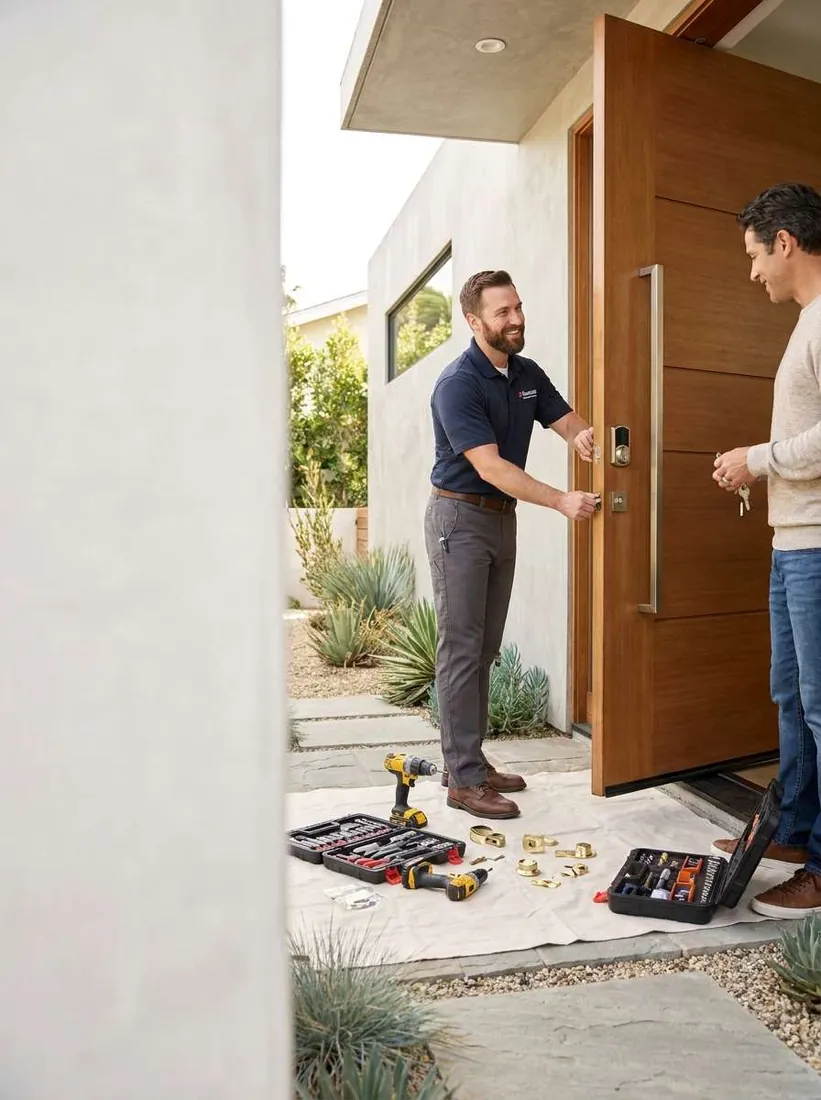
Lock installation in Sherman Oaks
Lock installation in Sherman Oaks, CA
Fitting new hardware to residential and commercial doors — choosing what suits the opening, preparing it properly, and testing it in place.
Lock installation in Sherman Oaks
The lock is the last decision, not the first
Most people start a lock installation by choosing a lock. That is the right decision made at the wrong point in the process, and it is the reason a good proportion of new hardware underperforms from the day it goes on.
The door comes first. Its thickness, its backset, its bore preparation, its construction, how it hangs, and whether the strike is where it should be all constrain what can be fitted and how well it will work. A lock chosen before any of that is known may not fit, may need the door modified, or may fit perfectly and still bind because the opening was never corrected.
The second decision is function rather than product: what does this door actually need to do, and who needs to be able to open it? A main entrance, a garage side door, a gate and an interior office door have genuinely different requirements.
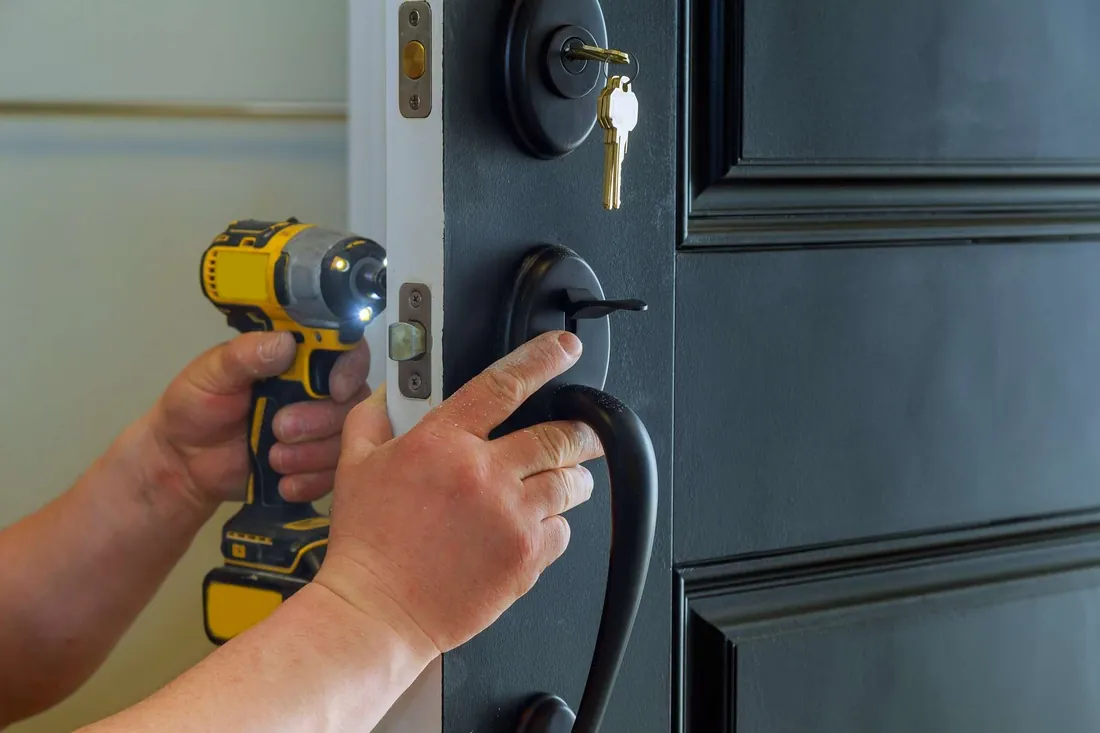
A new lock on an uncorrected door inherits every problem the old one had.
In detail
Preparing the opening before anything is fitted
On an older Sherman Oaks door — and a great many of them are sixty years old or more — the preparation is usually the larger half of the job.
The first check is whether the door still hangs true. Hinge screws work loose in softened timber, and a dropped leaf puts the bolt out of line with the strike. " Replacing short screws with longer ones that reach the framing stud lifts the door back into position, and it is worth doing before any new hardware goes near it.
The second is the strike. Sixty years of movement means the pocket may be in the wrong place, too shallow for a full bolt throw, or simply worn. Fitting a new deadbolt to an old strike pocket frequently produces a bolt that extends only part-way, which the owner then attributes to the new lock.
The third is the door preparation itself. Older doors were not always built to what is now standard: thicknesses vary, backsets may be unusual, and bore diameters are sometimes non-standard. Measuring before ordering avoids the situation where a lock has to be forced into an opening it does not suit.
Only once all of that is right does the lock go on, and it is then tested with the door closed — not on a bench, and not with the door standing open.
Common cases
When installation is the right answer
The existing lock is worn out
A plug that no longer holds pins reliably will keep failing whatever is done to it.
The hardware never suited the door
A latch-only knob set on a main entrance is not a security lock.
A door has no deadbolt at all
Common on older secondary doors, and among the most worthwhile upgrades.
You want a different function
Keypad, connected, or a high-security cylinder with controlled duplication.
After damage or a forced entry
Replacing what was broken, and usually reinforcing the strike at the same time.
A gate or exterior door needs proper hardware
Exterior-rated fittings rather than whatever was cheapest.
Reference
Measure these before ordering anything
Five minutes with a tape measure prevents most installation problems, particularly on doors that predate current standards.
| Measurement | Typical range | Why it matters |
|---|---|---|
| Door thickness | 35–45 mm on most residential doors | Outside that range needs a different spindle or an adaptor |
| Backset | 60 mm or 70 mm | Door edge to the centre of the bore; the latch must match |
| Bore diameter | 54 mm is standard | Non-standard bores need enlarging or a different lock |
| Edge bore | 25 mm is standard | Where the latch or bolt assembly passes through |
| Stile width | Varies; narrow on glazed doors | A narrow stile may not leave room for the lock body |
| Strike position | Should align with the bolt at rest | An old pocket in the wrong place limits the bolt throw |
Before you call
What helps when you call
- Whether the door is residential or commercial
- Roughly how old the door is
- Door thickness, backset and bore size if you can measure them
- Whether there is an existing deadbolt or only a latch
- What function you want: key, keypad, connected, high-security
- Whether the door currently binds or the bolt throws short
- Whether you want it keyed alike with other doors
- A photograph of the door edge and the existing strike
Process
How the visit runs
Describe it
The property or vehicle, the hardware involved, and what changed before the problem started.
Confirm the service
We confirm what applies and what the technician needs to bring, including how authorisation will be shown.
Diagnose on site
The hardware and the whole opening are inspected before anything is replaced.
Complete and test
Everything is tested in place before the visit ends.
Common questions
Lock installation questions
Request lock installation in Sherman Oaks
Tell us what kind of door, what you want it to do, and whether it should be keyed alike with anything else.
Identification is required
For any work that provides access to a property, vehicle or safe, the technician will ask for photo identification and evidence that you are entitled to enter. Having that ready keeps the visit short.