
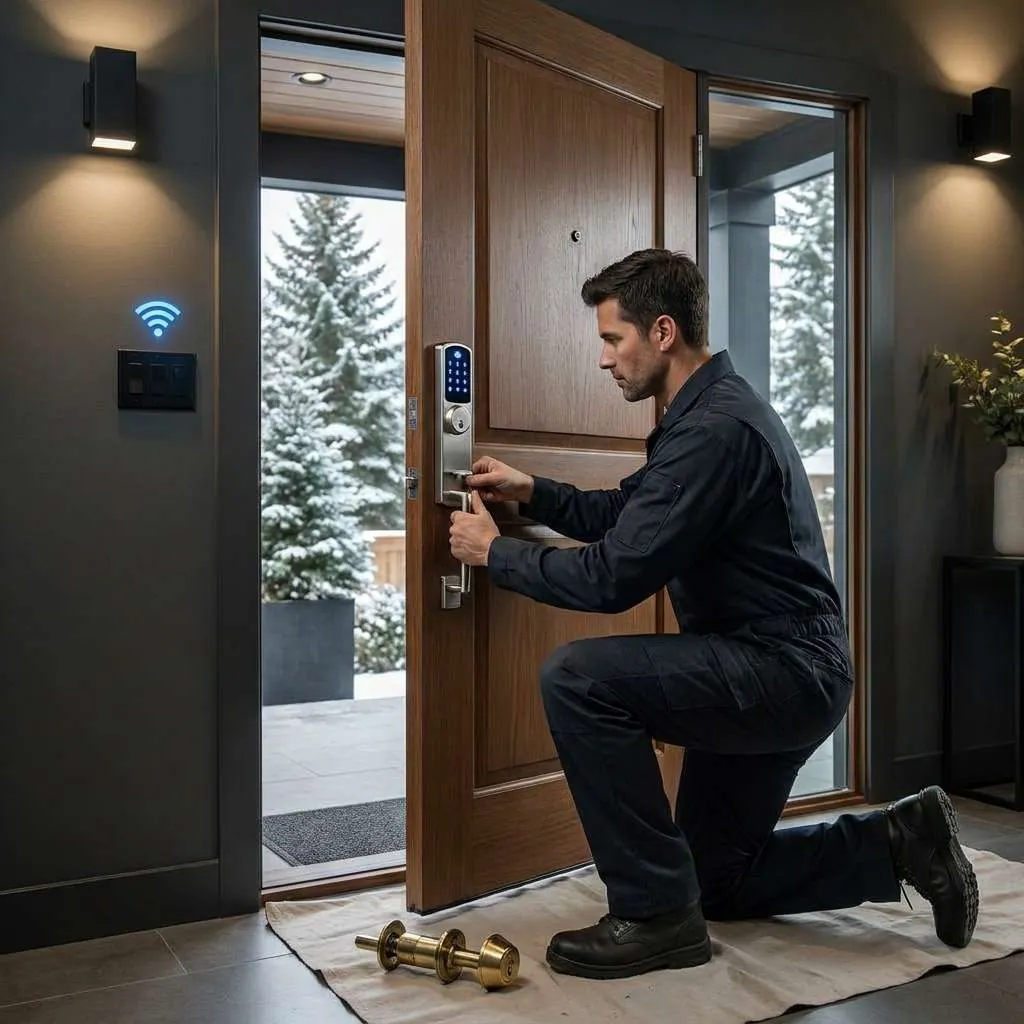
Commercial work in Sherman Oaks
Commercial locksmith in Sherman Oaks, CA
Storefront and office door hardware along Ventura Boulevard and the streets behind it — where most faults turn out to be the closer or the alignment rather than the lock.
Commercial work in Sherman Oaks
A commercial strip measured in miles, not blocks
Ventura Boulevard runs the full width of Sherman Oaks, and along it sits an unusually dense run of small commercial premises: restaurants, medical and dental suites, professional offices, salons, studios and ground-floor retail. Behind the boulevard, side streets carry more offices and service businesses.
Nearly all of these are small-format units with glass frontages, which means narrow-stile aluminium doors with hook-bolt or mortise hardware, cycled heavily through the day and held by closers that work harder than most people realise.
The consequence is that the commonest commercial call here is not a failed lock. It is a door that has sagged, or a closer that has drifted out of adjustment, so the bolt no longer meets its keeper. The premises cannot be locked, and the cylinder gets the blame.
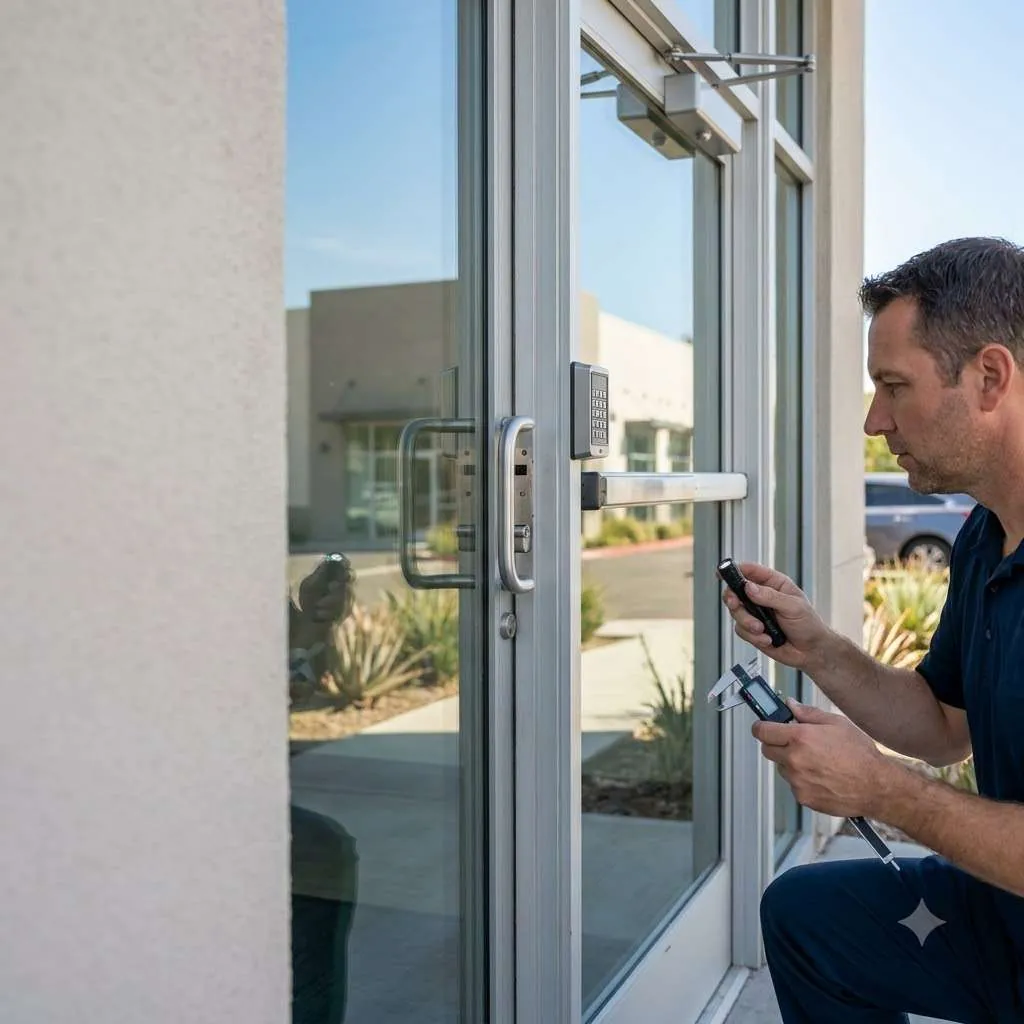
Prop the door open and throw the lock. Ten seconds tells you which problem you have.
In detail
Why storefront doors stop locking
A narrow-stile aluminium door is a light frame carrying a heavy pane of glass. It hangs on pivots or offset hinges, and over years of use the geometry drifts. The door drops fractionally at the leading edge, and the hook bolt that used to engage cleanly into its keeper now catches the edge or misses it entirely.
The closer contributes from the other direction. It has to bring the door through its final few degrees with enough force for the latch or bolt to engage. When its adjustment drifts — and closers on heavily used doors drift steadily — the door comes to rest just short of home. At that point the bolt cannot reach its keeper no matter how well the cylinder works.
The diagnostic takes ten seconds. Prop the door fully open and throw the lock. If the bolt extends smoothly and fully in free air, the lock is healthy and the opening has moved. If it binds even then, the lock body or cylinder is the problem.
Heat makes it worse in the afternoon. Aluminium expands, and a door already at the edge of its tolerance will bind once the sun is on the frontage and behave perfectly the next morning. That daily pattern is itself a diagnosis.
Common cases
What businesses here call about
The door will not lock at closing
Almost always the closer or the alignment. The cylinder is usually fine.
Staff turnover
Rekeying the cylinders that person held, or revoking credentials where a system exists.
A new lease starting
Rekeying before occupation, and deciding whether a master scheme is worth setting up from the start.
A door that binds only in the afternoon
Thermal expansion on a door already close to its tolerance.
A medical or dental suite with a records room
That door should not share a key with the suite entrance.
An exit device that no longer latches
Leaves the premises unsecured overnight, and is worth treating promptly.
Options
Commercial hardware on these premises
Narrow-stile hook bolt
Standard on aluminium and glass frontages. Alignment critical, because the hook must meet its keeper.
Mortise lock body
On heavier commercial doors. Serviceable and rebuildable rather than disposable.
Door closer
The component that fails first on a heavily used door, and the one most often overlooked.
Exit device
Required on exit doors. Must allow egress without a key, code or special knowledge.
Commercial lever hardware
For suite and interior doors. Specify a commercial grade, not a residential one.
Master-key scheme
Designed from a chart of who needs which doors, then pinned to match.
Electric strike
Adds credential release while keeping the mechanical lock and its key override.
Door-position switch
Reports whether the door is genuinely closed. Cheap, and frequently omitted.
Before you call
What helps when you call
- How many doors are involved, and what kind
- Whether the premises are owned, leased or in a managed building
- Who is authorised to approve work on those doors
- Whether any door is a required exit
- Whether the fault varies with the time of day
- Roughly how many people need keys or credentials
- Whether a master-key scheme already exists
- A photograph of the door edge and the keeper or strike
Process
How the visit runs
Describe it
The property or vehicle, the hardware involved, and what changed before the problem started.
Confirm the service
We confirm what applies and what the technician needs to bring, including how authorisation will be shown.
Diagnose on site
The hardware and the whole opening are inspected before anything is replaced.
Complete and test
Everything is tested in place before the visit ends.
Common questions
Commercial locksmith questions in Sherman Oaks
Request commercial locksmith work in Sherman Oaks
Tell us how many doors, what kind of premises, and who can approve the work.
Identification is required
For any work that provides access to a property, vehicle or safe, the technician will ask for photo identification and evidence that you are entitled to enter. Having that ready keeps the visit short.