
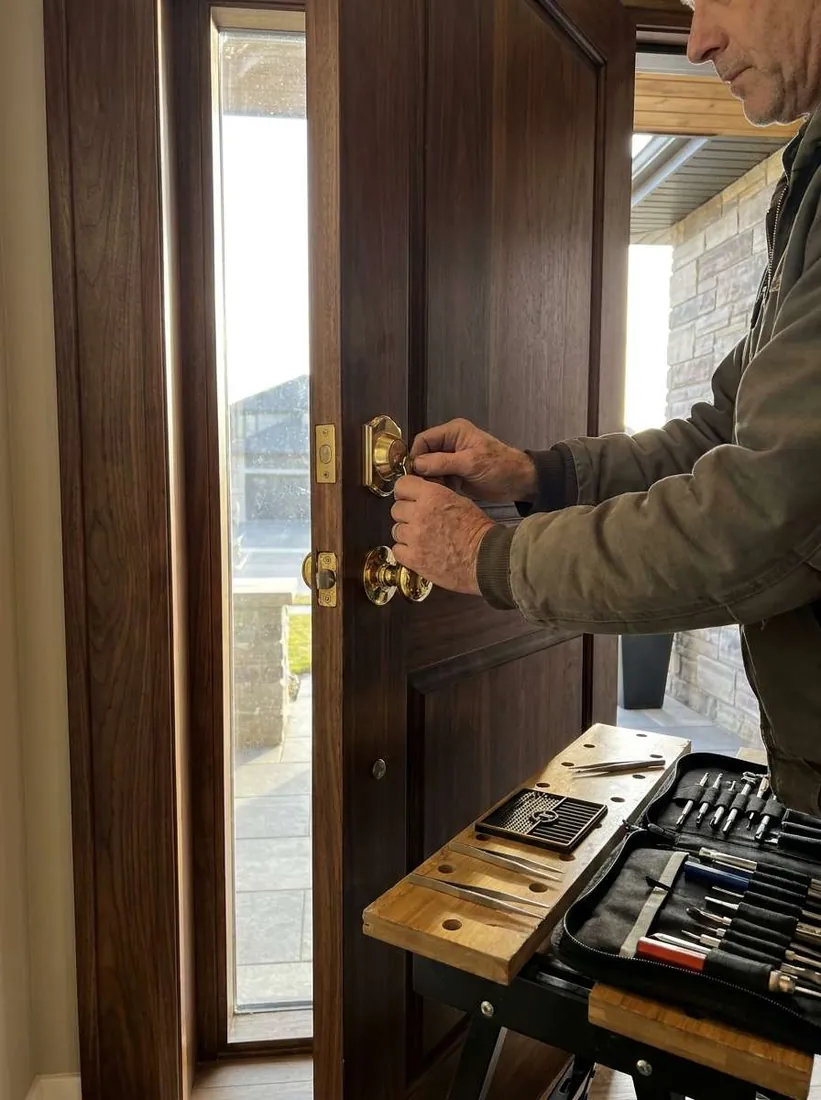
Home lock work in Studio City
Residential locksmith in Studio City, CA
Rekeying, repair and upgrades for a housing stock that turns over often — and hillside properties where several doors need planning together.
Home lock work in Studio City
Frequent turnover, and what that means for keys
Studio City's housing changes hands and changes occupants more often than most of the Valley. Short and irregular tenancies are common, sublets are frequent, and properties are let furnished and unfurnished, long-term and briefly.
The practical effect is that key control is never settled. Every change of occupancy raises the same question — who still has a working key? — and the only answer that actually means anything is rekeying, because a returned key proves nothing when copies cost a few dollars and leave no trace.
Alongside that sits the ordinary work of an older housing stock north of Ventura, and a rather different set of questions on the hillside streets to the south, where properties have several doors, gate access and sometimes a detached studio that is let separately.
In detail
Planning keys on a hillside property
A flat-street house has two or three exterior doors and one obvious answer: key them alike so the household carries one key. A hillside property is more interesting, because it usually has more doors and more kinds of user.
A typical arrangement might include a gate at the street, a front door, a kitchen or side door, a garage, and a detached studio or guest room at the rear. The people who need access might include the household, a cleaner, a gardener, occasionally a contractor, and — if the studio is let — a tenant who should have no access to the main house at all.
Keying all of that alike is convenient and wrong. It means the studio tenant and the gardener both hold a key that opens the residence, and once that key has been cut a few times nobody can account for it.
A tiered arrangement gives the same convenience without the exposure. The household carries one key that opens the house doors. The studio has its own cylinder entirely. The gate is best handled with a code, because it is the threshold everyone crosses and a code can be withdrawn the day an arrangement ends. The owners hold a master that opens everything.
Common cases
What comes up here
A tenancy ending
Re-pinning the unit cylinder between occupants, with fresh keys cut at the door.
A sublet finishing
The same, and worth doing even if keys were returned.
A hillside property with several doors
Tiered keying rather than one key for everything.
A detached studio that is let
Its own cylinder, deliberately separate from the residence.
A post-war door that has dropped
Alignment work, which is cheaper and more durable than a new lock.
Gate access for a gardener or pool service
A code that can be withdrawn, rather than a key that cannot be recovered.
Options
Options for a property with several doors
Keyed-alike house doors
Front, kitchen, side and garage on one key for the household.
Separate cylinder for a let space
A studio or guest room let independently should not open the residence.
Household master key
Owners carry one key that opens everything; others carry less.
Gate keypad or reader
The threshold everyone crosses, best handled with codes rather than keys.
Restricted keyway
Blanks controlled, so duplication requires authorisation.
Exterior-rated gate hardware
Specified for weather and for a gate that does not close as precisely as a door.
Reinforced strikes
On every exterior door. Cheap, invisible, and effective.
Keypad on a frequently used door
Where key loss is common, a code costs nothing to change.
Before you call
What helps when you call
- How many exterior doors and structures are involved
- Whether any space is let separately
- Who needs access besides the household
- Whether there is a gate and how it currently opens
- Whether the property is owned or rented
- For a rental, when access is available between tenancies
- Where a technician can realistically stop on a hill street
- A photograph of the lock face and the door edge
Process
How the visit runs
Describe it
The property or vehicle, the hardware involved, and what changed before the problem started.
Confirm the service
We confirm what applies and what the technician needs to bring, including how authorisation will be shown.
Diagnose on site
The hardware and the whole opening are inspected before anything is replaced.
Complete and test
Everything is tested in place before the visit ends.
Common questions
Residential questions in Studio City
Request residential locksmith work in Studio City
Tell us how many doors are involved and whether any space is let separately.
Identification is required
For any work that provides access to a property, vehicle or safe, the technician will ask for photo identification and evidence that you are entitled to enter. Having that ready keeps the visit short.