
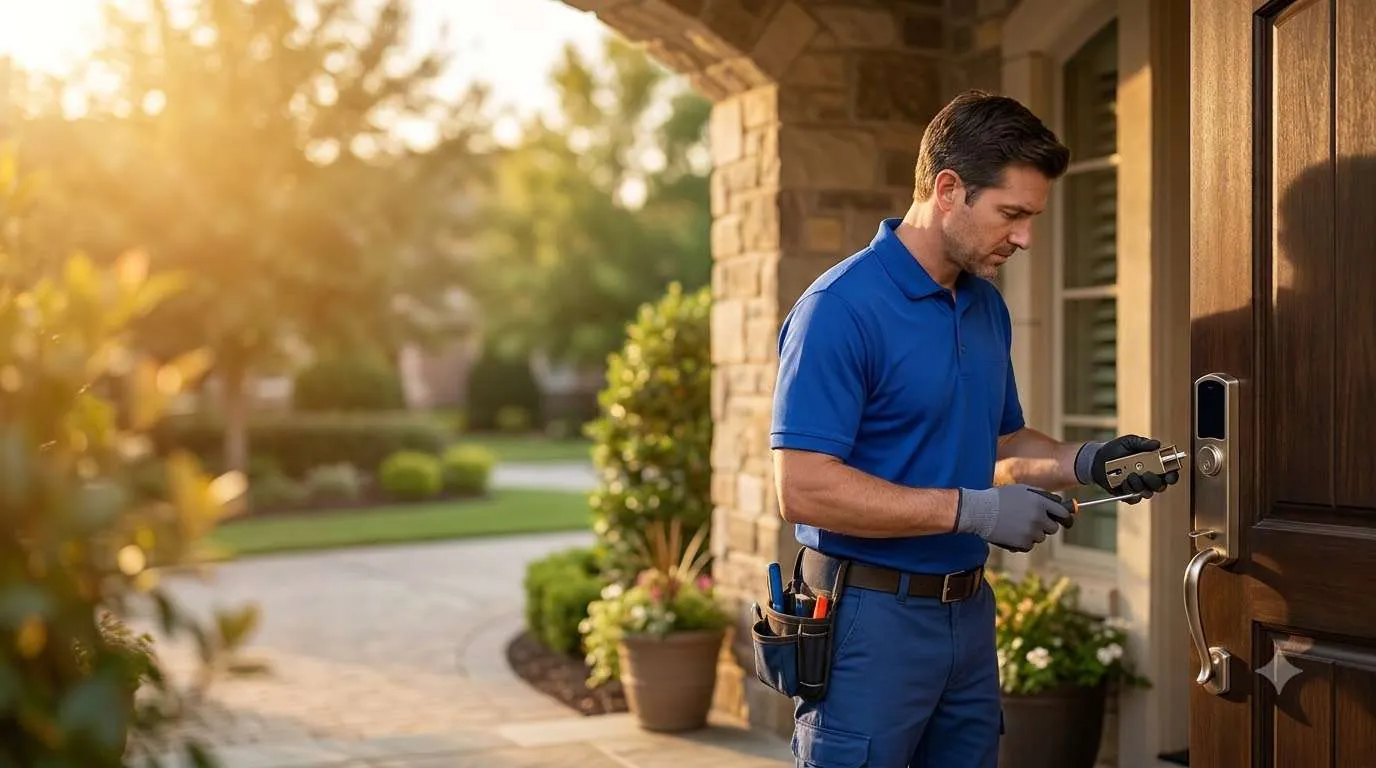
Lock changes in Studio City
Lock change in Studio City, CA
Replacing hardware rather than re-pinning it — when that is genuinely the better call, and what to fit instead.
Lock changes in Studio City
Changing the lock, or just the key?
“I need my locks changed” usually means one of two quite different jobs, and the distinction is worth several hundred dollars on a house with four exterior doors.
If the goal is simply that the old keys stop working — after a move, a tenancy, a lost key — and the existing locks are mechanically sound, then rekeying achieves exactly that without replacing anything visible. It is faster and considerably cheaper.
Replacement is the right call when the hardware itself is the problem: worn out, damaged, unsuited to the door, or simply the wrong function for what you now need. This page is about those cases, and about what to fit instead. For the other route, see rekeying.
In detail
When replacement is genuinely the better answer
Five situations make replacement the right call rather than a more expensive way of achieving the same thing.
The plug is worn. Once a cylinder's plug has worn to the point that it no longer holds pins reliably, re-pinning it produces a lock that will fail again. No amount of servicing recovers that.
The hardware never suited the door. A latch-only knob set on a main entrance was inadequate on the day it was fitted. Rekeying preserves an arrangement that should not exist.
The lock is damaged. After a forced entry, or where a body has been drilled or broken, replacement is the only route.
You want a different function. A keypad, a connected lock, or a high-security cylinder with controlled duplication is a different product, not a different key.
Parts are no longer available. On obsolete patterns, each repair is a temporary measure and the next failure has no fix at all.
There is also a security argument for older hardware. A cylinder from the nineteen-fifties was designed against nineteen-fifties expectations. Modern cylinders with hardened anti-drill inserts and better pick resistance are not expensive, and on a main entrance the difference is real.
Reference
Choosing what to fit
On almost every door, the strike reinforcement matters more than the grade of the lock in front of it.
| Door | Usually suits | Also worth doing |
|---|---|---|
| Main entrance | Single-cylinder deadbolt, or keypad if you want code entry | Reinforced strike with screws reaching the framing stud |
| Back or side door | The same grade as the front — not something lighter | Bring it onto the same key as the front |
| Garage side door | Deadbolt; often the weakest opening on a property | Check the frame is sound before fitting anything |
| Interior office or store | Keyed lever set, separate from the main key | Keep the holder list short and written down |
| Exterior gate | Exterior-rated hardware with adjustment for movement | Consider a keypad if service staff need access |
| Patio slider | Secondary bolt through the frame | Limit vertical movement so the panel cannot be lifted out |
Common cases
Reasons people change locks here
After a purchase, where hardware is also tired
Replacing and rekeying at once, so the new locks share one key.
Following a break-in or attempted entry
Replacing damaged hardware, and reinforcing the strike at the same time.
A lock that has been repaired twice already
A third repair is usually money spent on postponement.
Upgrading to a keypad or connected lock
A different function rather than a different key.
A secondary door with only a latch
Adding a proper deadbolt where there has never been one.
Obsolete hardware with no parts available
Where the next failure would have no fix.
Before you call
What helps when you call
- How many doors need changing
- Whether the existing locks are worn, damaged, or simply the wrong key
- What function you want on each door
- Whether they should all share one key
- Door thickness, backset and bore size if you can measure them
- Whether any door currently binds or the bolt throws short
- Whether the property is owned or rented
- A photograph of the door edge and the existing hardware
Process
How the visit runs
Describe it
The property or vehicle, the hardware involved, and what changed before the problem started.
Confirm the service
We confirm what applies and what the technician needs to bring, including how authorisation will be shown.
Diagnose on site
The hardware and the whole opening are inspected before anything is replaced.
Complete and test
Everything is tested in place before the visit ends.
Common questions
Lock change questions
Request a lock change in Studio City
Tell us how many doors and whether the issue is the hardware or just the key.
Identification is required
For any work that provides access to a property, vehicle or safe, the technician will ask for photo identification and evidence that you are entitled to enter. Having that ready keeps the visit short.