
Rekeying in Sherman Oaks
Rekey locks in Sherman Oaks, CA
Changing which key opens a lock without replacing the lock — how it works, when it is the right answer, and what it cannot fix.
Rekeying in Sherman Oaks
The cheapest way to change who can get in
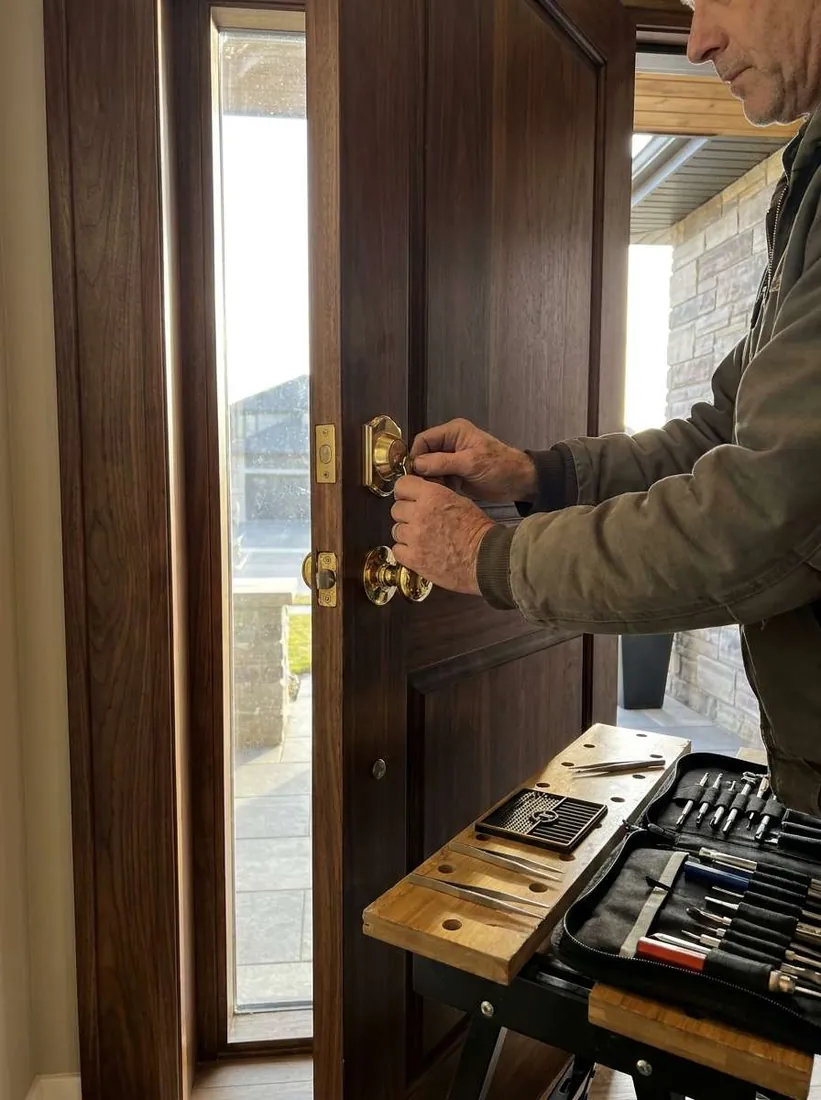
Rekeying is one of the few genuinely efficient things in the locksmith trade. It takes a lock that works perfectly well and makes every existing key for it stop working, without replacing any visible hardware and usually in a few minutes per cylinder.
It is the right answer far more often than people assume. The instinct after moving into a house, or after losing a key, is to replace the locks — which is more expensive, takes longer, and on a property with four or five exterior cylinders adds up quickly for no additional benefit.
This page covers how it works, when it applies, and the situations where replacement genuinely is the better call. For home lock work more broadly, the residential page covers the wider picture.

In detail
What happens inside the cylinder
A standard pin-tumbler cylinder contains a row of small pin stacks. Each stack sits partly in the rotating plug and partly in the fixed housing above it. When the correct key is inserted, its cuts lift each stack to exactly the right height so the break between the two pins lines up with the edge of the plug, and the plug can turn.
Rekeying means removing the plug, taking out the existing bottom pins, and replacing them with a set cut to different heights — then cutting a key whose profile lifts them all to the shear line. Everything else stays: the lock body, the finish, the fixings, the installation.
The result is a lock that behaves identically and no longer recognises a single one of the keys that used to open it. It does not matter how many copies existed or who held them.
The same process allows several locks to be pinned to one key, which is why a rekey is the natural moment to bring a household's doors onto a single key. It also underpins master-key schemes, where extra pins in each stack create a second shear point so more than one key profile will operate the lock.
Common cases
When rekeying is the right call
You have just moved in
Nobody can account for how many keys exist on a house that has changed hands. This is the single most common reason to rekey.
A tenancy has ended
Keys returned prove nothing, because copies are cheap and leave no trace.
A key has gone missing
Particularly if it was on a fob with a tag, or lost near home.
Household access has changed
A relationship ending, a house-sitter finishing, a contractor handing back.
You want one key for several doors
Keyed-alike pinning, done during the same visit at very little extra cost.
A small business has had staff turnover
The same principle applies to commercial cylinders.
Reference
Rekey or replace?
The practical test: if the lock is mechanically sound and suited to the door, rekey it. Otherwise replace it, and bring the other doors onto the new key while you are there.
| Situation | Usually the answer | Why |
|---|---|---|
| Moved into a house, locks are sound | Rekey | Same outcome, considerably lower cost |
| Lock body damaged or worn out | Replace | Rekeying a failing lock postpones the problem |
| Latch-only knob set on a main entrance | Replace | The hardware was never adequate for that door |
| Several doors, mismatched keyways | Rekey, swapping one or two cylinders | Cheaper than replacing every lock to match |
| Want a keypad or smart lock | Replace that door only | A different function, not a different key |
| Lock has been serviced twice already | Replace | A third repair is usually money spent on postponement |
Before you call
What helps when you call
- How many cylinders are involved
- Whether they currently use the same key or different ones
- Whether you want them all brought onto one key
- The brand on the lock face if it is visible
- Whether any lock has been sticking or feeling worn
- How many keys you want cut
- Whether the property is owned or rented
- For a rental, whether management needs to hold a key
Process
How the visit runs
Describe it
The property or vehicle, the hardware involved, and what changed before the problem started.
Confirm the service
We confirm what applies and what the technician needs to bring, including how authorisation will be shown.
Diagnose on site
The hardware and the whole opening are inspected before anything is replaced.
Complete and test
Everything is tested in place before the visit ends.
Common questions
Rekeying questions
Request rekeying in Sherman Oaks
Tell us how many cylinders are involved and whether you want them on one key.
Identification is required
For any work that provides access to a property, vehicle or safe, the technician will ask for photo identification and evidence that you are entitled to enter. Having that ready keeps the visit short.