Standing outside your own front door with no way in is a peculiar kind of frustrating. It is not dangerous, it is not usually expensive, and it will definitely be resolved within the hour — and none of that makes it feel any better at the time.
What follows is the order of operations that keeps a lockout cheap. Most of the real cost in these situations is self-inflicted, created in the first ten minutes by somebody trying to solve it faster than it can be solved.
First, is anyone at risk?
This is the only genuinely urgent version of the question, and it changes everything that follows.
If a child, a vulnerable adult or an animal is shut inside and at risk — particularly in warm weather — call emergency services immediately. The fire service and police can force entry at once and are equipped for it. The damage is repairable; the alternative may not be. Call a locksmith afterwards to replace whatever had to be forced.
The same applies if something is on the stove. A locksmith is a poor substitute for a fire engine.
If nobody is at risk, you have time. Use it, because rushing is what makes this expensive.
Check everything before assuming you are locked out
A surprising proportion of lockouts resolve themselves in the first five minutes, and they cost nothing.
Walk the whole property. People check the front door, confirm it is locked, and stop. The back door, the side door, the garage side door, a garden gate, a utility entrance — any of these may be unlocked, and on a house with several entrances the odds are better than you would think.
Check whether a window was left open. Not forced — open. If a window is genuinely unlatched and safely reachable from ground level, that is a legitimate way in.
Think about who else has a key. A partner, a housemate, a neighbour you gave a spare to three years ago, a family member, a letting agent, a house-sitter. A ten-minute wait for somebody to arrive with a key beats a locksmith visit on both cost and speed.
Check the car. Spare house keys live in glove boxes more often than people remember, and so do garage remotes.
What not to try
This is the part that saves money, and it is mostly a list of things not to do.
Do not force the door. Shouldering a door does not usually defeat the lock. It splits the frame, because the jamb is softwood and the strike plate is held by short screws. You then need a carpenter as well as a locksmith, and the door may never close quite the same way again. The lock is the cheap part of a doorway.
Do not try the credit-card trick. It works on spring latches with no deadbolt, which is a shrinking minority of exterior doors, and it frequently bends the latch on the doors where it does not work. A bent latch means the lock needs replacing as well as opening.
Do not climb. Every year people are seriously injured getting into their own homes — falling from a first-floor window, off a wall, through a conservatory roof. A locksmith visit is a great deal cheaper than a hospital visit, and considerably cheaper than a long recovery. This applies double on a sloping site, where an upper window can be a long way above the ground on the downhill side.
Do not break a window as a first resort. Glazing costs more than a lockout in almost every case, and the mess and the security gap last until a glazier can attend.
When the lock, not the key, is the problem
Sometimes you are holding the right key and the door still will not open. That is a different situation and worth recognising, because the fix is different too.
The key will not go in. Something is obstructing the keyway — occasionally debris, occasionally the remains of a previous key, occasionally a cylinder that has been damaged.
The key goes in but will not turn. This usually means a worn key, a worn cylinder, or a bolt under pressure because the door has dropped. If it has been getting gradually stiffer for weeks, the lock was warning you.
The key turns but the door will not open. The cylinder is fine and something mechanical has failed — a spindle, a follower, a linkage between the handle and the latch.
The key snapped. Stop. Leave the fragment where it is. Do not push it further in, do not insert a spare behind it, and above all do not apply glue to anything. A fragment near the face of the plug usually comes out in minutes with the right tools; one that has been pushed deep or glued to the wafers often means replacing the cylinder.
Situations where a locksmith is the right call anyway
Some of these are not lockouts at all, but they are the same phone call.
You have lost your key rather than locked it inside
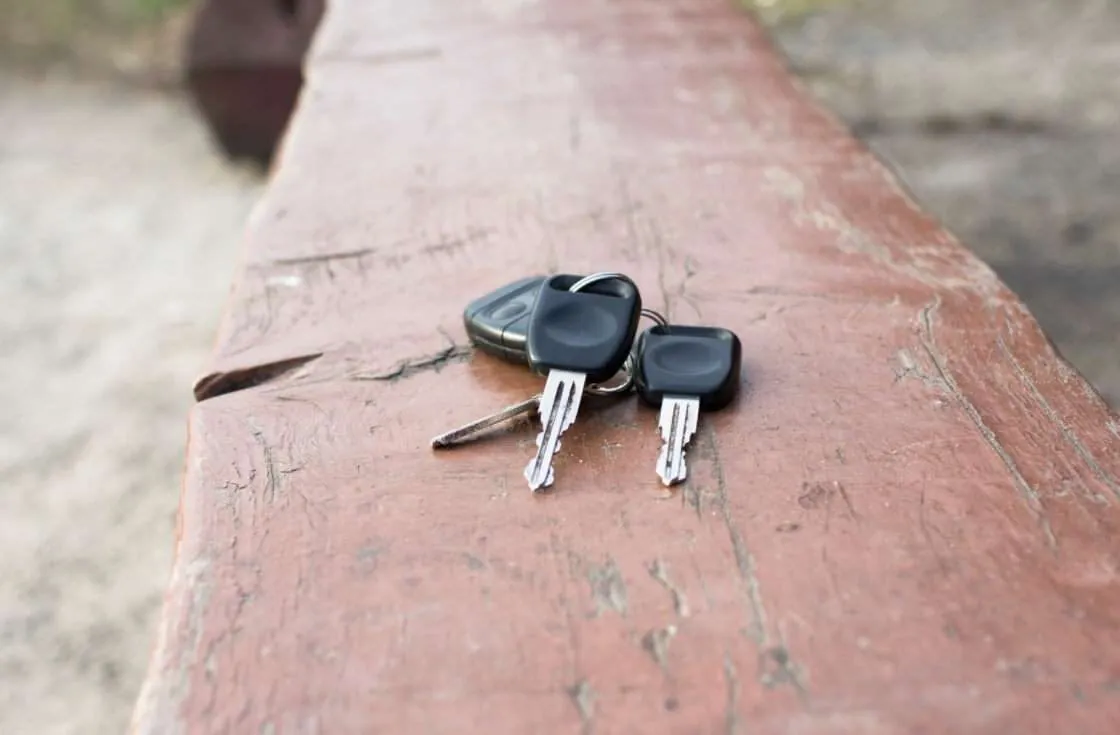
The question here is not how to get in; it is whether that key can be connected to your address. A key lost on a keyring with a tagged fob, or dropped close to home, is worth treating seriously. An unmarked key lost in an airport in another state is a much lower risk. If there is any doubt, rekeying the cylinder is inexpensive and settles it — the old key stops working regardless of who has it.
Your key was stolen
Treat this differently from a loss. If a bag or wallet was taken and it contained both keys and something showing your address, somebody now has both halves of the problem. Rekeying that day is the proportionate response.
You have just moved in
Between the paperwork and the removal van, the front door is rarely anyone's priority — but a house that has changed hands has an unknown number of working keys in unknown hands. Previous owners, their relatives, a cleaner, a gardener, the agent, anyone who had access during the sale. None of them is likely to be a problem, and all of them together mean you do not control access to your own home.
Rekeying rather than replacing is usually the answer: the cylinders stay in the doors and only the pins change, so every previous key stops working. It is the moment to bring the front, back and side doors onto one key as well.
The lock has simply worn out
Locks are mechanical, they are used several times a day, and they do not last forever. A cylinder full of decades of dust and hardened lubricant, a plug worn enough that pins no longer sit true, a spring that has lost its tension — any of these produces a lock that works unreliably before it stops working entirely. Unreliable is the warning stage.
Choosing who to call
When a lockout does need a locksmith, it is worth spending two minutes on who you call.
Look for a real business address rather than just a phone number. Check that the business names a specific service area rather than claiming to cover everywhere. Ask what the call-out involves before agreeing to it, and be wary of a quote that seems implausibly low on the phone — a price that changes dramatically on arrival is a known pattern and a good reason to decline.
Expect to be asked for identification. A locksmith who will open a door for whoever is standing next to it is not being helpful; they are a security problem, and the same willingness would apply to somebody standing outside your door when you are not there. Being asked for proof that you live there is a sign the trade is being done properly.
Preventing the next one
A few small things make the next lockout considerably less likely.
- Leave a spare with somebody nearby you trust — and check occasionally that it still works, because it will not if the locks have been rekeyed since.
- Avoid hiding keys outside. The obvious places are obvious to everybody, and a key under a mat or in a plant pot is a standing invitation.
- If you have a key safe, mount it out of sight and change the code periodically.
- Consider a keypad deadbolt. Removing the key from daily use removes the whole category of problem, and codes can be changed in seconds.
- Act on stiffness. A key that has started needing a wiggle is telling you something, and dealing with it costs a fraction of what a seized lock does.
If you would rather deal with the cause than the symptom, our residential locksmith services page covers rekeying, repair and hardware upgrades in more detail. For the situation you are in right now, the emergency locksmith page sets out what happens on a call-out and what identification is required.