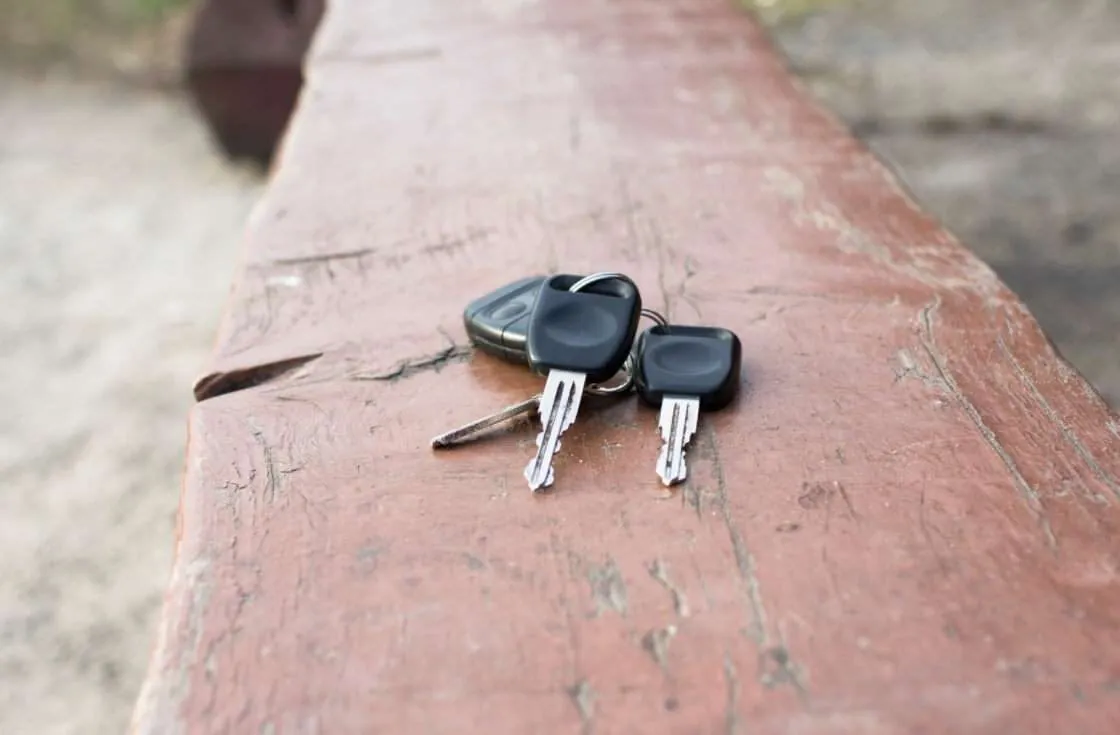
Car keys stopped being simple some time ago. A key that once needed only to be cut correctly now usually carries a transponder chip, often a remote, and sometimes no blade at all. That has changed what an automotive locksmith needs to know, what equipment they need to carry, and how much it matters that you choose a competent one.
This is about how to make that choice sensibly, and what to watch out for.
Start by understanding what you actually need
Before contacting anyone, work out which problem you have. It will make every subsequent conversation shorter and it will help you tell a competent answer from a vague one.
Locked out, keys visible inside. This is a lockout: an entry job, no key work required. Your existing keys will still work afterwards.
Keys lost entirely. This is entry plus key creation, which is a substantially larger job. The cut has to be derived from the vehicle rather than copied, and the immobiliser has to be taught to accept a key it has never seen.
The key turns but the engine will not start. Mechanically fine, electronically not. The immobiliser is not recognising the transponder.
The remote buttons do nothing but the car starts. The opposite: the chip is fine and the radio side is not. Very often just a battery.
The key will not turn at all. Mechanical — a worn key, a worn cylinder, or the steering lock under tension.
If a locksmith cannot distinguish between these on the phone, that is worth noticing.
Check that they are licensed
In California, locksmiths are required to be licensed by the Bureau of Security and Investigative Services. That licensing exists for an obvious reason: this trade opens other people's property for a living, and the barrier to entry needs to be more than owning a set of tools.
Ask for the licence number. A legitimate business will give it without hesitation, and you can verify it independently. Somebody who becomes evasive when asked has told you something useful.
Ask about insurance as well. If a door card is damaged during an entry, or a cylinder is harmed during key work, you want that covered by someone other than you.
Look for a real business, not just a phone number
This is the single most reliable filter, and it is the reason a lot of people have bad experiences.
A legitimate local locksmith has an address you can find, a service area they actually name, and a phone number that connects to them rather than to a call centre. Warning signs run the other way: no address anywhere on the site, a vague claim to serve an entire state, a generic business name that could belong to anyone, and a phone manner that avoids naming the company.
The pattern to be wary of is the lead-generation intermediary. You call a number, it routes to a dispatcher in another state, and whoever turns up is a subcontractor with no relationship to the brand you thought you called. The quote you were given on the phone is not binding on them, and there is nobody meaningful to complain to afterwards.
How they quote tells you a great deal
A competent automotive locksmith will ask questions before giving a number: the year, make and model, whether any working key remains, whether the car uses a turn key or a push-button start, and where it is. Those details genuinely determine the work, and someone who quotes a firm price without them is either guessing or setting up a change of price on arrival.
Be sceptical of a figure that is dramatically below everything else you have been quoted. The well-documented version of this scam involves an implausibly low phone quote, followed on arrival by a long list of reasons the job is more complicated than expected, by which point you are standing next to your car with no better options.
Equally, be sceptical of a business that will not discuss cost at all. A reasonable answer is a clear explanation of what determines the price — the platform, whether keys have been lost entirely, whether programming is required — and a realistic range once they know those things.
Expect to prove the vehicle is yours
This is not an inconvenience; it is the mark of a properly run business.
Before opening a vehicle or cutting a key, a locksmith should ask for photo identification and documentation connecting you to that specific vehicle: the registration, the title, or an insurance document naming you against the vehicle identification number. For a company or hire vehicle, written authorisation from the registered keeper.
A locksmith who skips this is not doing you a favour. The same willingness would apply to somebody standing next to your car while you are elsewhere.
If your documents are locked inside the vehicle — which is common, since that is often why you are calling — say so on the phone. There are usually other ways to establish the connection, and sorting it out in advance avoids a wasted visit.
Ask whether they can actually do your vehicle
Not every locksmith can programme every platform. Equipment is expensive and coverage varies, and some vehicles require dealer-level tooling.
A straightforward "yes, we handle that platform" or "no, that one needs the dealer" is a good sign. Vagueness on this point tends to become a wasted appointment.
It is also worth asking about timing, because some vehicles impose a mandatory security delay before they will accept a new key. It can run to tens of minutes and it cannot be shortened by anyone — its entire purpose is to make the process slow for someone without authority. A locksmith who mentions this unprompted knows what they are doing. One who promises a lost-key replacement in five minutes on a platform with a security delay does not.
What about arrival times?
Treat a firm arrival time quoted before anyone knows where you are with some caution. Travel across a metropolitan area varies enormously by hour and route, and a technician may be finishing another job.
What a well-run business can tell you is where the nearest available technician is and a realistic estimate for that moment. That is a more honest answer than a number promised in advance, and it is worth more than an optimistic figure that turns out to be wrong.
Warning signs worth walking away from
- No licence number offered, or evasiveness when asked for one
- No business address anywhere, and no named service area
- A phone quote far below every other quote you have received
- The price changing substantially on arrival
- An unmarked vehicle and no identification from the technician
- No request for proof that the vehicle is yours
- Pressure to agree to drilling a lock before other options are discussed
- Cash-only insistence with no receipt or paperwork
Any one of these is worth a question. Two or three together is worth ending the call.
What a car locksmith can do
Beyond lockouts and lost keys, the trade covers more than most people realise: spare keys cut and programmed while an original still exists, transponder programming, remote and fob pairing, proximity fob enrolment, broken key extraction from doors and ignitions, ignition diagnostics, and lock decoding to derive a cut when no key remains.
The single most useful of those is the least dramatic. Having a spare key made while you still have a working one is substantially cheaper and quicker than recreating a key from nothing — no derived cut, no immobiliser learning mode, and on many platforms no security delay. It is the one piece of advice in this article that saves money rather than spending it.
Our automotive locksmith services page goes into the technical side in more detail, including what each symptom usually indicates and what to have ready when you call.