Automotive locksmith in Sherman Oaks
Car locksmith in Sherman Oaks, CA
Key programming, fob pairing, ignition diagnostics, broken key extraction and authorised lockouts — the diagnostic side of automotive locksmith work.
Automotive locksmith in Sherman Oaks
Most car key problems are diagnosed before anyone travels
The phrase “my car key has stopped working” covers at least six distinct faults, and they need different equipment. Working out which one you have is the most valuable part of the first conversation, because it determines whether a technician arrives with the right tools or has to come back.
The separation that matters is mechanical against electronic. A key that will not turn in the lock or the ignition has a mechanical problem — a worn blade, a worn cylinder, or a steering lock under tension. A key that turns perfectly but will not start the engine has an electronic one: the immobiliser is not recognising the transponder.
This page covers the diagnostic and programming side of automotive work in Sherman Oaks. For the specific job of replacing a lost or damaged key, the car key replacement page goes into that in more detail.
Common cases
Faults that come up regularly
Key turns, engine will not start
Transponder not recognised. The cut is fine; the chip or its programming is not.
Remote dead, car starts normally
Battery first, then the internal contacts, then the pairing.
No key detected on a push-button car
Try the backup start position — it separates the radio side from the chip in one test.
Key will not turn in the ignition
Worn key, worn cylinder, or the steering lock under load. Rock the wheel gently before forcing anything.
Key snapped in the ignition
Extraction first. Do not attempt to start the vehicle with a fragment inside.
Intermittent starting
Often a worn key or a failing cylinder rather than an electronic fault. The pattern of when it fails is diagnostic.
In detail
Programming, pairing and what each one actually does
Three separate electronic operations get referred to loosely as “programming”, and they are not interchangeable.
Transponder programming teaches the immobiliser to accept a particular chip. This is what allows the engine to start. It is the operation with the tightest security around it, which is why some vehicles impose a delay before entering learning mode.
Remote pairing teaches the body control module to accept a particular remote for locking, unlocking and the boot. It is entirely separate from starting, which is why a key can start the car with dead buttons, or operate the doors while the engine refuses.
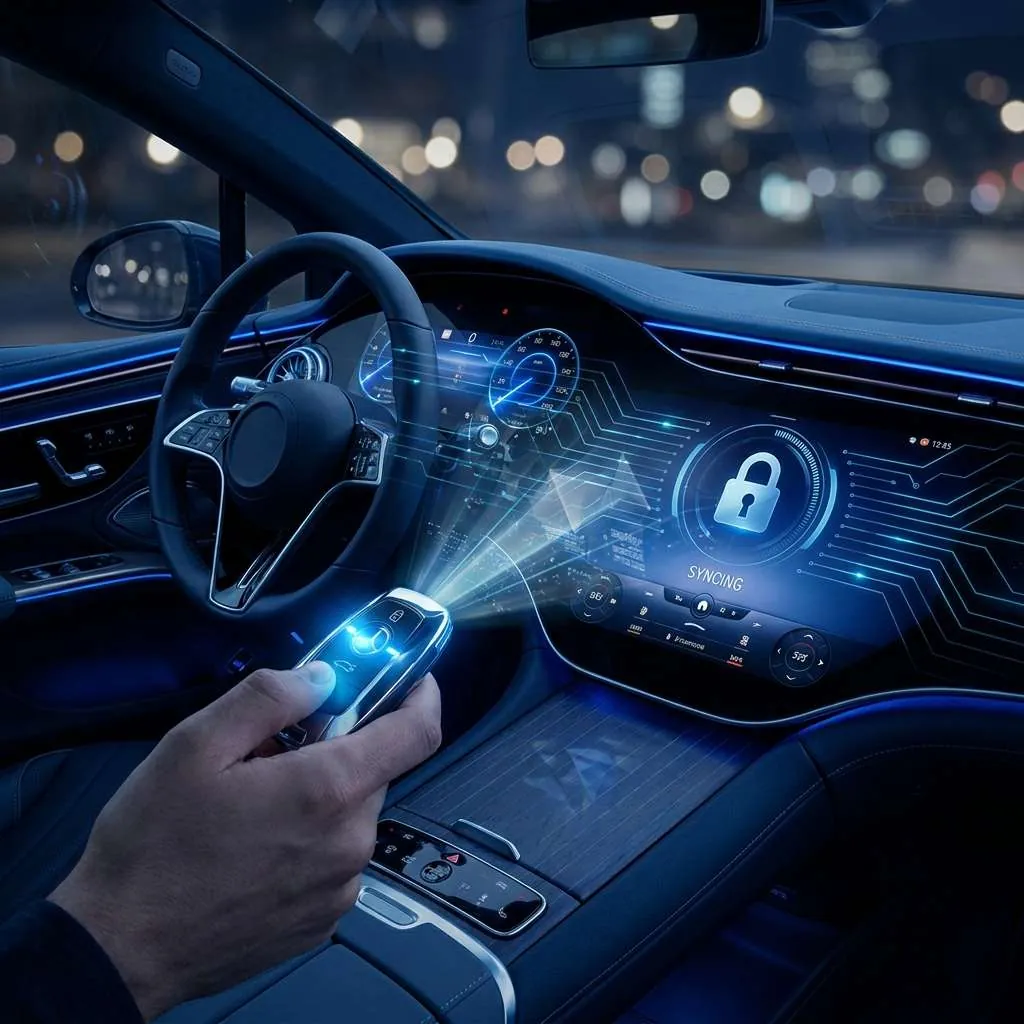
Proximity fob enrolment registers a fob for keyless entry and push-button start. The vehicle detects the fob in or near the cabin rather than reading a chip in the ignition, which introduces its own failure modes around antennas and interference.
Knowing which of these has failed narrows the job considerably. A fob that locks the doors but will not start the car needs transponder work, not a new remote. A key that starts the car but will not lock it needs remote work, not a new key.

Options
What can be dealt with on site
Most automotive locksmith work happens where the vehicle is parked rather than at a workshop.
Key cutting
From an existing key, from the vehicle's key code, or by decoding one of its locks.
Transponder programming
Adding a chip to the immobiliser so the engine will start.
Remote and fob pairing
Registering locking, boot and alarm functions separately from starting.
Proximity fob enrolment
Keyless entry and push-button start, including emergency blade cutting.
Broken key extraction
Removing a fragment from a door lock or ignition without pushing it deeper.
Ignition diagnostics
Establishing whether a key that will not turn is the key, the cylinder or the steering lock.
Lock decoding
Reading an existing lock to derive the cut when no key remains.
Authorised lockouts
Non-destructive entry where the vehicle allows it, after ownership is confirmed.
Process
How the visit runs
Describe it
The property or vehicle, the hardware involved, and what changed before the problem started.
Confirm the service
We confirm what applies and what the technician needs to bring, including how authorisation will be shown.
Diagnose on site
The hardware and the whole opening are inspected before anything is replaced.
Complete and test
Everything is tested in place before the visit ends.
Before you call
What helps when you call
- Year, make and model, and the trim level if you know it
- Turn key or push-button start
- Whether the fault is mechanical (will not turn) or electronic (not recognised)
- Whether any working key remains
- Whether the backup start position works, on a push-button car
- Whether the key has been dropped, wet or washed
- Where the vehicle is parked
- Photo identification and proof of ownership
Common questions
Car locksmith questions
Request an automotive locksmith in Sherman Oaks
Say whether the key turns, and whether the engine starts. Those two answers narrow it down considerably.
Identification is required
For any work that provides access to a property, vehicle or safe, the technician will ask for photo identification and evidence that you are entitled to enter. Having that ready keeps the visit short.